Last updated November 23, 2026
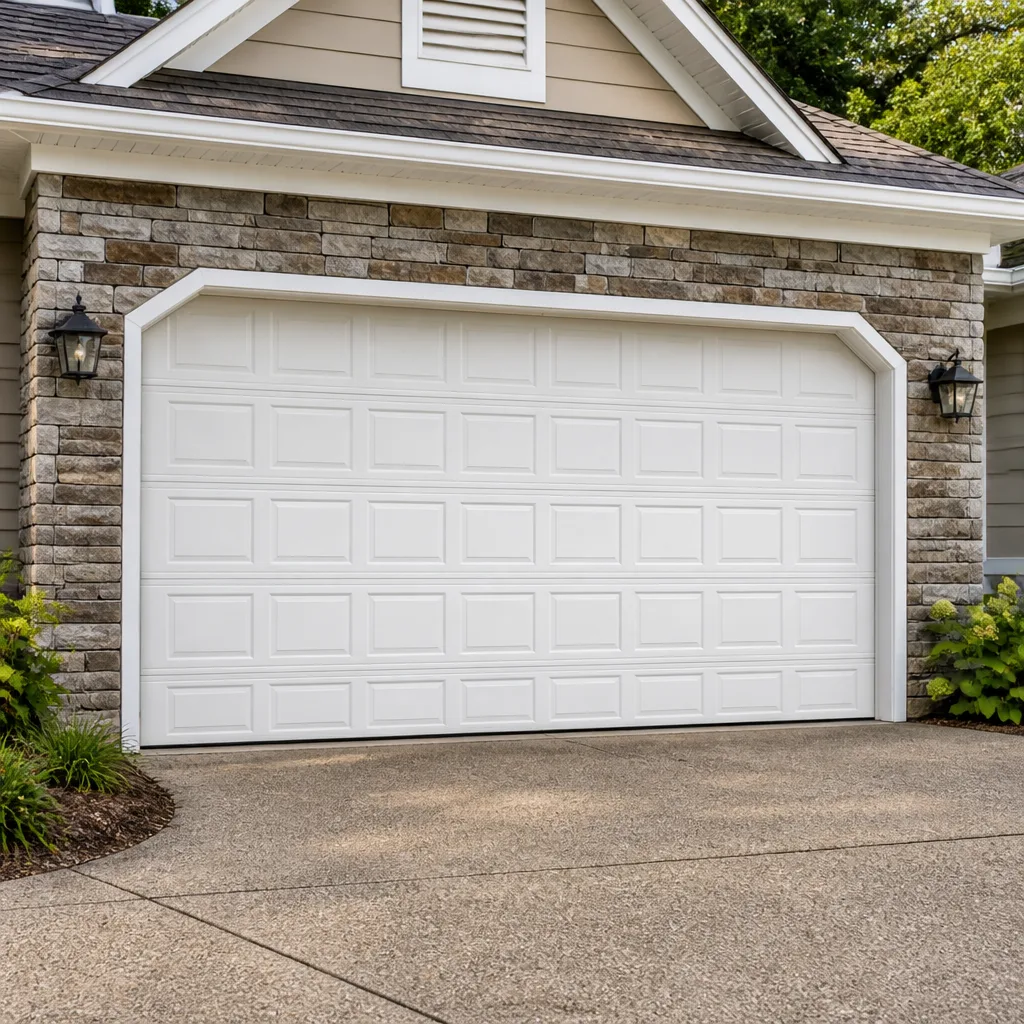 Raised-panel steel
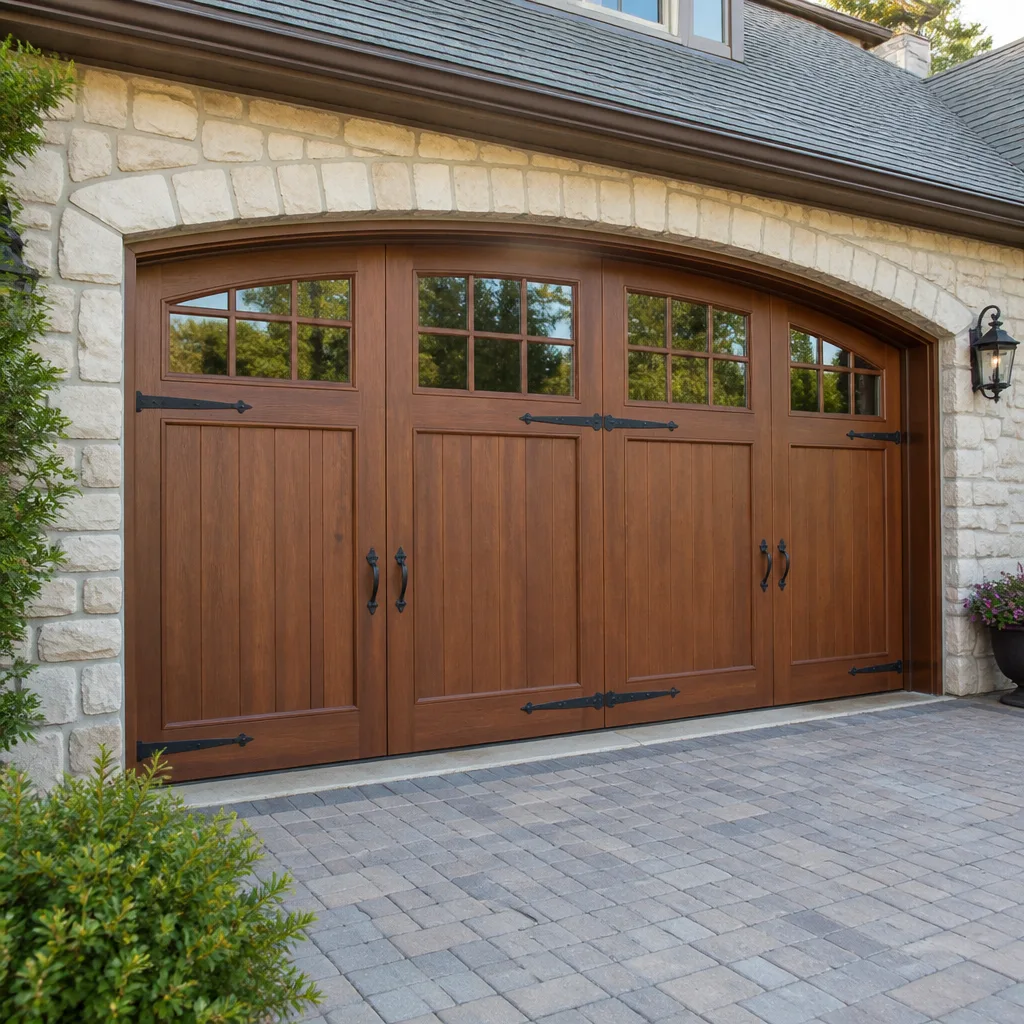 Carriage house
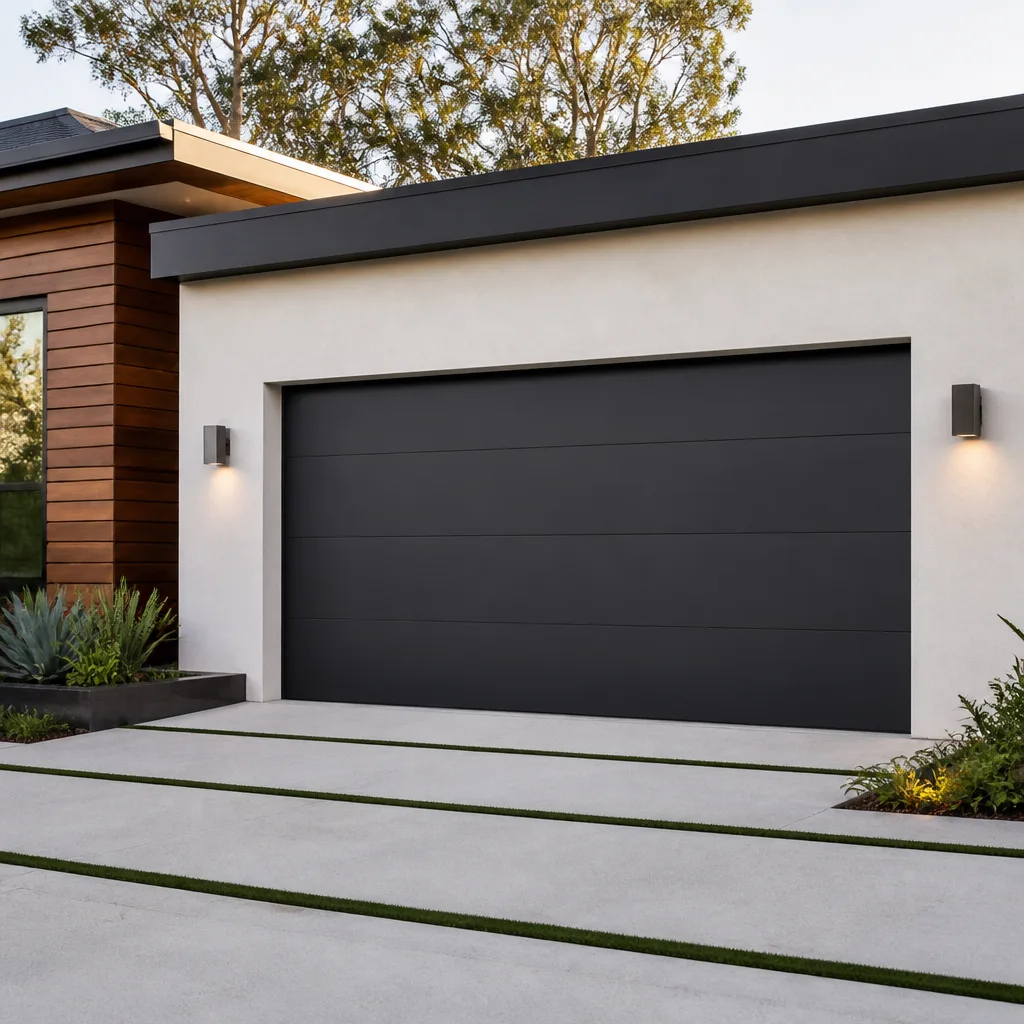 Modern flush
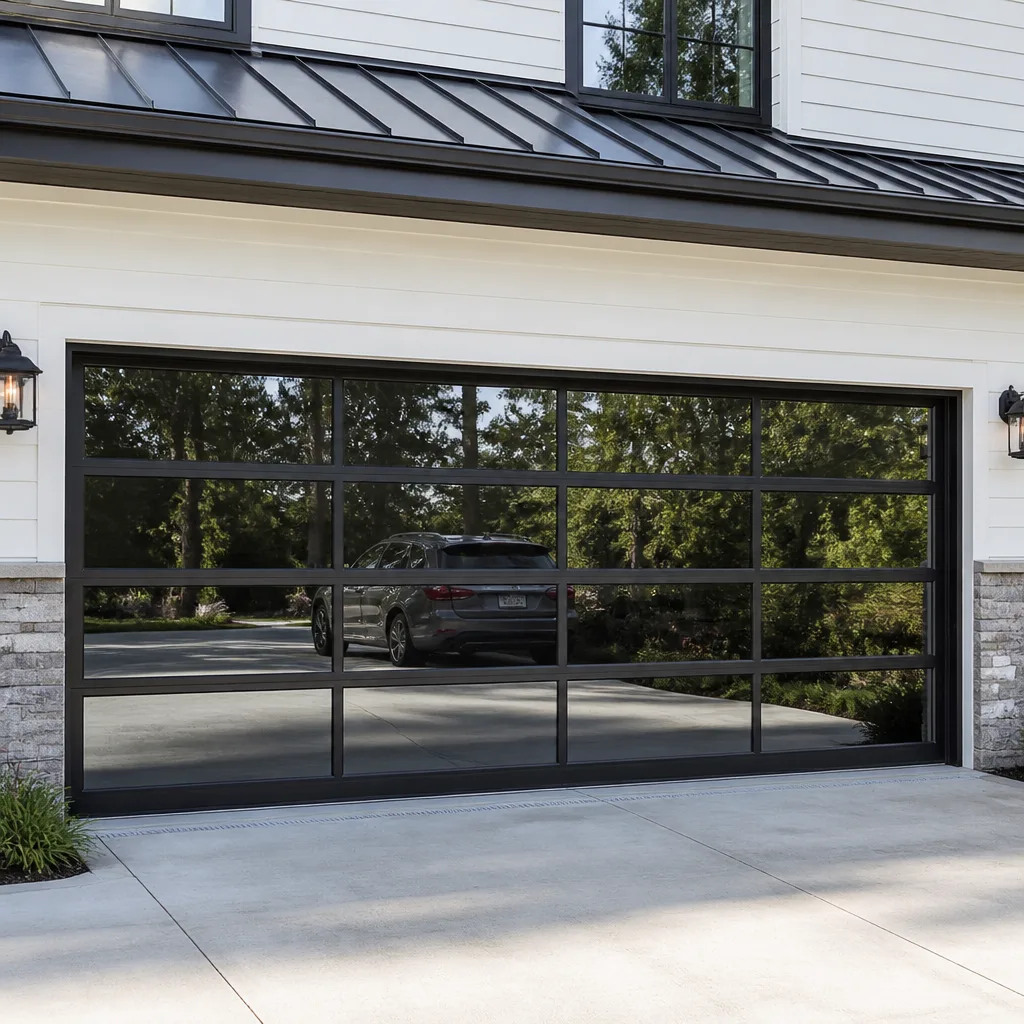 Full-view glass
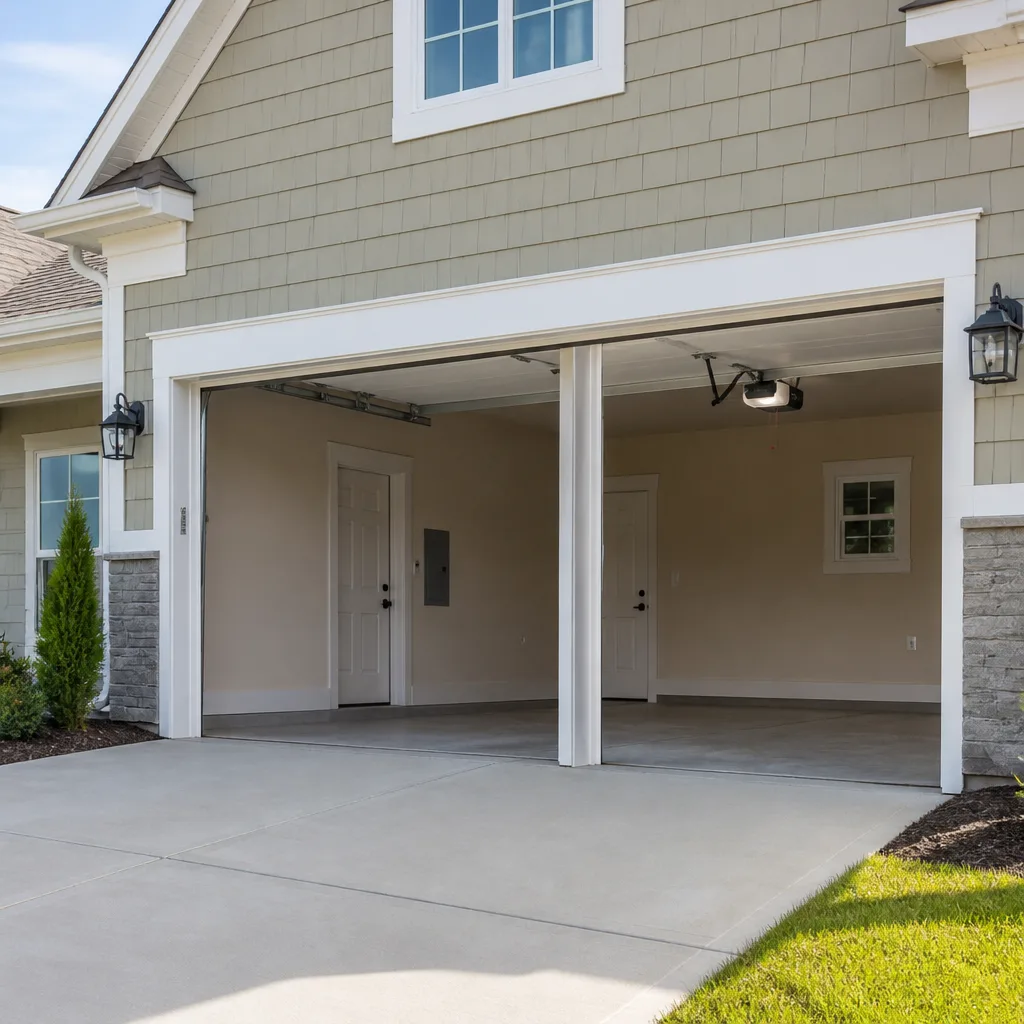 LiftMaster openers
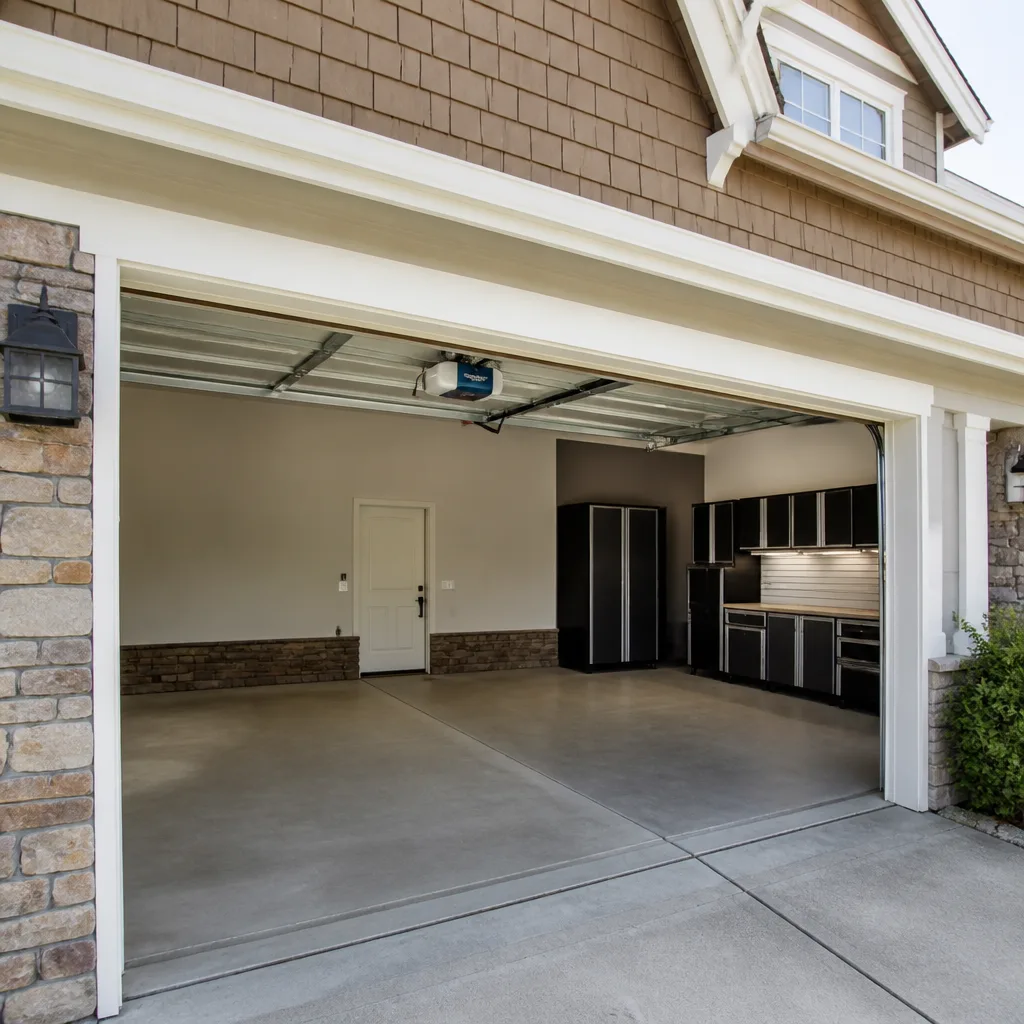 Chamberlain openers
Full 25-point door and opener safety check with every visit - springs, cables, rollers, tracks, and your LiftMaster or Chamberlain opener included
You get a price before we start. It does not change when the pro arrives.
Get your free estimateGarage Door Repair Troubleshooting in Levittown: Common Problems and How to Fix Them
Most people assume a garage door that quits is a mystery that only a technician can untangle. Here’s the truth: nearly every failure traces back to one of five mechanical categories, and a homeowner can sort out which one they’re facing in about three minutes without touching a wrench. The trouble is that people skip the sorting and jump straight to jabbing at the opener or yanking at the door by hand, which turns a simple diagnosis into a bigger bill. In this guide, we’ll walk you through a symptom-first way of thinking about garage door problems in Levittown, show you which fixes are safe and which are physically dangerous to attempt, and explain how this region’s freeze-thaw cycles quietly reshape your tracks and hardware every season. You’ll finish knowing exactly what to say when you call, so the visit is faster and the fix lands right the first time.
Quick Answer
In Levittown, the most common garage door problems are snapped or worn torsion springs, misaligned or bent tracks, worn rollers and hinges, opener logic or Wi-Fi failures, and photo-eye sensor interruptions. Springs and cables are high-tension components and should only be handled by a trained technician, while sensor cleaning, track observation and weather-seal checks are things homeowners can safely inspect. Knowing which component is failing is the fastest path to getting your door back in service.
Styles & brands we work with
- Raised-panel steel
- Carriage house
- Modern flush
- Full-view glass
- LiftMaster openers
- Chamberlain openers
Table of Contents
- The Five Mechanical Categories Every Garage Door Problem Fits Into
- Your Three-Minute Triage: A Symptom-to-Component Decision Tree
- A Door That Won’t Move vs. a Door That Moves Wrong
- Spring Problems: Why This Is the Red-Line Category
- How Levittown’s Freeze-Thaw Cycles Affect Tracks and Lubrication
- Opener and Sensor Troubleshooting: The Safe Zone
- What to Tell a Technician So the Visit Is Half-Diagnosed
- Common Mistakes to Avoid
The Five Mechanical Categories Every Garage Door Problem Fits Into
Before you decide anything about your door, it helps to know the machinery’s anatomy. A residential garage door and its opener are really just five subsystems working together. When something goes wrong, it’s almost always one of these five that’s talking to you.
- Springs. The counterweight system. Torsion springs run on the shaft above the door; extension springs run along the sides. A broken spring is the most common cause of a door that suddenly won’t lift.
- Cables. The pulleys-and-drum rig that ties the door to the springs and keeps it level. A cable that jumps a drum or frays throws the door off balance.
- Tracks. The vertical and horizontal rails that guide the door and its rollers. Bent or misaligned tracks make the door bind, scrape or drift sideways.
- The opener. The motor, gear, capacitor and logic board that lift and lower the door on command. Belt, chain and screw drive units all fail in similar ways, and modern Wi-Fi models add a connectivity layer that can drop out.
- Safety sensors and the safety reverse. The pair of photo-eyes near the floor and the pressure-sensing trip that stop the door if something is in the way.
That’s the whole map. Once you know which category your symptom belongs to, you know whether you’re looking at a five-minute check or a call to a technician. In our experience across Levittown, the split is roughly even between opener and sensor complaints (the safe, tinker-friendly side) and spring, cable and track failures (the specialist side). Here’s what makes the difference on a diagnosis: sorting by component first, not by “the door is acting weird.”
Your Three-Minute Triage: A Symptom-to-Component Decision Tree
The fastest way to classify a problem is to work backward from what you’re hearing and seeing. Use this decision tree to sort your symptom before you touch anything. None of these steps require you to remove a part or put your hands on high-tension hardware.
- Is the door visible from behind and does the opener run without lifting it? If the motor hums or clicks but the door doesn’t move, the opener is trying and the mechanical door is jammed. That points to springs, cables or a track bind. Stop and don’t keep running the motor; a stripped gear is the next failure.
- Is there a loud bang followed by a door that won’t lift? That’s the classic signature of a broken torsion spring. This is the red-line category. Stop here and call for garage door spring repair.
- Does the door lift a few inches then stop or reverse? Look at the two photo-eye sensors near the floor. A blocked beam or a misaligned lens is the culprit more often than not.
- Does the opener beep, flash or refuse to respond but the wall button works? That’s a remote or logic issue, often a battery, a dead sensor, or a Wi-Fi opener that dropped its connection. This is the safe zone.
- Does the door scrape, bind or look crooked as it travels? That’s a track or roller problem, and it usually gets worse with temperature swings. Observe it moving and note where it hangs up.
- Does the door make grinding or clicking sounds but still move? Worn rollers or a failing opener gear. Note the noise location and when it happens (opening, closing, or both).
Work through the list in order and stop at the first match. That’s your category. If you can answer these questions, you’re already ahead of a technician who arrives to a vague “it isn’t working.” For everyday non-emergency issues, our garage door repair team can also walk you through this same triage on the phone before deciding on a visit.
A Door That Won’t Move vs. a Door That Moves Wrong
This distinction does more for a diagnosis than any other single question, and it’s the one homeowners skip most often. “The door won’t move at all” and “the door moves but not correctly” are two completely different repairs.
When the door won’t move, the mechanical drive is interrupted. The door has lost its lift force. In roughly the order we see them, that means a broken spring, a snapped or jumped cable, a track so bent the door is locked in place, or a dead opener gear. The common thread is that the door is stuck with the weight unsupported, and forcing anything is dangerous because the system is holding stored force it can’t release normally.
When the door moves wrong, the drive is intact but the geometry or the controls are out of sync. That covers doors that bind, cock sideways, reverse for no obvious reason, close unevenly, or hang up at one height. These usually point to a track alignment, a worn roller, a bent hinge, a sensor that’s tripping, or an opener force limit set too tight.
Why does it matter? Because “won’t move” almost always needs a technician, while “moves wrong” can sometimes be resolved by a sensor clean, a track observation, or an opener adjustment. And when you call, that one sentence – “it won’t move” versus “it moves but binds” – tells us half the story before we pull in the driveway.
Spring Problems: Why This Is the Red-Line Category
If there’s one rule to take from this guide, it’s this: springs are under extreme tension, and this is a job for a trained technician. A torsion spring stores enough energy to lift a door several hundred pounds, and when it’s wound, that energy is live. Working on it without the right winding bars, the right technique and a clear understanding of how the tension releases is genuinely dangerous – not a “be careful” situation, but a serious-injury one. That’s why we handle springs as a dedicated, specialist service and why most general handymen decline the work.
What you can safely do is identify the failure from the outside:
- A loud bang from the garage, followed by a door that won’t lift.
- A visible gap in the torsion spring coil above the door, or a stretched, separated extension spring.
- A door that feels heavy when you try to raise it by hand (if you can, and only if it’s already off the opener).
- Doors that hang level on one side and droop on the other when they’re down.
What you should not do: wind or unwind a spring, cut a spring, or attempt a “quick fix” with a clamp or a come-along. There are no shortcuts that hold. If your spring is broken, the safest move is to leave the door where it sits and call for help. In Levittown, we treat spring failures as one of the fastest-turnaround jobs on our list, and we’ll tell you straight whether both springs should be replaced together. A matched pair is almost always the right call: when one goes, the other is usually at the same age and load.
How Levittown’s Freeze-Thaw Cycles Affect Tracks and Lubrication
Levittown’s climate hands garage doors a specific set of recurring challenges: cold winters, warm summers, and a lot of freeze-thaw cycling through the shoulder seasons. Every time the temperature drops below freezing and then climbs back above it, water in the ground and moisture on the door’s steel expand and contract. That cycling quietly works on your door and its hardware all year.
The most visible effect is on the tracks. Metal tracks are anchored to the framing, and the framing itself moves a little with the seasons. Over a few freeze-thaw cycles, the bolts can loosen and a track that was dead plumb in October can drift slightly out of alignment by spring. A track that’s off by a fraction of an inch is enough to make the door bind, scrape or cock sideways. That’s why we see a spike in “the door is rubbing” calls after a deep cold snap. If your door is scraping or drifting along the track, it’s worth a look before a small misalignment wears the rollers or the door’s edge trim.
Lubrication also behaves differently in this climate. Cold stiffens grease, so a thick, tacky lubricant that feels fine in July can make rollers and hinges sluggish in January. A lighter, weather-appropriate lubricant on the rollers, hinges and spring coils keeps things moving without collecting grit. It’s a small, safe bit of maintenance a homeowner can do – but never on the springs’ winding hardware, only the coils and moving parts as directed by the manufacturer.
Weather seals take the same beating. The seal along the bottom of the door and the trim around the sides is your first line against drafts, water and mice, and it hardens and cracks after enough hot-cold cycles. A brittle seal that’s flapping or leaving a gap is a simple replacement, and it makes a real difference to how your garage feels through a Levittown winter.
Opener and Sensor Troubleshooting: The Safe Zone
This is the part of the system where homeowners can do a lot themselves, because nothing here is under dangerous tension. Opener and sensor problems are responsible for a big share of the calls we get in Levittown, and many of them are resolved by a check or a reset rather than a repair. Here’s how to work through the safe zone in order.
- Check the power and the wall button first. Confirm the opener has power and the wall button works. If the wall button operates the door but the remote doesn’t, the problem is the remote or the receiver, not the motor.
- Look at the sensors. The two photo-eye units near the floor should both show a steady light. If one is dark or blinking, wipe the lens clean, check that nothing blocks the beam, and confirm they’re pointed at each other. A bumped sensor or a spiderweb is a surprisingly common cause of a door that closes a few inches and reverses.
- Test the safety reverse. With the door open, place a small object in the path and close it with the wall control. The door should reverse on contact. If it doesn’t, stop using the opener and call for service.
- Reset the logic. If a modern Wi-Fi-enabled opener has stopped responding to an app or voice command, it may just need a power cycle or a reconnect to the home network. LiftMaster, Chamberlain, Genie and Craftsman units all have slightly different reconnect procedures, so check the manual or the app’s instructions.
- Listen for the motor. A motor that hums but doesn’t move the door points to a stripped gear or a jam, and both need a technician.
If none of that solves it, we cover the full range of opener brands, so whatever’s on your ceiling – a legacy unit or a current smart model – our garage door opener repair team can get it back in service today without pushing you toward a brand switch.
What to Tell a Technician So the Visit Is Half-Diagnosed
The most useful thing you can do for a technician is describe the symptom in the language of the component. A vague “the door is broken” starts the diagnosis from zero. A specific symptom starts it from the answer. When you call, have these ready:
- The symptom in one sentence. “It won’t move at all” versus “it moves but binds and scrapes on the right.”
- What you hear. A bang, a hum with no movement, grinding, clicking, or silence.
- What the opener does. Whether the motor runs, whether the wall button or remote works, and whether the sensors show a steady light.
- When it started. After a cold snap, after you pushed the door by hand, after a power outage, or with no apparent trigger.
- The door’s basics. Roughly how wide and heavy it is, and the make of the opener if you can read it (Genie, Clopay, Amarr, Wayne Dalton and others are all common here).
- Any visible damage. A gap in the spring, a bent track, a frayed cable, a cracked panel.
With those six answers, a good technician can often tell you the fix, the part and the timing before opening the toolbox. That’s what “diagnosed correctly the first time” looks like in practice.
Common Mistakes to Avoid
- Forcing a door that won’t lift. If the spring is broken, the door’s full weight is unsupported, and yanking it up can bend tracks, snap cables and injure you. Leave it down and call.
- Winding or “assisting” a torsion spring. This is the single most dangerous mistake on the list. Springs hold stored energy and can release without warning. This isn’t a job for a homeowner or a general handyman.
- Using the opener to diagnose a mechanical jam. Running the motor against a stuck door strips gears and can burn out the unit. If the door won’t move, stop pressing the remote.
- Greasing everything with whatever’s in the shed. Heavy grease stiffens in Levittown’s cold and collects grit. Use a lubricant meant for garage door hardware, and keep it off the sensor lenses.
- Ignoring a small track misalignment. A track that’s off a fraction of an inch after a freeze-thaw cycle wears the rollers and door edge over time. Catching it early is cheaper.
- Replacing one spring when both are worn. Matched springs wear at the same rate. Replacing only the broken one usually means a second call in the near future, so ask whether a pair makes more sense.
- Assuming a new door is the only fix. Many doors that look tired just need springs, rollers, or a track realignment. Get a diagnosis before you shop for a replacement.
See the difference
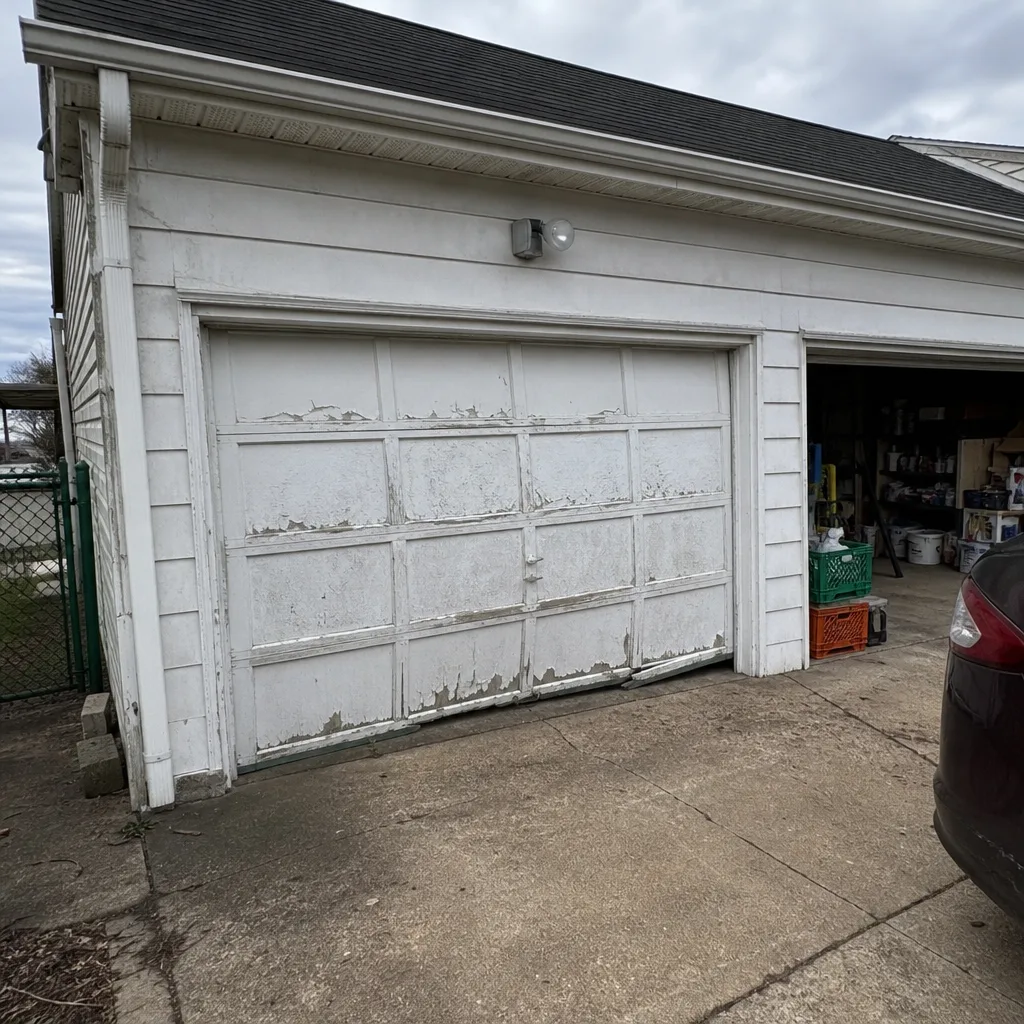 Before
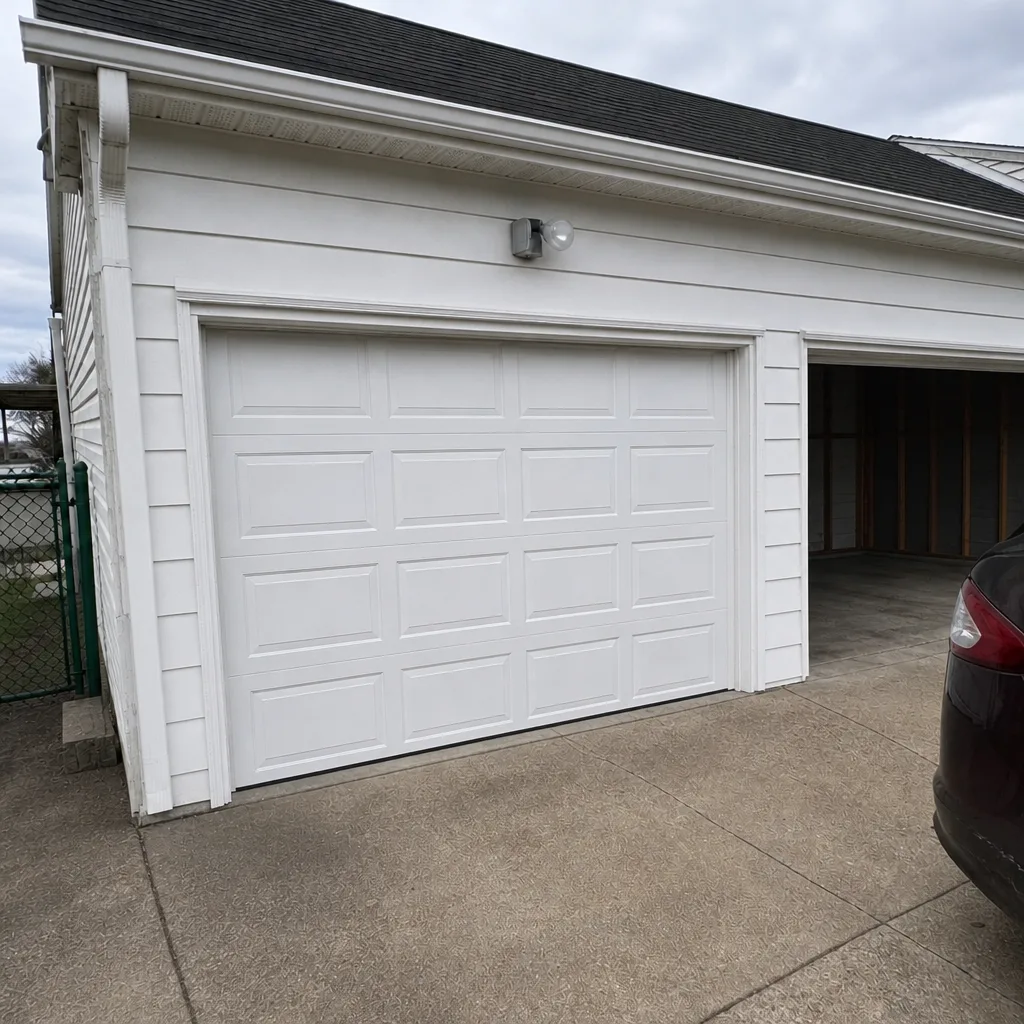 After
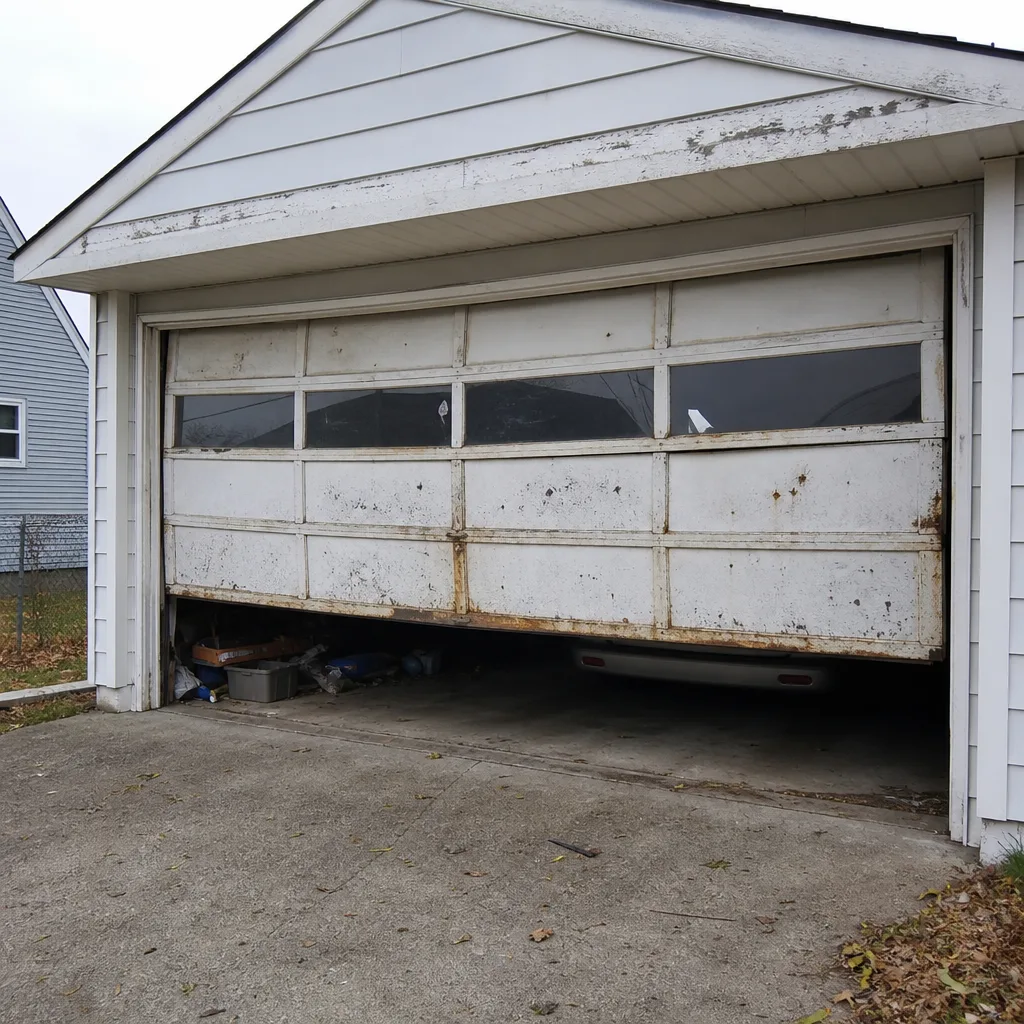 Before
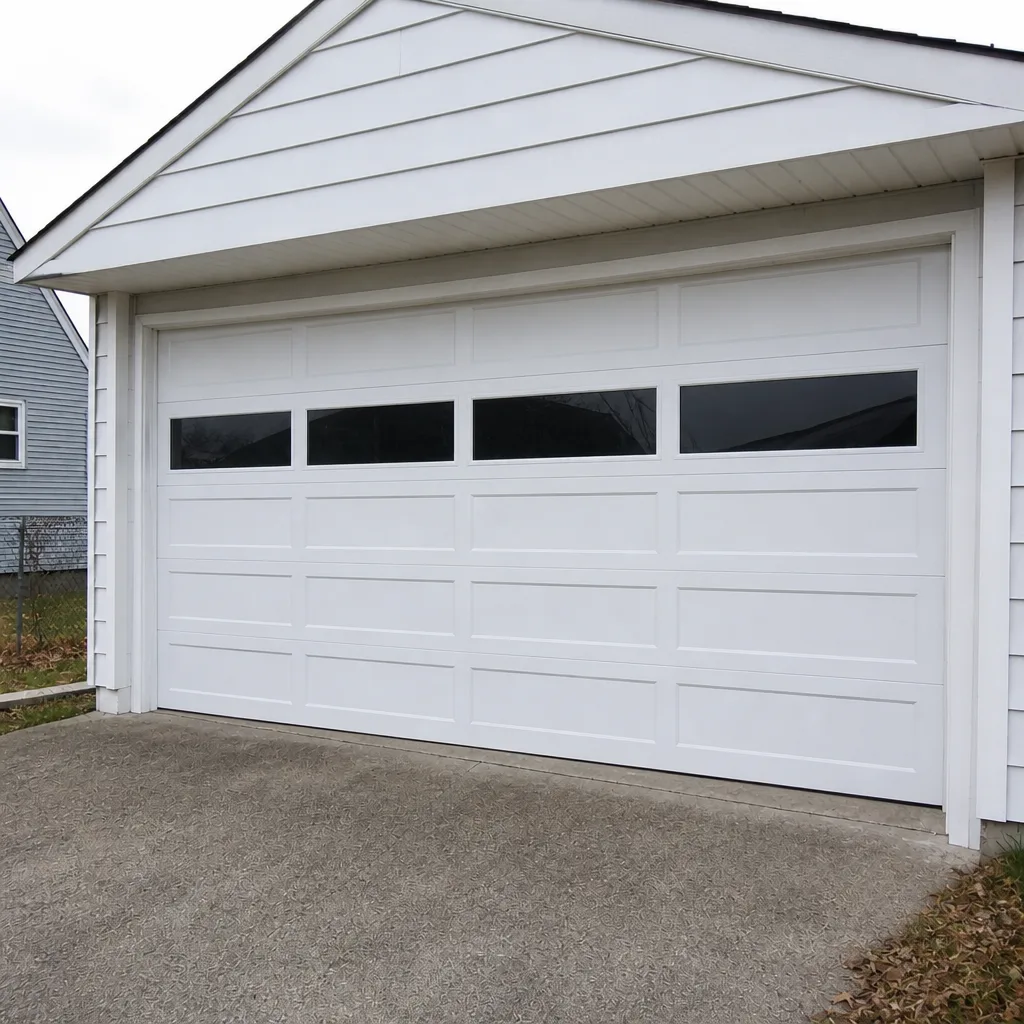 After
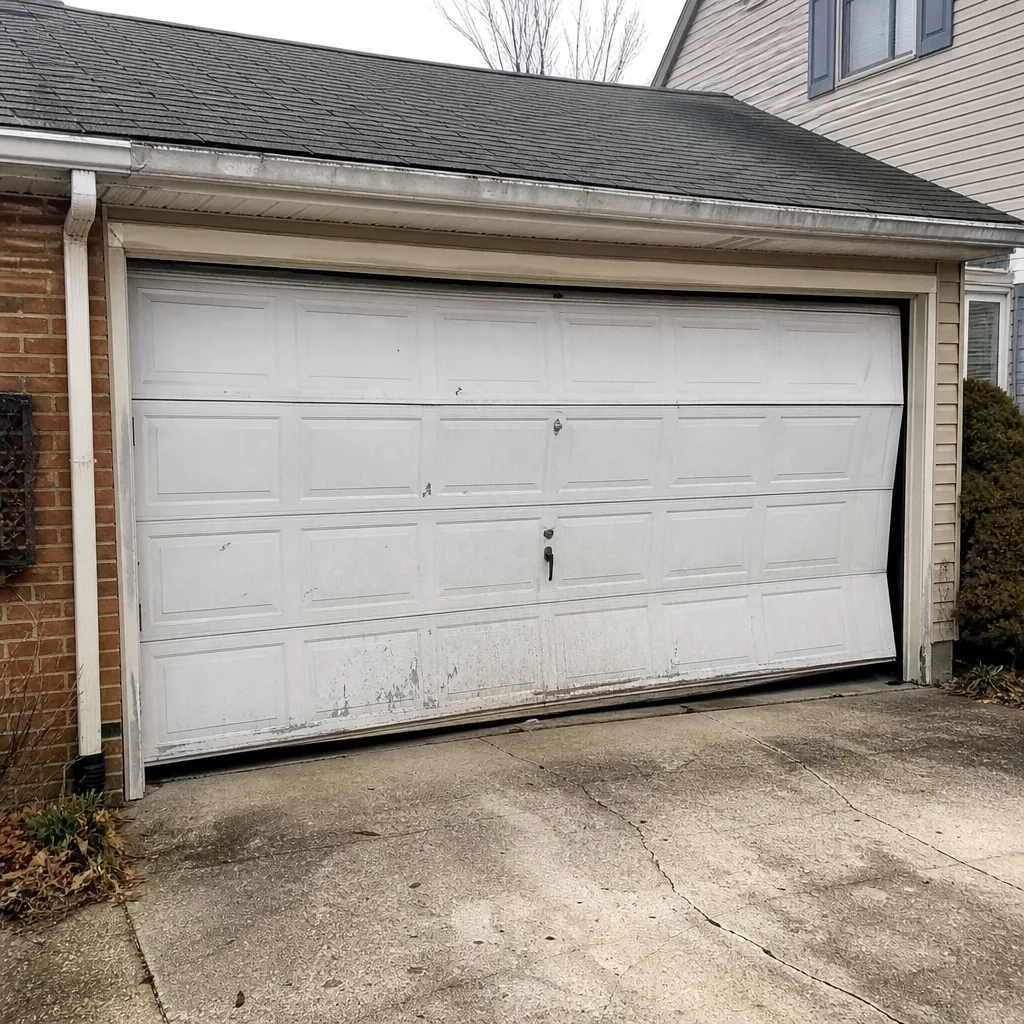 Before
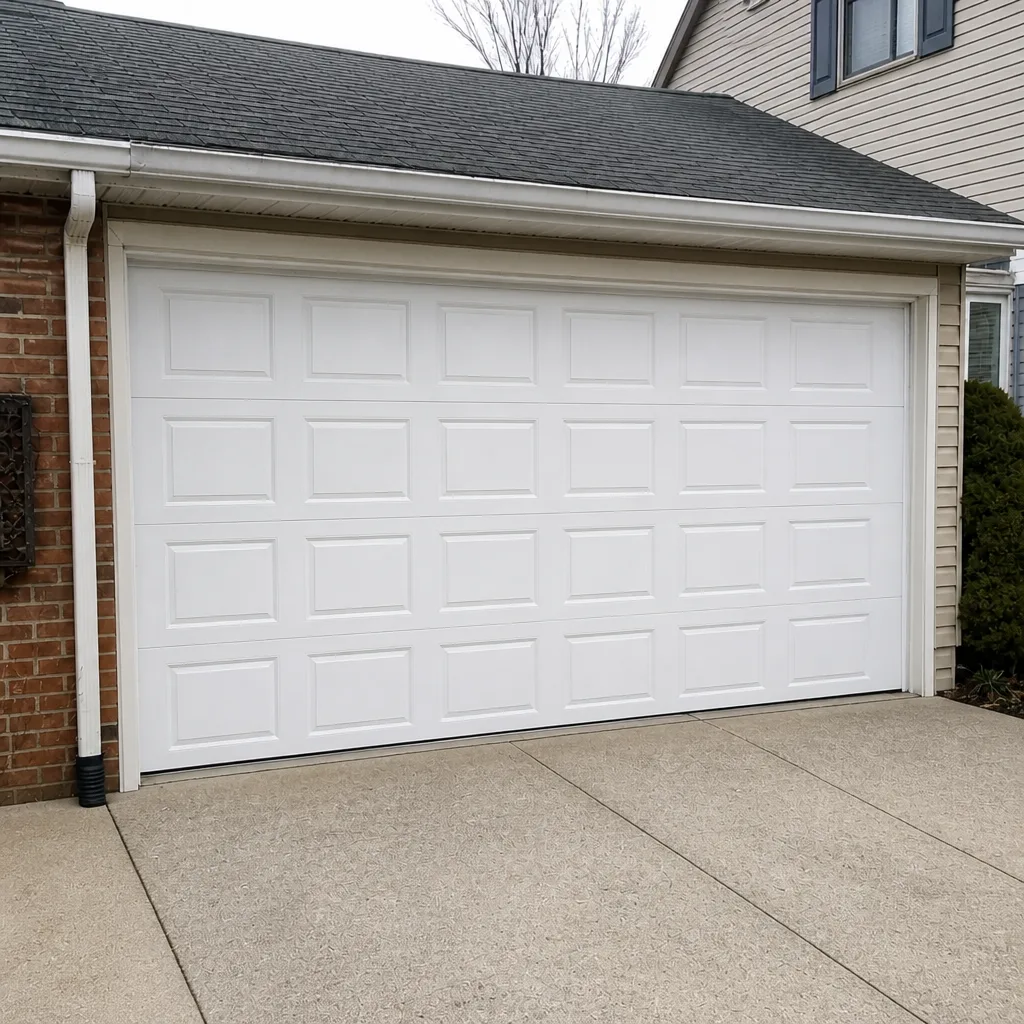 After
When to Call a Professional
Some problems are safe to triage; others are not. Call a professional when the door won’t move at all, when you hear the bang of a broken spring, when a cable is frayed or hanging loose, when a track is badly bent or the door has jumped it, when the opener runs but the door doesn’t, or when the safety reverse fails its test. Also call if a door is stuck open and leaving the house unsecured, or stuck down and trapping your car – those are the situations where emergency service matters. Levittown Garage Door Repair Co offers free estimates in Levittown – call (833) 362-9987. Our technicians have up to 11 years of experience, and they’ll diagnose the problem, quote the job and agree the price with you before any work starts.
Frequently Asked Questions
Typical Levittown garage door repairs run from around $120 to $450 depending on the job, with spring replacement at the higher end of that range and sensor or opener adjustments at the lower end. The written estimate you’re given sets the final price, and we quote and agree it with you before any work starts. Call (833) 362-9987 for an exact quote – estimates are free.
Yes – for emergency and repair calls we offer same-day service, with fast dispatch from 7am to 7pm. A door that won’t lift, a snapped spring, or a door stuck open that’s leaving your home unsecured all qualify for emergency garage door service. Call (833) 362-9987 and we’ll get you back in service today.
No – the price is quoted and agreed before any work starts, so there are no surprises on the invoice. If we find something extra once the door is opened up, we’ll tell you and get your approval before doing it. Call (833) 362-9987 for a free estimate.
The local professionals we connect you with are licensed and insured as Pennsylvania requires, and spring work in particular is handled by trained technicians because of the high-tension safety risk. We work on eight of the most widely installed garage door and opener brands, so we’re ready for whatever’s on your home. Call (833) 362-9987 to book.
Most Levittown garage door problems are repairs, not replacements, and the majority are fixed on the first visit. Spring replacement, opener repair, sensor fixes and track realignment are all standard repair jobs. A new door usually only makes sense when the panel is damaged beyond repair or the door is at the end of its life. Call (833) 362-9987 and we’ll tell you honestly which case you’re in.
A door that moves but hangs unevenly is usually dealing with a cable or track issue rather than a dead opener, and that’s a “call the technician” category because cables are under tension. Don’t force the door or try to adjust the cable yourself. Call (833) 362-9987 for a free estimate and we’ll diagnose it correctly the first time.
The Bottom Line
Almost every garage door failure in Levittown fits into one of five categories: springs, cables, tracks, the opener, or the safety sensors. Sort your symptom first with the decision tree, and you’ll know immediately whether you’re in the safe zone (sensor cleaning, remote and Wi-Fi troubleshooting, lubrication) or the red-line zone (springs, cables, bent tracks). Respect the red line – high-tension hardware is a job for a trained professional, and no DIY shortcut makes it safe. Watch your tracks and seals through the freeze-thaw seasons, keep the hardware lubricated with the right product, and give a technician a clear symptom description so the visit is fast and the fix lands right the first time. If you’d rather not sort it alone, we’re here to help.
When you’re ready to get your door diagnosed or you just want a straight answer, Levittown Garage Door Repair Co is one call away. From an opener glitch to a full new installation, we handle the brand you already have, offer free estimates, and agree the price with you before any work starts. Reach out to Levittown Garage Door Repair Co today – call (833) 362-9987 – and we’ll have your door back in service.
Written by the team at Levittown Garage Door Repair Co.