Top Signs You Need Garage Door Service – Don’t Ignore These
The signs of a failing garage door usually show up weeks before the door quits. Grinding, a door that runs slower than it used to, a slight shake, a remote that needs a second press – those are early warnings. The reason so many Levittown homeowners end up with an emergency is that a shaking door gets called “normal” until the spring snaps. If you’d rather not climb around a door yourself, call (833) 362-9987 for a free estimate.
What Sounds Signal a Real Problem?
Not all noise means failure, but the type of noise points straight to the cause. A healthy door is quiet: a low hum from the opener and the soft roll of the wheels. Here’s what each sound actually means mechanically:
- Grinding usually comes from worn or dry rollers and a bending track. The metal roller rubs instead of rolling, and the track wears with it. Left alone, the door jumps the track.
- Popping is sharper and often intermittent, and it usually points to a loose section, a worn hinge, or a torsion spring under load. A pop on opening is the sound of a component under tension slipping.
- Scraping is metal on metal or a bent panel dragging the frame. It tends to get louder the closer the door gets to the floor or the top of the track.
- A thud or bang at the end of travel may be the opener hitting a hard stop instead of the travel adjustment. That jars the whole door and opener on every cycle.
We work on the brand you already have – LiftMaster, Chamberlain, Genie, Clopay, Amarr, Wayne Dalton, Craftsman, Raynor – so a technician isn’t guessing at a sound on a system they’ve never opened up. In a Levittown split-level, the garage door is often the loudest thing in the house and the noise carries through the room above it. If you can hear it across the house, that’s a clue worth acting on.
Why Is My Door Opening Slower Than It Used To?
A door that used to open in eight seconds and now takes twelve isn’t quirky. Something is degrading. Slow operation is one of the earliest symptoms, and it’s the one most homeowners brush off in Levittown because the door still technically works. Several systems cause it:
- Springs losing tension. Torsion springs carry most of the door’s weight. As they weaken, the opener takes more of the load, and the door drags. Springs are under extreme tension, so this is a job for a trained technician, not a weekend fix.
- Dry or seized rollers and hinges. Too much friction for the opener to push through.
- A worn opener gear or motor. Older openers with a failing gear whine and move slowly before they stall.
- Weatherstripping dragging the floor. A door resting on swollen or worn bottom seal adds drag on every cycle.
A well-running door does the same job in the same time every morning. When the timing slips, the system is telling you something is wearing. Slow is the cheapest stage to catch it, and it’s usually the least expensive stage to fix.
The Five-Minute Visual Inspection Any Homeowner Can Do
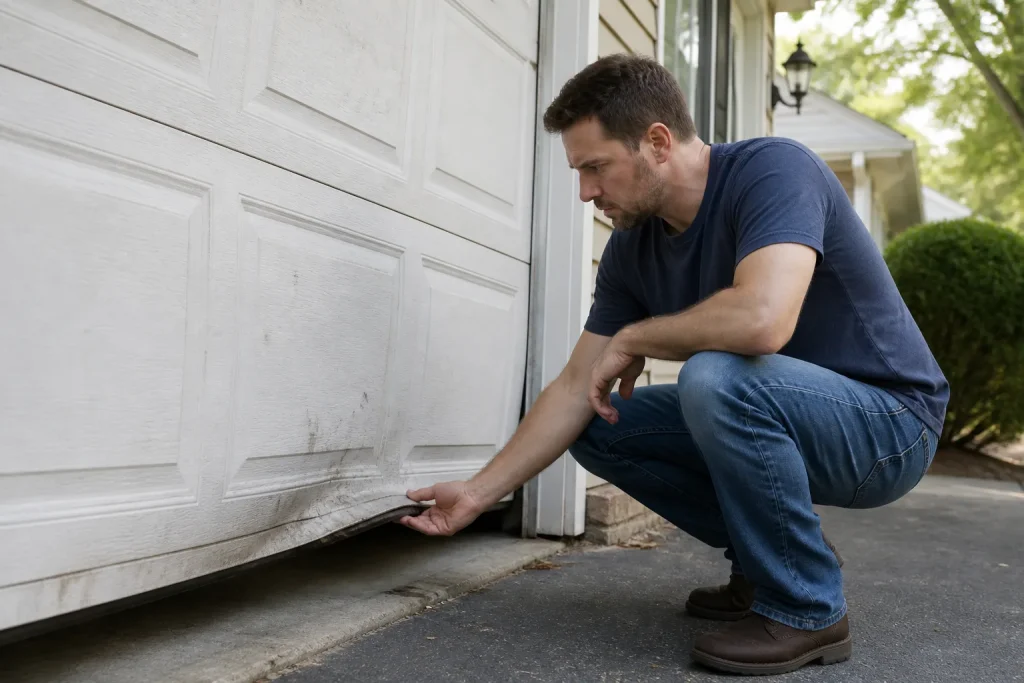
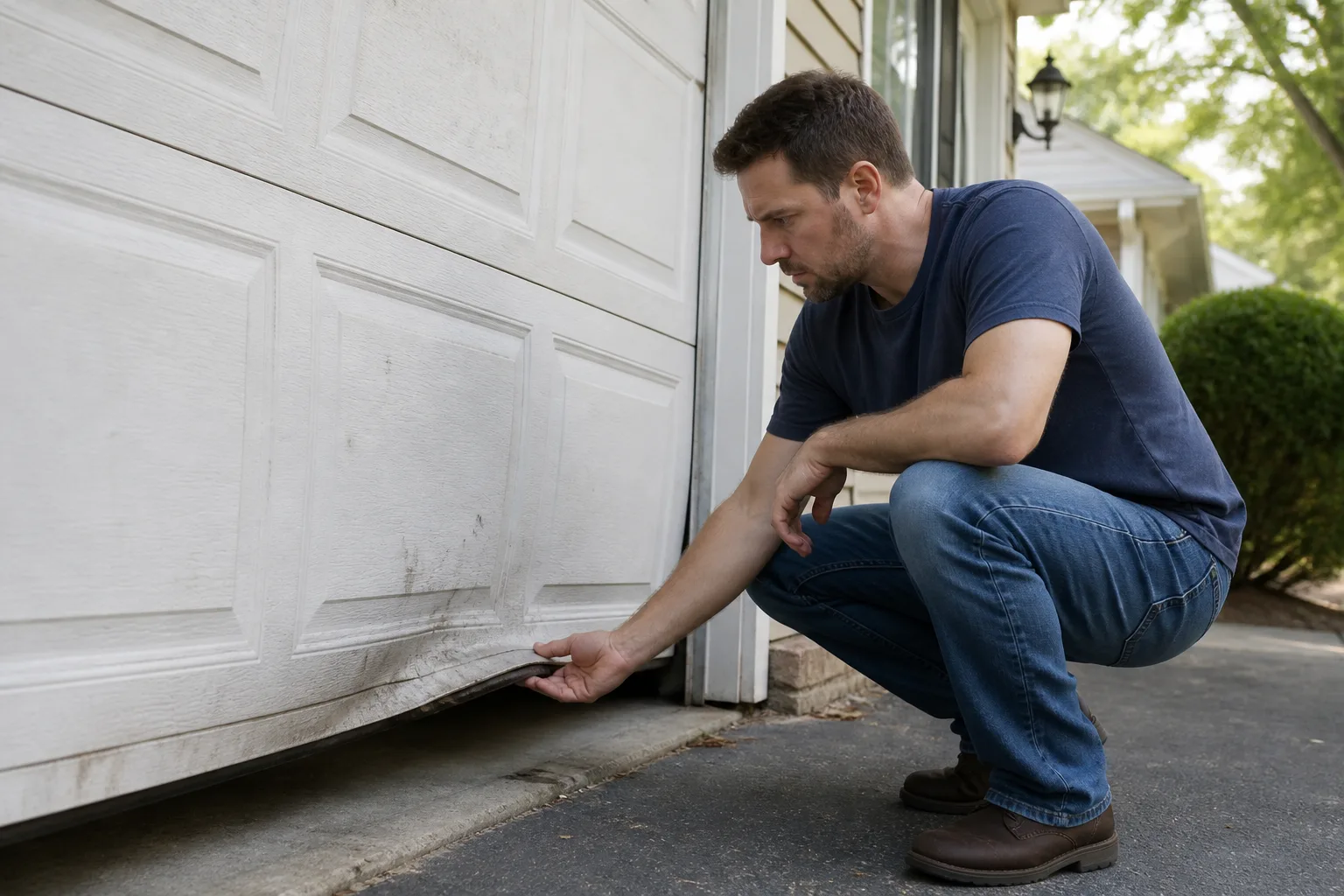
You don’t need tools for most of this. Walk out, look at the door from inside and outside, and check these four things. This is what we look at first on a Levittown call, and you can spot most of it yourself in about five minutes.
- Springs. Look at the coils above the door. A visible gap, a slight bend, or a coil that looks stretched is a warning. Don’t touch them. Springs are under extreme tension, and this is a job for a trained technician, never a DIY adjustment.
- Cables. The cables run along the sides. Fraying, a section that looks wound wrong, or a cable sagging where it should be tight all point to wear. Cables fail under tension too, so leave those to a professional.
- Rollers. The wheels that ride in the track should turn freely and sit snug. A worn bearing or a roller with a flat spot is a cheap part that’s about to cost more if ignored.
- Weatherstripping and bottom seal. Check the seal where the door meets the floor and the frame. Cracks let weather in, and a worn bottom seal drags and lets water get to the floor. In Levittown, a wet garage floor after a storm usually traces back to the bottom seal.
If any of these look off, that’s your cue to have the door looked at. If a few are marginal at once, the door is in a wear cycle, not just one bad part.
How Do I Run the Safety Reversal Test?
This is the one test worth doing regularly. It checks that the opener stops and reverses if it hits something, and it’s how you confirm the door is safe for kids, pets, and anyone walking under it. Here’s how you run it:
- Place a piece of wood or a similar firm object flat on the floor under the middle of the door.
- Close the door with the control. The door should stop on contact and reverse back up.
- Repeat with an object like a small box near the bottom edge to confirm the force setting.
- If the door doesn’t reverse, or you have to hit the control twice to reverse it, the opener needs adjustment.
Any door that fails the reversal test should come out of service until it’s fixed. On a modern opener – including the LiftMaster, Chamberlain, Genie, and Craftsman units we service – this is usually a sensor or travel-limit adjustment, but it has to be checked on the door and opener as a pair. If it fails on a Levittown home, don’t wait for the door to decide the outcome. Our garage door opener repair covers exactly this.
How Do Small Problems Turn Into Big Repair Bills?
Almost every expensive repair starts as a cheap one. A worn roller is a small part. Left alone, it wears the track it runs in. A track that’s been worked and damaged needs replacing, not just adjusting, and that costs several times what the roller did. The compounding runs in a predictable direction:
- Worn roller leads to a worn track. Fix the roller early and the track lasts.
- Dry hinges and a rubbing panel lead to a sagging door and a bent section.
- A slipping cable leads to a door off its track, which is a security problem as much as a mechanical one.
- A worn spring eventually snaps. A snapped spring can take the opener and the door with it.
Homeowners who ignore the early signs don’t save money. They just delay an inconvenient repair until it becomes an emergency one, often on a morning when the car is trapped inside. The cheaper path is almost always the earlier one. Our garage door repair handles both the small fixes and the full track work, so you’re not calling a different contractor for the bigger job later.
When to Call a Pro
You can handle visual checks and the reversal test yourself. Things like a loose bolt or a bit of lubricant on rollers and hinges are reasonable homeowner upkeep. But call us and leave it to a technician for anything involving springs or cables, a door that’s come off its track, a bent section, an opener that fails the reversal test, or any door that’s jammed and won’t move. Springs and cables are under high tension and are genuinely dangerous to adjust, so a trained technician should be the one on them. Our technicians have up to 11 years of experience and specialize in spring repair as a dedicated service. For a door that’s jammed or won’t close, our garage door spring repair and emergency service get your car back out the door.
Related services in Levittown: when a door stops opening or reverses on its own, the opener is often the culprit rather than the door. Our opener repair covers both legacy systems and Wi-Fi-enabled models, and we’re equipped to diagnose lift systems from the major opener brands.
The Bottom Line
Grinding, popping, and scraping each mean a specific part is wearing. A door that slows down is telling you springs, rollers, or the opener are losing their edge. A five-minute visual check and a reversal test catch most of this early. The cost of ignoring the small stuff is almost always a bigger repair later, and the cheapest fix is the one done before the door quits. If you’re in Levittown and need help, Levittown Garage Door Repair Co offers free estimates – call (833) 362-9987. From a Genie opener that needs a tune-up to a full Clopay or Wayne Dalton door replacement, we’re one company from opener glitch to full installation.
Frequently Asked Questions
The earliest signs are unusual noise (grinding, popping, or scraping), a door that opens or closes slower than it used to, a door that shakes or jerks, and a remote or wall control that needs more than one press. Any of those means a part is wearing. Call (833) 362-9987 if you’re not sure.
Not always, but the type of noise matters. Grinding points to worn rollers and track, popping points to loose hardware or a loaded spring, and scraping points to a bent panel or obstruction. Grinding and popping are the ones to take seriously. Call (833) 362-9987 for a free estimate.
Yes, and you should. Place a firm object on the floor under the closing door. It should stop and reverse on contact. If it doesn’t, or if the door needs a second press to reverse, the opener needs adjustment and the door shouldn’t be used until it’s checked.
A worn roller or dry hinge wears the track, a slipping cable can knock the door off its track, and a weak spring eventually snaps and can damage the opener. Small parts cost far less to fix early than the bigger repair they lead to. Call (833) 362-9987 to get the door diagnosed correctly the first time.
Written by the team at Levittown Garage Door Repair Co.
Need Garage Door Help?
Call Levittown Garage Door Repair Co - the local pro we connect you with is licensed and insured, here with fast after-hours help in Levittown.
(833) 362-9987