Last updated November 23, 2026
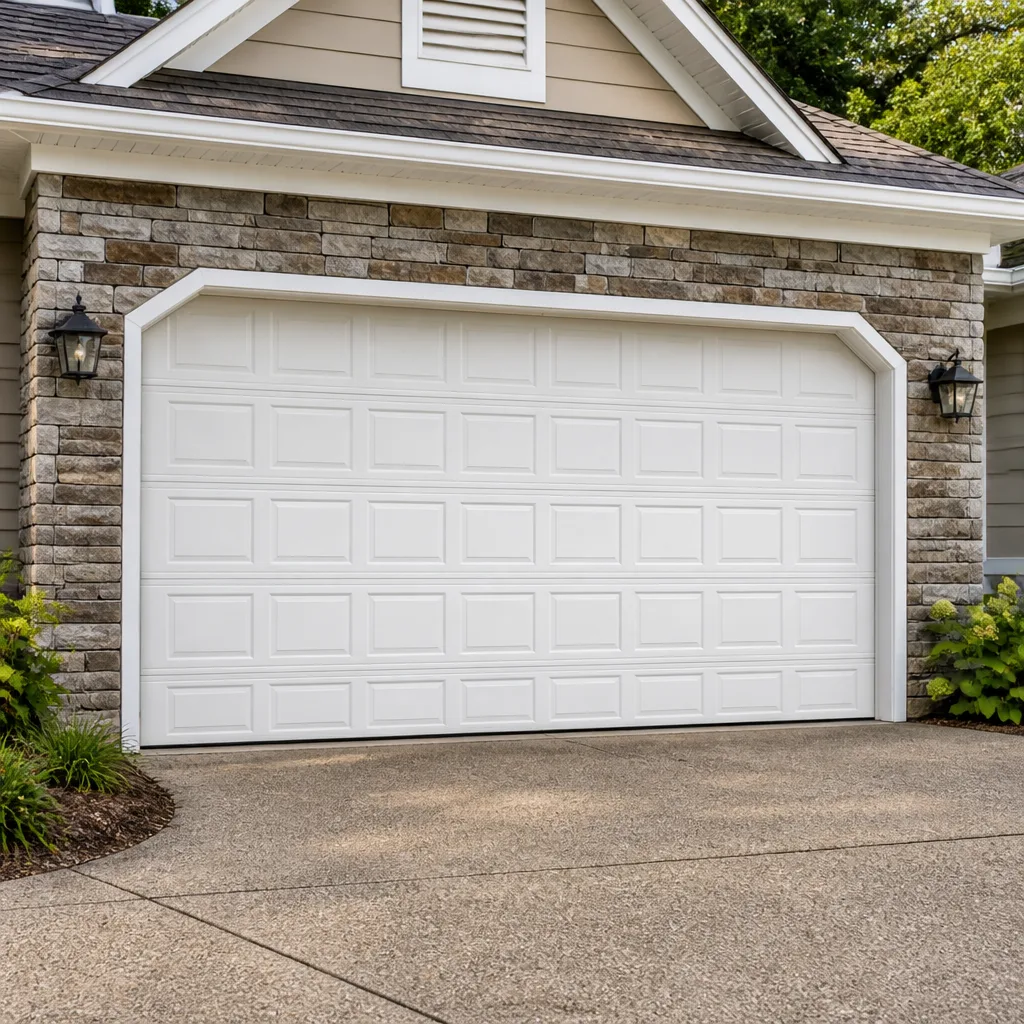 Raised-panel steel
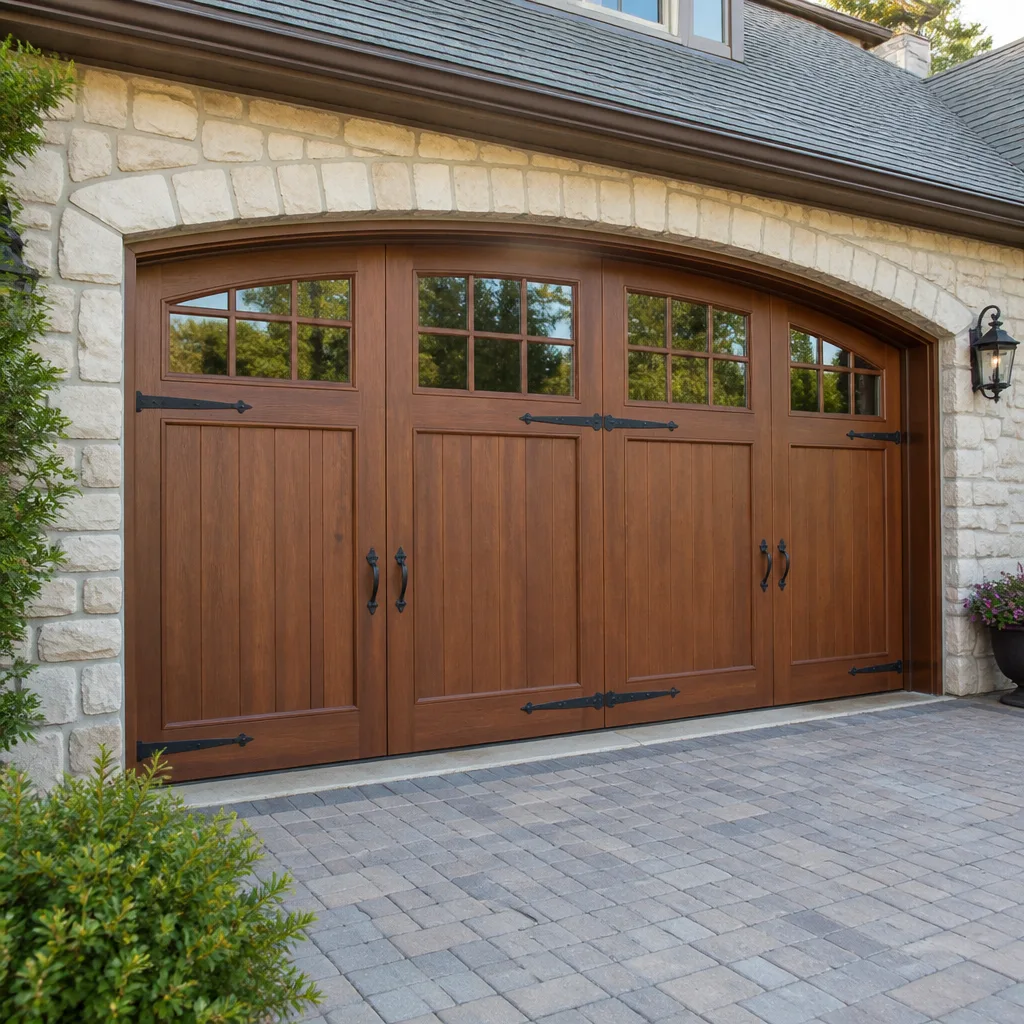 Carriage house
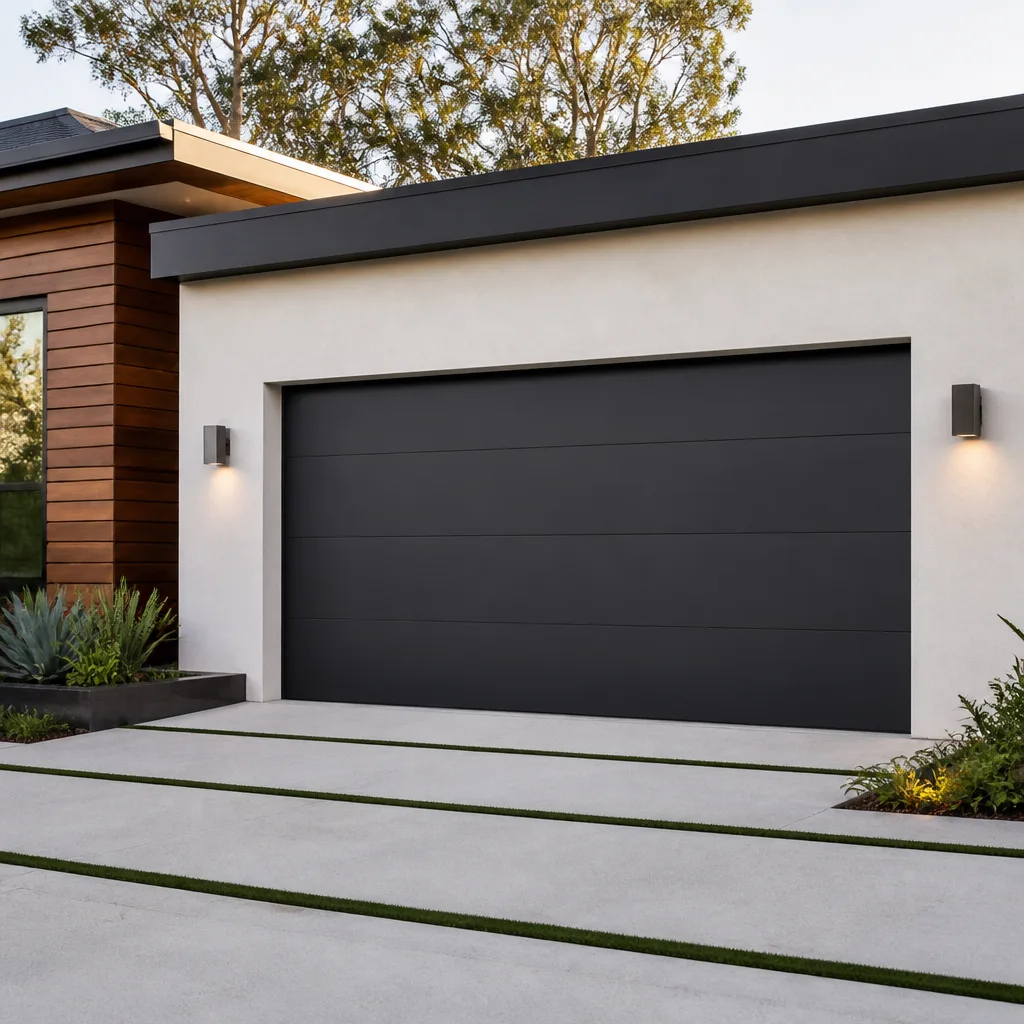 Modern flush
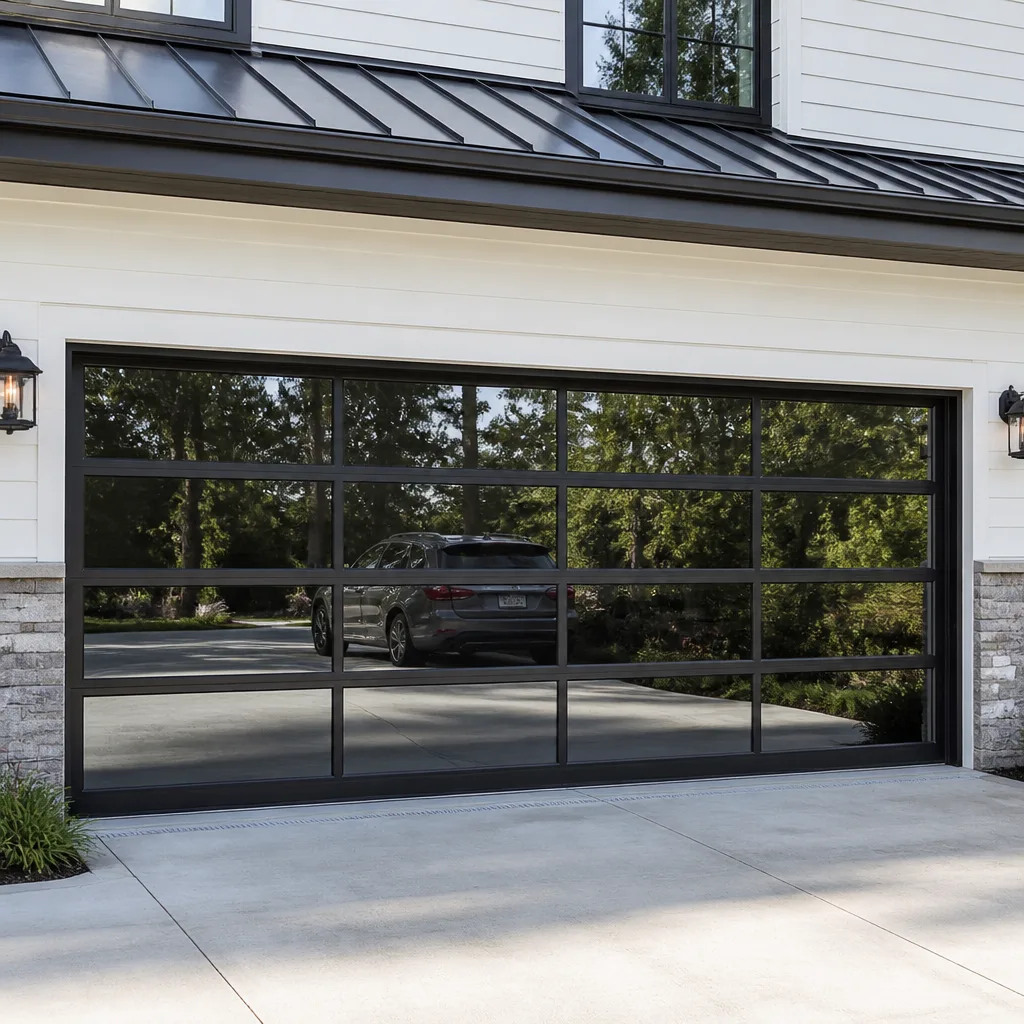 Full-view glass
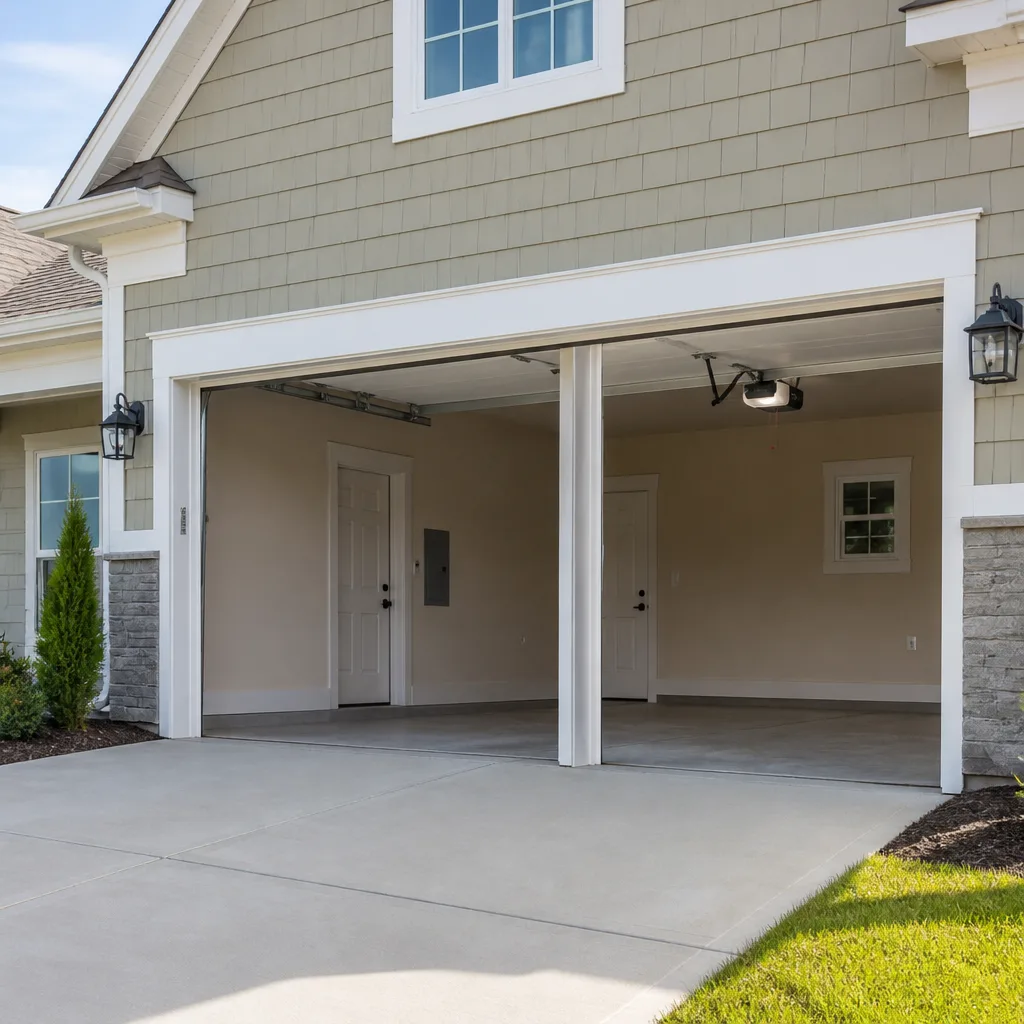 LiftMaster openers
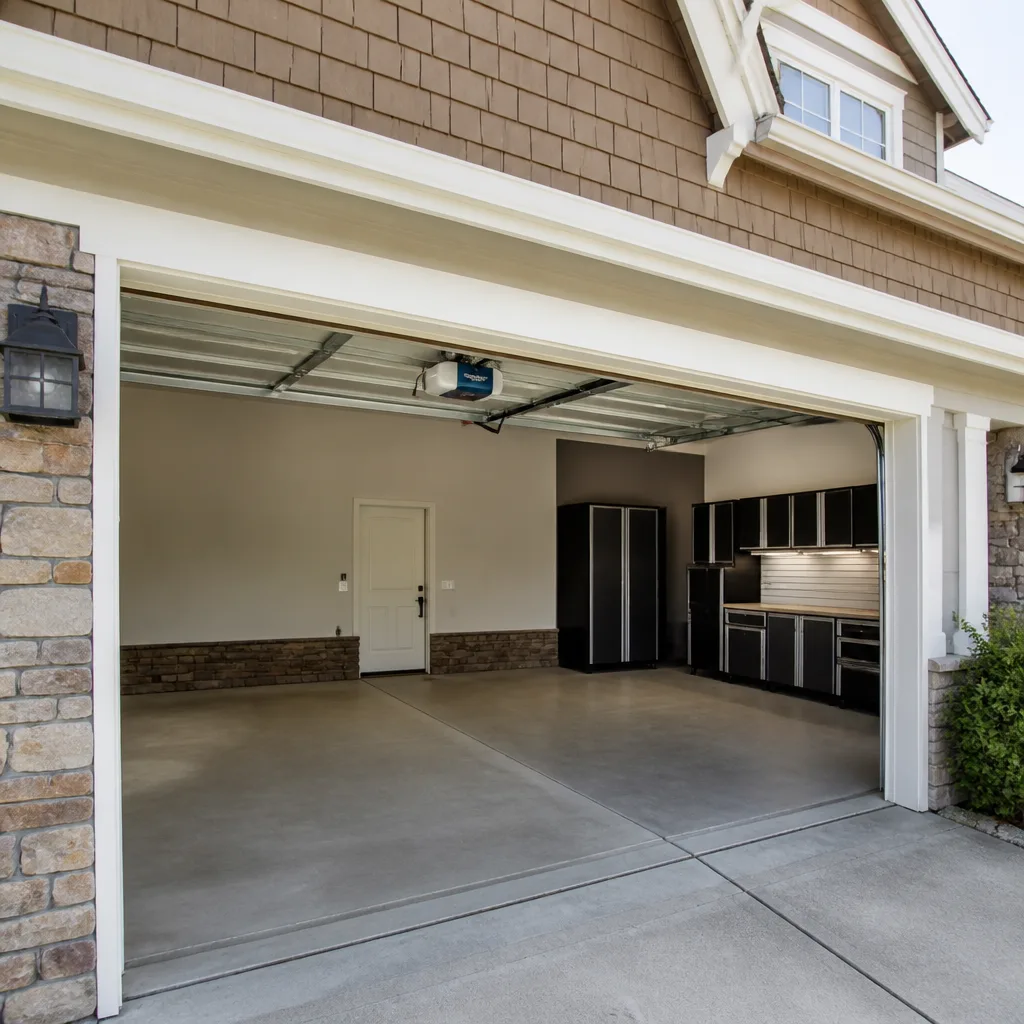 Chamberlain openers
Full 25-point door and opener safety check with every visit - springs, cables, rollers, tracks, and your LiftMaster or Chamberlain opener included
You get a price before we start. It does not change when the pro arrives.
Get your free estimateThe Complete Guide to Garage Doors in Levittown
Most Levittown homes were built with single-car garages designed in the early 1950s, before modern door standards existed. That single fact shapes nearly every garage door question in this town: the opening is narrow, the framing has had decades to settle, and the hardware hanging inside it was never designed for a house that would still be using it in 2026. The result is that generic online guides, which assume an 8-foot-wide opening and a clean, square frame, don’t map onto what most Levittown homeowners actually have. In this guide we’ll walk through how Levitt-era construction changes sizing and replacement, which materials survive Bucks County’s humid summers and freeze-thaw winters, the real difference between attached garages and carport conversions, and when a repair genuinely holds versus when the framing needs attention before any door goes in.
Quick Answer
A garage door in Levittown almost always needs to be measured against the original Levitt-era opening, not a standard spec sheet, because those mid-century garages were built to dimensions that no longer match off-the-shelf door sizes. Springs, openers, and new doors can all be sourced for these homes, but the sizing and tension have to be worked out on site. The short version: expect the measurement step to matter more here than it would on a newer house.
Styles & brands we work with
- Raised-panel steel
- Carriage house
- Modern flush
- Full-view glass
- LiftMaster openers
- Chamberlain openers
Table of Contents
- How Levitt-Era Construction Affects Door Sizing
- Door Styles and Materials That Hold Up in Bucks County
- Attached Garage vs. Carport Conversion: Two Different Jobs
- Torsion vs. Extension Springs, Belt vs. Chain Drives
- Repair That Holds vs. Framing That Needs Attention
- Brand-Agnostic Servicing and What It Means for You
- Common Mistakes to Avoid
- When to Call a Professional
How Levitt-Era Construction Affects Door Sizing
If you’ve tried to price a new door online, you’ve probably noticed every listing assumes a certain width and height. Those are modern nominal sizes. The garages in most of Levittown’s original neighborhoods were built to different proportions, and decades of settling, patched concrete, and remodel work have shifted many of them further. That’s the first thing a technician has to sort out.
What that actually means for a replacement:
- Rough openings aren’t standard. The gap between the framing members where the door sits can be an inch or two off from modern specs in either direction. A door that’s ordered to the wrong dimension either won’t fit or leaves uneven gaps that let weather in.
- Headroom is often tight. The distance from the top of the door to the ceiling determines whether a torsion spring setup (which mounts above the door) or an extension spring setup (which mounts along the tracks) is the right fit. Many Levitt-era garages have less headroom than modern construction.
- Side clearance matters. Torsion springs need room on the sides for the shaft and drums. If the framing is close on one side, the layout has to change.
- Original hardware ages unevenly. Track brackets, hinges, and rollers that were installed together decades ago don’t wear at the same rate. Replacing one part without checking the rest usually shortens the life of the new part.
The practical takeaway is that a proper measure in Levittown isn’t a formality. We measure the rough opening, the headroom, the side clearance, and check whether the frame is square, because those four numbers decide which door and which spring system you can actually use. If you’re working through a repair rather than a replacement, the same principles apply, and our garage door repair work always starts with that measurement conversation.
Why “standard size” is a trap on these homes
Homeowners sometimes assume a door ordered to the closest standard size will just need minor trimming. In practice, a door that’s even slightly oversize or undersize creates problems that show up months later: a gap at the bottom that lets cold air and moisture in, uneven spring tension that wears the opener, or a door that binds against the track. Getting the measurement right the first time is cheaper than correcting it after installation.
Door Styles and Materials That Hold Up in Bucks County
Levittown sits in a part of Bucks County that swings hard between seasons. Summers bring humidity that works on wood and steel alike. Winters bring repeated freeze-thaw cycles, which stress anything that expands and contracts with temperature. The right door material here is one that tolerates both ends of that swing without warping, rusting, or needing constant attention.
Here’s how the common options tend to perform in this climate:
- Steel: The most common choice for replacement doors today. Steel handles humidity well as long as it’s painted or factory-finished, and it resists the warping that wood can develop. Dents from impacts are the main weakness, but they’re repairable.
- Aluminum: Light and rust-resistant, which matters in wet seasons. Good for homeowners who want a lighter door that the opener doesn’t have to work as hard to lift, though aluminum dents more easily than steel.
- Wood and wood-composite: Traditional look that fits the character of many original Levittown homes. Wood needs regular sealing because the humidity and freeze-thaw cycle will find any gap in the finish. Composite products handle this much better than solid wood.
- Insulated vs. non-insulated: For an attached garage that shares a wall with the house, insulation helps keep the garage from becoming a cold sink in winter. For a detached or carport-conversion garage, the benefit is smaller.
Style-wise, the paneled doors that match the original look of a Levitt-built home are still available from major manufacturers like Clopay and Amarr, so you can keep the mid-century appearance without settling for aging original materials. A full installation from one of those lines, properly measured, gives you a door that looks appropriate to the house and holds up to the seasons.
Attached Garage vs. Carport Conversion: Two Different Jobs
Levittown has an unusual concentration of both attached garages and carports that were later enclosed into garages. These two configurations look similar from the street but require different thinking when you’re upgrading or replacing a door, and treating them the same is one of the more common mistakes we see.
Attached garages share at least one wall with the living space. That wall is a thermal boundary, which means the door is part of your home’s envelope. Insulated doors, tighter weather seals, and a properly balanced opener all matter more here because air leaks and heat loss have a direct effect on the rest of the house.
Carport conversions were enclosed after the original construction, often with framing and a header that weren’t designed for the weight and movement of a garage door. That changes the conversation:
- Check the header and framing first. The beam above the opening has to carry the door’s weight and the spring tension. On a conversion, that beam may need reinforcement before any door work begins.
- Confirm the opening was built square. Conversions are sometimes framed to fit the space rather than to standard dimensions, which means measuring is even more important.
- Decide on insulation based on use. A conversion that’s now a workshop or storage space may not need the insulation an attached garage benefits from.
- Verify the opener mount. A conversion’s ceiling structure may not have a solid place to anchor a ceiling-mounted opener, which affects which opener type works.
Getting these things right at the start avoids the situation where a new door is installed into framing that can’t hold it. If you’re not sure which category your garage falls into, that’s worth a conversation before you commit to a door.
Torsion vs. Extension Springs, Belt vs. Chain Drives
Two systems do most of the work on any garage door: the springs that counterbalance its weight and the opener that raises it. On Levitt-era homes, both choices are shaped by the structure around them, so it’s worth understanding the trade-offs rather than defaulting to whatever a catalog suggests.
Spring systems
Torsion springs mount horizontally above the door on a shaft. They’re quieter and more durable, and they suit doors with enough headroom above them. Many Levitt-era garages may have limited headroom, which is where the choice gets interesting.
Extension springs mount along the tracks on either side, running parallel to the door. They work in lower-headroom spaces but need proper safety containment, and they wear differently. Both types are under extreme tension. Springs are a job for a trained technician, not a weekend project, because a spring that releases unexpectedly can cause serious injury.
Opener drives
The opener brands that dominate these homes include LiftMaster, Chamberlain, Genie, and Craftsman, and the drive type matters as much as the brand:
- Belt drive: Quietest option, which matters if the garage is attached to a bedroom wall. Good for the tighter clearances common in these homes.
- Chain drive: More durable and less expensive, but louder. A common choice for detached garages where noise isn’t a concern.
- Screw drive: A middle ground with fewer moving parts, though less common.
Smart and Wi-Fi-enabled openers from LiftMaster and Chamberlain work fine on these homes, but the mounting and the door’s balance have to be right first. An opener that fights an unbalanced door wears out early no matter how good the electronics are. When an opener stops responding or behaves erratically, our garage door opener repair starts with checking the door’s balance before touching the motor.
Repair That Holds vs. Framing That Needs Attention
The most important judgment on an older Levittown home is whether a repair will genuinely solve the problem or whether the structure underneath needs attention first. A new spring, opener, or door installed into failing framing is a repair that won’t last. Here’s how to tell the difference.
Signs a repair is likely sufficient:
- The door moves smoothly by hand (when the opener is disengaged) with no binding or scraping.
- The frame around the opening looks straight and the door hangs evenly.
- The problem is clearly mechanical: a broken spring, a worn roller, a noisy opener, a misaligned sensor.
- No visible rot, sag, or cracking in the header above the door.
Signs the framing needs attention before any door work:
- Sagging above the opening, or a header that looks stressed.
- Visible rot or soft wood around the frame, common on older homes exposed to decades of moisture.
- The door hangs crooked and the track can’t be adjusted to correct it.
- Repeated repairs to the same component (springs failing early, opener straining) suggest a structural cause.
When framing is the underlying issue, the honest answer is that door work waits until the structure is sound. That’s a conversation we have directly with homeowners rather than installing a door into a frame that won’t hold it. Spring work specifically is its own category: our garage door spring repair is handled by trained technicians precisely because the tension involved makes it a high-risk job.
Brand-Agnostic Servicing and What It Means for You
One thing that separates a specialist from a generalist in this trade is whether they’ll work on the system you already have. Single-brand dealers often steer homeowners toward their own product line, which can mean replacing perfectly serviceable hardware just to get service. We take the opposite approach: we diagnose and repair nearly any system a homeowner already owns, and we don’t push a brand switch.
That matters on Levitt-era homes in particular, because the hardware in them is a mix. A door might be an older Wayne Dalton or Raynor, the opener a Craftsman or a LiftMaster installed at some point since, and the springs whatever fit the original framing. Being able to service all of it together means one technician can look at the whole system rather than handing you off.
What we cover:
- Openers and operator systems from LiftMaster, Chamberlain, Genie, and Craftsman, both legacy and current smart/Wi-Fi models.
- Doors from Clopay, Amarr, Wayne Dalton, and Raynor for repair and replacement.
- Springs, tracks, rollers, hinges, and sensors regardless of the original manufacturer.
The benefit to you is that you’re not asked to replace a working door or opener simply because it’s not the brand a particular shop sells. Your door gets diagnosed correctly the first time, and the fix matches the actual problem.
Common Mistakes to Avoid
- Ordering a standard-size door without measuring the opening. Levitt-era garages often don’t match modern nominal sizes, so a door bought off the shelf may fit poorly or not at all. Measure the rough opening, headroom, and side clearance before you buy.
- Treating a carport conversion like a standard attached garage. Conversions often have framing that was never built for the weight and movement of a door. Check the header and structure before any door goes in.
- Attempting spring replacement yourself. Torsion and extension springs are under extreme tension, and a release can cause serious injury. This is a trained-technician job no matter how straightforward a video makes it look.
- Replacing an opener when the door is the real problem. An opener that strains or fails early is often fighting an unbalanced door or worn springs. Fix the balance first, and the opener may work fine.
- Ignoring moisture around the frame. Bucks County’s humid summers and freeze-thaw winters work on older wood framing, and soft or rotted frame members can let a door hang crooked. Address the wood before the door.
- Choosing a wood door without a sealing plan. Wood suits the look of many Levittown homes, but it needs regular sealing to stand up to the seasons. If you’d rather not maintain it, a steel or composite door is the better call.
- Assuming a noisy opener needs replacing. Noise usually comes from worn rollers, loose hardware, or a belt at the end of its life, not the motor itself. Diagnose before you replace.
When to Call a Professional
Some garage door issues are safe to check yourself: a door that won’t close because something is blocking the sensor, a remote that needs a new battery, a track with a visible obstruction. Everything else on a Levitt-era home is worth a professional visit, especially a broken spring, a door that won’t move at all, a door hanging crooked, or anything that looks like framing trouble. If a door fails and traps a car or leaves the house unsecured, emergency garage door service is a real option rather than a vague promise, and getting it back in service is the priority. Levittown Garage Door Repair Co offers free estimates in Levittown. Call (833) 362-9987 and we’ll get you a straight answer on what the job actually needs.
See the difference
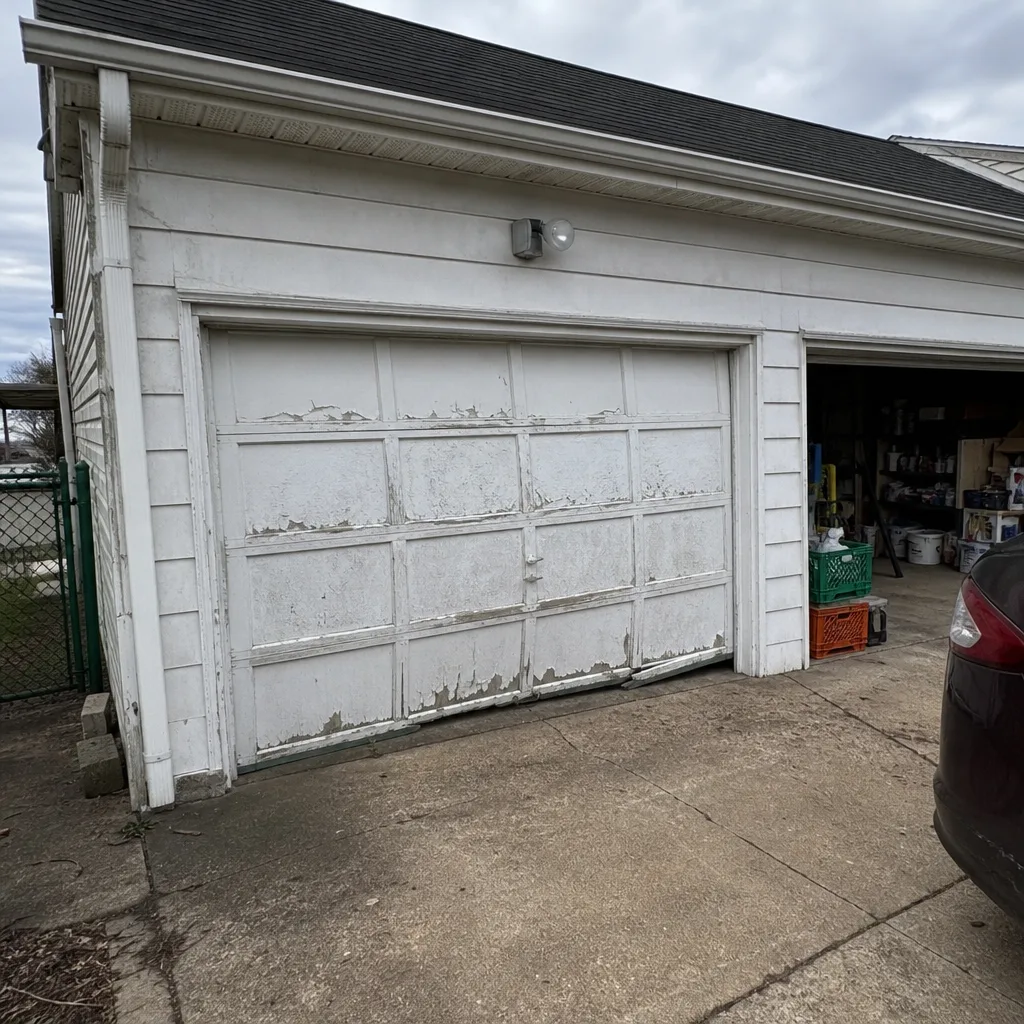 Before
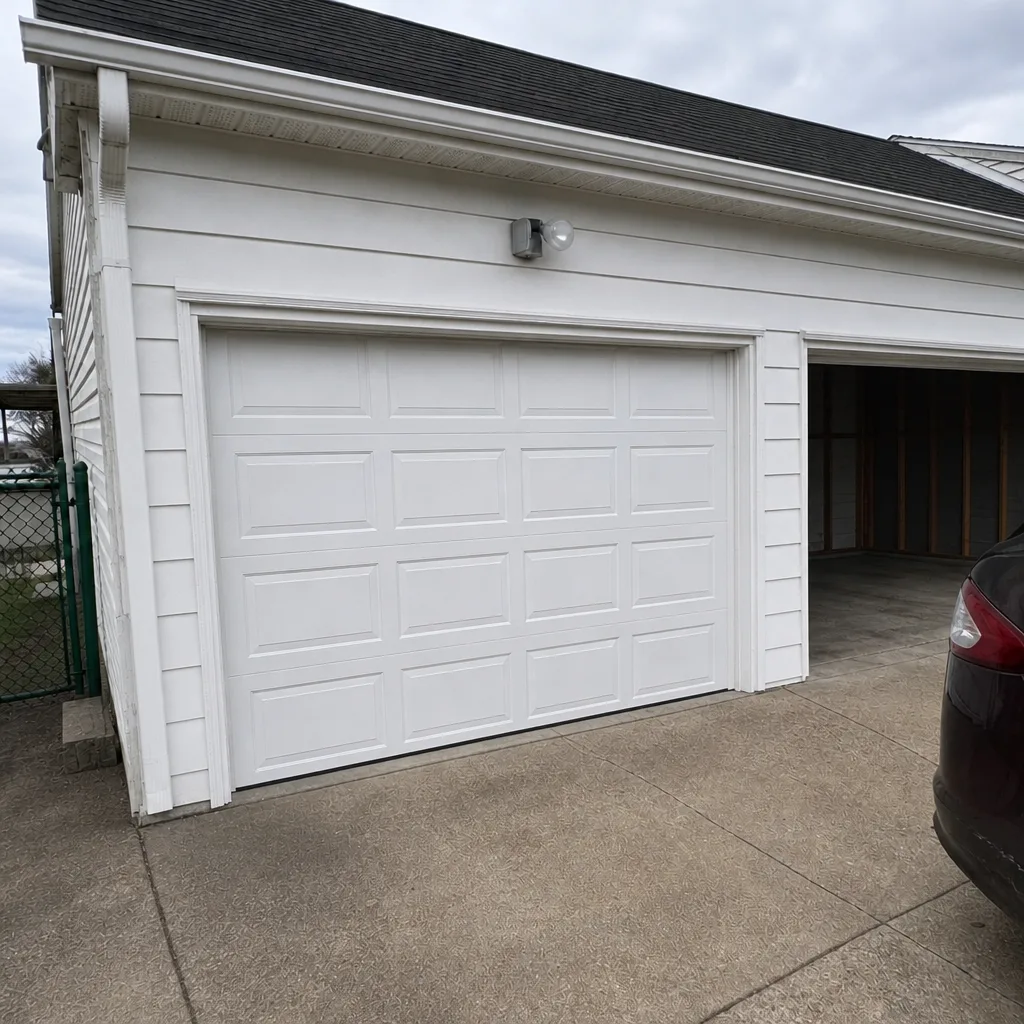 After
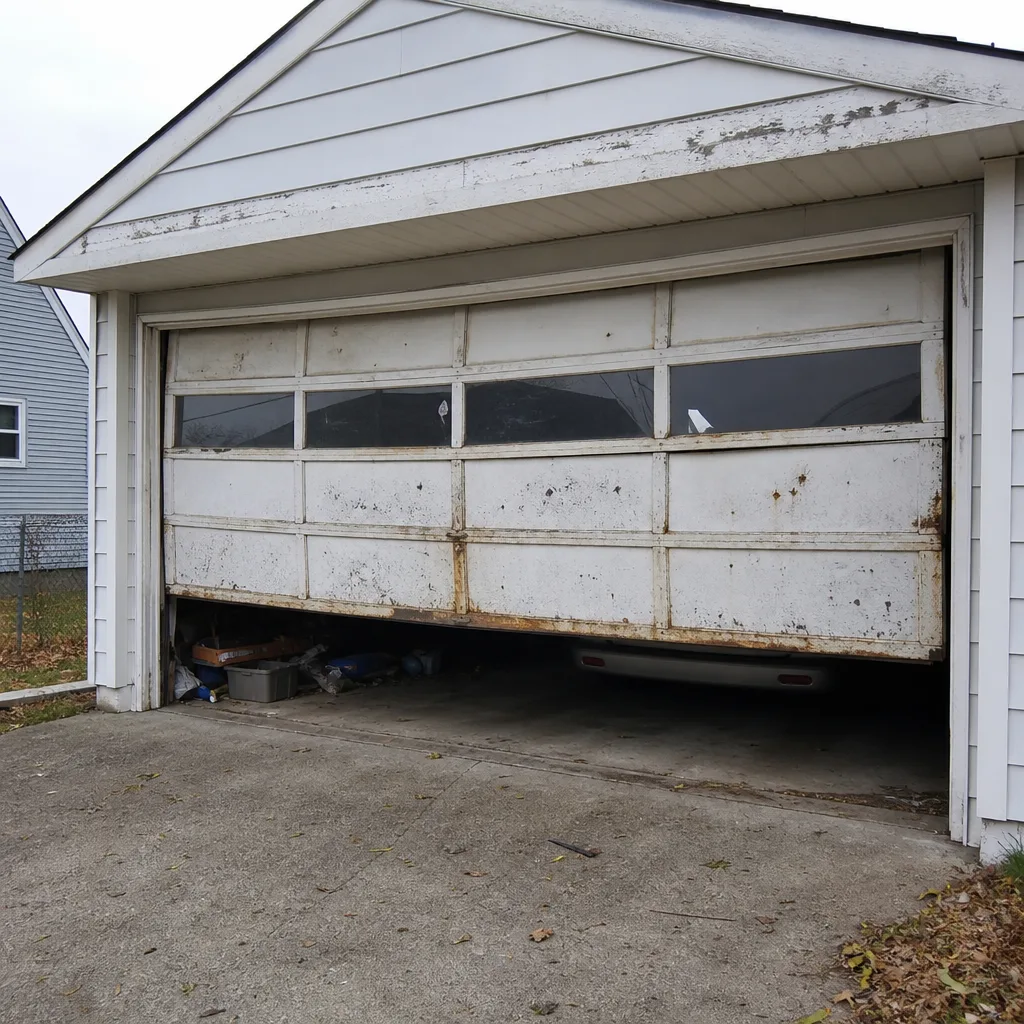 Before
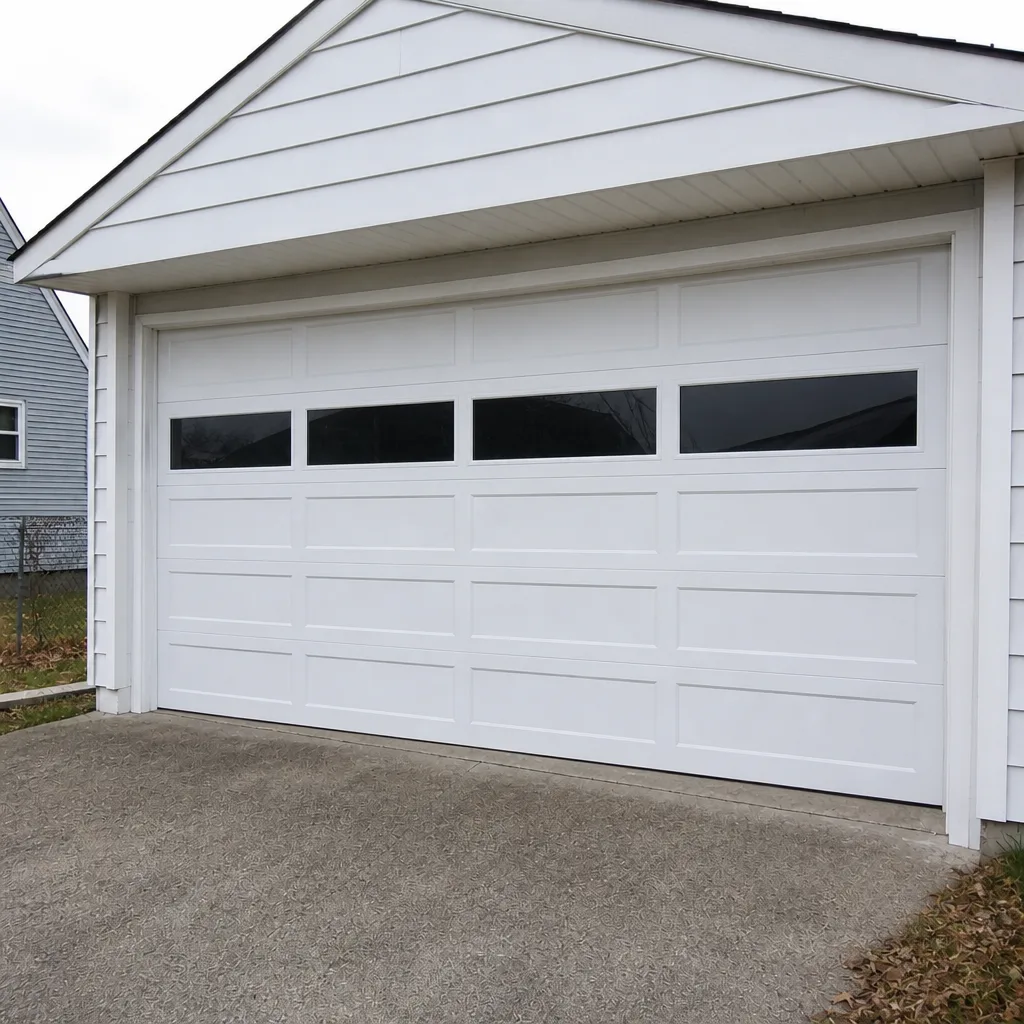 After
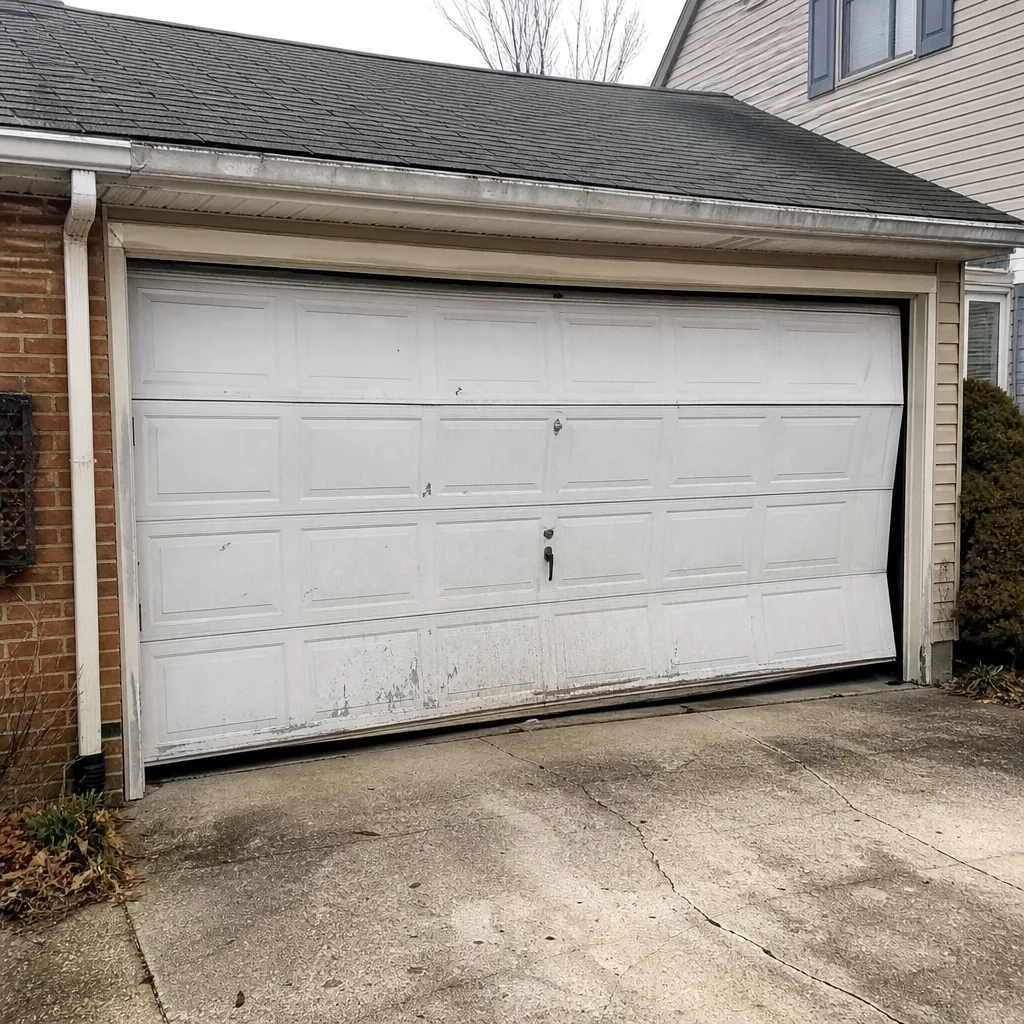 Before
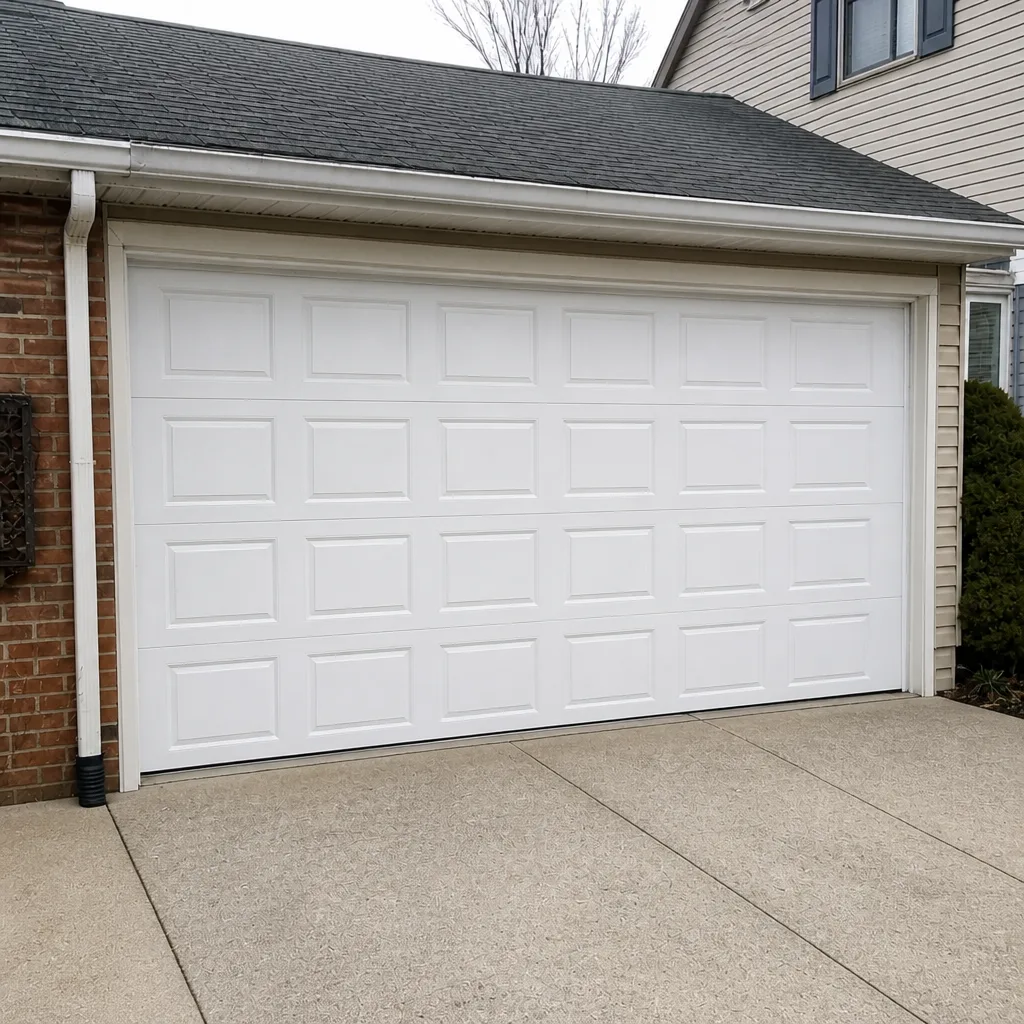 After
Frequently Asked Questions
Because most Levitt-era garages were built to dimensions that don’t match modern standard door sizes, so a standard door often needs adjustment to fit or causes gaps and binding if installed as-is. A proper measure of the rough opening, headroom, and side clearance on site is what determines the right door.
Spring repair is priced per spring and a matched pair is usually replaced together, so a pair costs roughly twice a single spring, and the written estimate sets the final price. Because springs are under extreme tension, this is a trained-technician job. Call (833) 362-9987 for an exact quote. Estimates are free.
Emergency garage door service is available for situations where a broken door traps a car or leaves the home unsecured, and we aim to get you back in service. Call (833) 362-9987 and we’ll confirm the soonest available time.
Torsion springs mount above the door on a shaft and extension springs run along the tracks on either side, and which one fits depends on the headroom and side clearance your garage actually has. On Levitt-era homes that’s a measurement question, not a preference.
Often the opener can be repaired, especially if the real problem is a door that’s out of balance or worn springs the opener is fighting. We check the door first, then the opener, so you’re not paying to replace a part that isn’t the cause.
Yes. We service systems from LiftMaster, Chamberlain, Genie, Craftsman, Clopay, Amarr, Wayne Dalton, and Raynor, so whatever is already on your Levittown home can be diagnosed and repaired without being pushed toward a brand switch.
The Bottom Line
Garage doors on Levittown’s Levitt-built homes have their own rules: narrow, non-standard openings, tight headroom, and framing that’s had decades to settle. Sizing has to come before shopping, materials have to survive humid summers and freeze-thaw winters, and carport conversions need the framing checked before a door goes in. Springs are always a trained-technician job, and an opener that seems to be failing is often just fighting an unbalanced door. When a repair holds and when the frame needs attention is the judgment that saves you money. If you’re not sure which situation you’re in, that’s exactly the conversation to have before you spend anything.
Contact Us for a Free Estimate
Whether it’s a broken spring, an opener that’s quit, or a full replacement on your Levitt-era garage, Levittown Garage Door Repair Co is here to diagnose it correctly the first time and get you back in service. We work on the brand you already have and quote the price before any work starts. Call (833) 362-9987 for a free estimate.
Written by the team at Levittown Garage Door Repair Co.