Last updated November 23, 2026
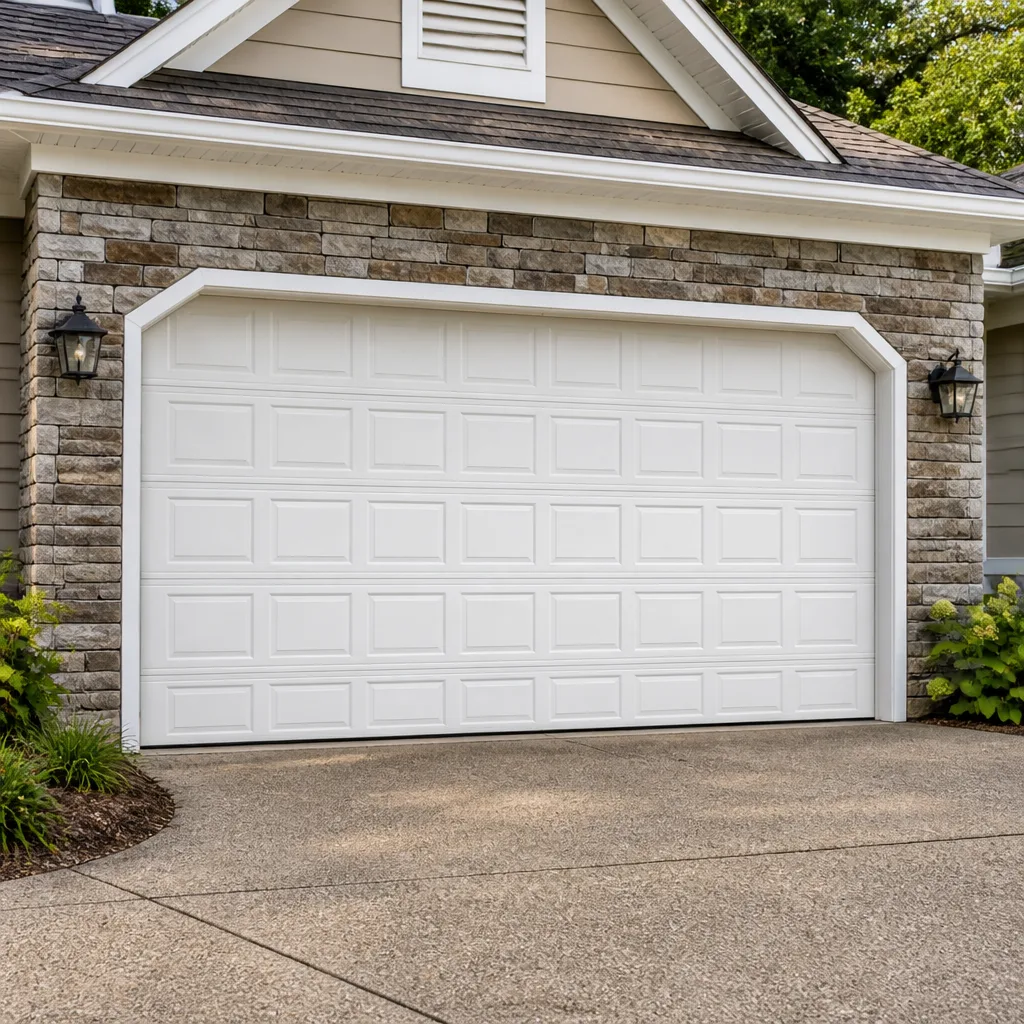 Raised-panel steel
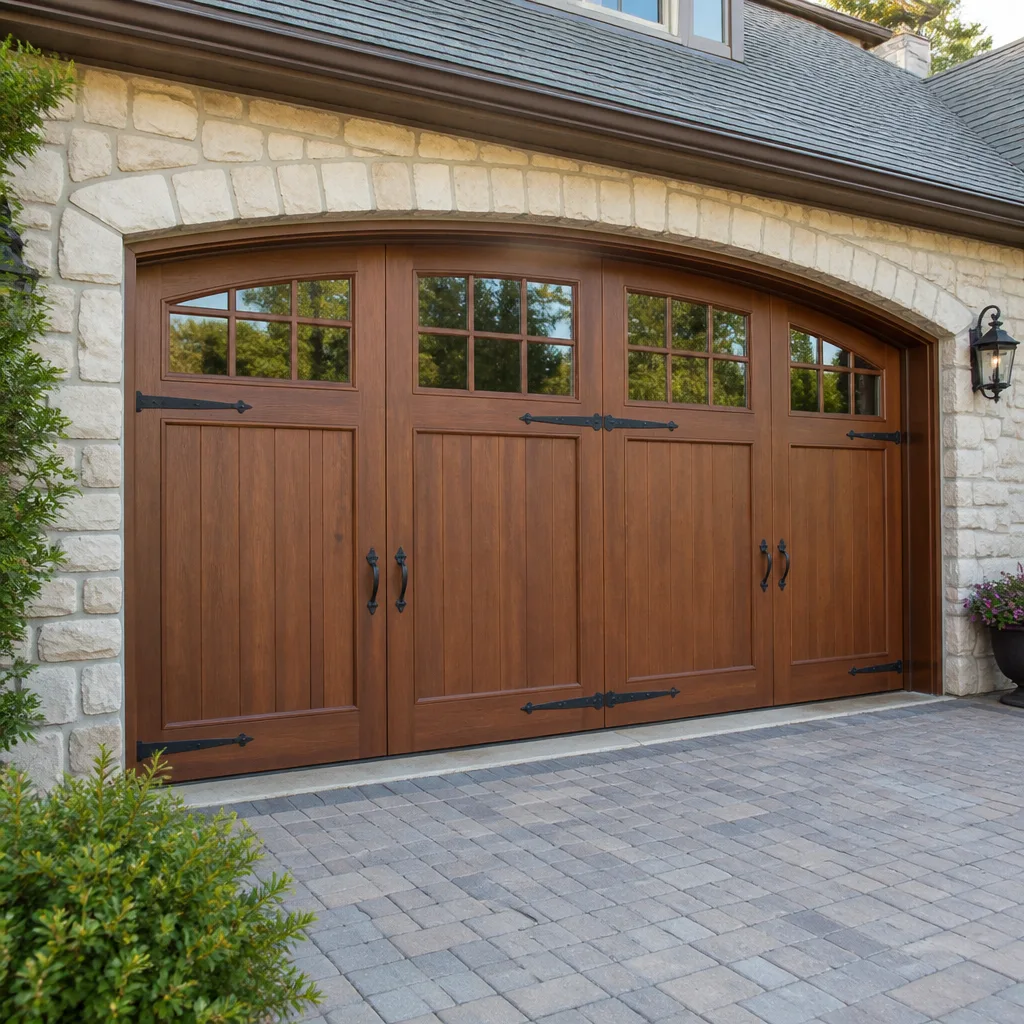 Carriage house
 Modern flush
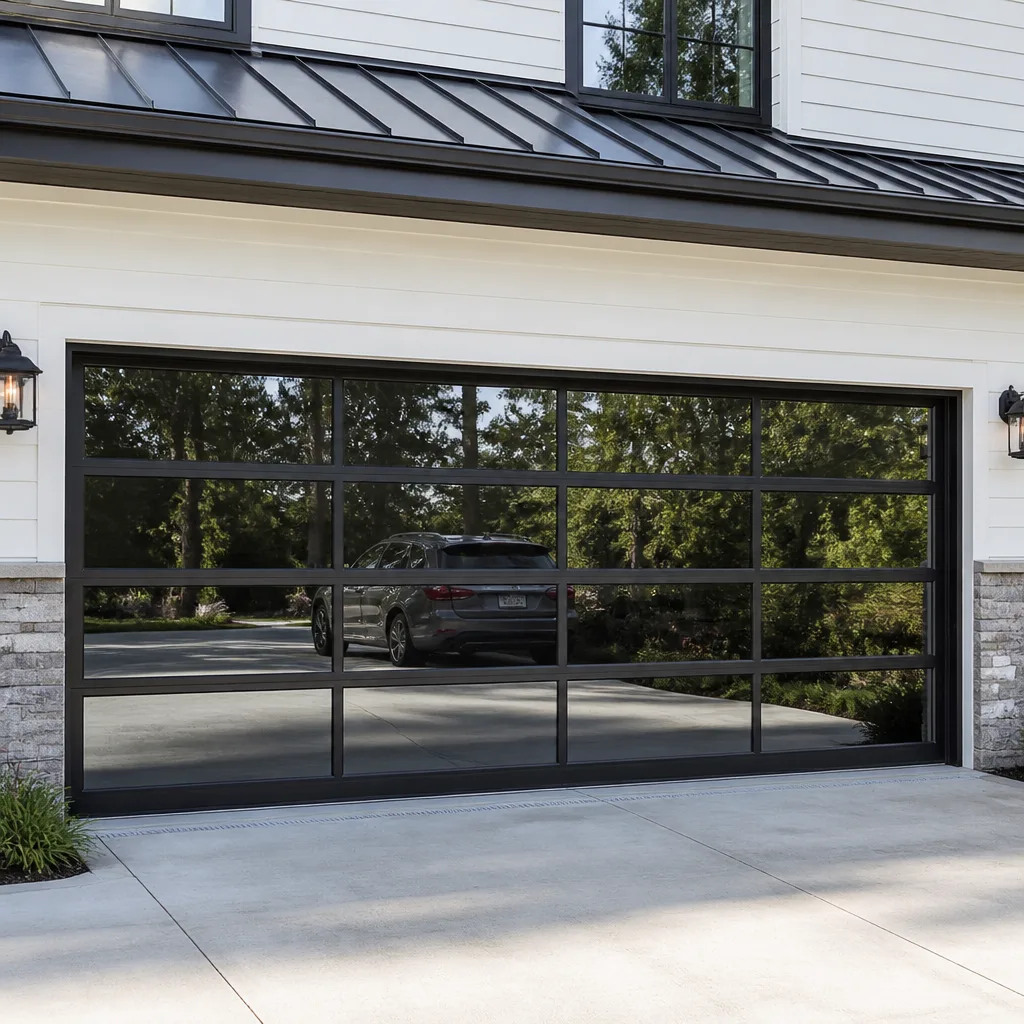 Full-view glass
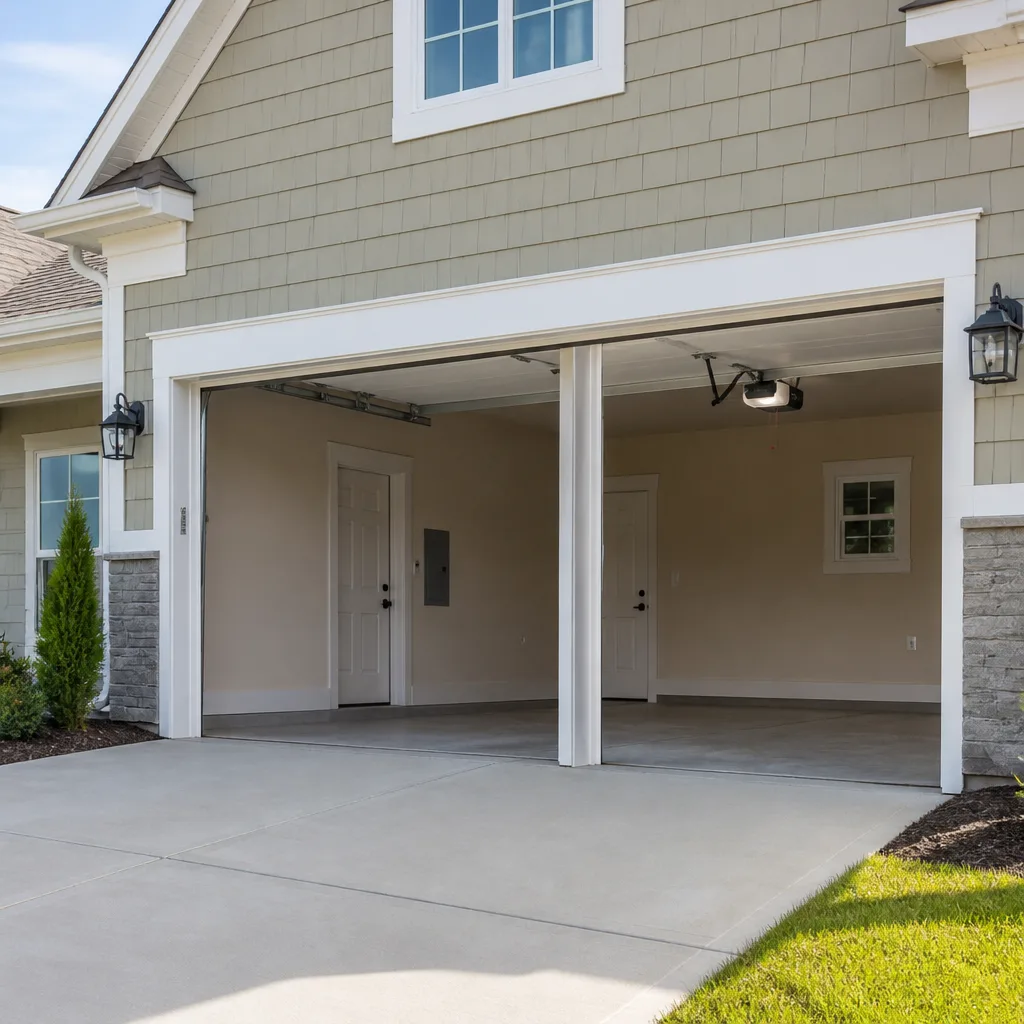 LiftMaster openers
 Chamberlain openers
Full 25-point door and opener safety check with every visit - springs, cables, rollers, tracks, and your LiftMaster or Chamberlain opener included
You get a price before we start. It does not change when the pro arrives.
Get your free estimateGarage Door Emergency Preparedness Guide for Levittown Homes
Most garage door emergencies we hear about in Levittown aren’t really about the door at all. They’re about a homeowner standing in a dark garage after a Nor’easter has knocked out power, pulling on a handle that won’t budge, with a car trapped inside and no idea that a red cord hanging a few feet away is the answer. A snapped spring is inconvenient. A door you can’t release is a genuine bind. This guide covers the three things worth knowing before something breaks: how to manually release your door, whether your car is actually trapped, and who to call when both answers matter at 11pm. None of it takes a toolbox to learn.
Quick Answer
Garage door emergency preparedness in Levittown comes down to knowing your manual release, recognizing when a door is unsafe to touch, and having a repair contact saved before you need it. If your door is stuck open, unsecured, or trapping a car, that’s a true emergency. A door that closes slowly, squeaks, or has one dead opener remote is not – it’s a next-day problem. When in doubt, keep hands and feet clear of a door with a broken spring and call for a diagnosis.
Styles & brands we work with
- Raised-panel steel
- Carriage house
- Modern flush
- Full-view glass
- LiftMaster openers
- Chamberlain openers
Table of Contents
- How do you manually release a garage door during a power outage?
- Can you lift a garage door by hand when a spring is broken?
- What do you do when the door is stuck open in winter?
- Is it an emergency or a next-day job?
- Notes for the opener models common in Levittown homes
- Build a one-page garage reference card
- Common mistakes to avoid
- Frequently asked questions
How do you manually release a garage door during a power outage?
Every residential garage door opener has a manual release, and nearly every one of them works the same way: a red cord or handle hangs down from the trolley that connects the door to the opener rail. Pull straight down on that cord, and the door disconnects from the operator so you can lift it by hand. That’s the whole mechanism. The confusion comes from not knowing where the cord is, or finding it jammed, or pulling at an angle that binds the trolley instead of releasing it.
Here’s the sequence we walk homeowners through over the phone, in order:
- Pull the opener’s power cord from the ceiling outlet, or switch off the breaker feeding the garage. This stops the operator from running while the door is disconnected.
- Find the red emergency release cord hanging from the trolley on the rail. Most are red, but older units sometimes use a different color – look for a rope or handle with a tag near the center of the rail.
- Pull straight down with steady pressure, not a sharp yank. The trolley should release with a click.
- Lift the door slowly by the bottom section using both hands, keeping fingers away from the section joints. A balanced door should lift with moderate effort and stay put once you let go.
- Reconnect carefully later. Once power returns, push the trolley back toward the door and pull the release cord again to re-engage, or cycle the opener per your manual. If the trolley won’t re-engage, don’t force it.
Two caveats matter in Levittown. First, cordless and wall-mounted jackshaft openers have a different release – usually a lever on the side of the unit or a chain hoist – so check your manual if you don’t see a hanging cord. Second, if the door won’t lift with reasonable effort after you’ve pulled the release, stop. That resistance usually means a spring or cable problem, not a power problem, and forcing it can drop a door on you.
Can you lift a garage door by hand when a spring is broken?
Sometimes, yes – and sometimes it’s genuinely dangerous. A torsion or extension spring is what makes a 150-pound door feel like 15. When one breaks, that counterbalance is gone, and you’re lifting the full weight of the door. For most single-car doors, a healthy adult can open and close the door manually in this state if they go slowly and keep the door balanced. For double-car doors, or doors with both springs gone, it’s more weight than one person should handle alone, and the door can come down hard if you lose your grip.
Here’s the honest breakdown of when manual operation is possible versus when we’d tell you not to touch it:
- Possible with care: A single-car door with one broken spring, lifting and lowering slowly with both hands, keeping the door fully open (propped) or fully closed (latched). Never leave it half-open.
- Stop and call: A door that feels out of balance – one side heavier, the door racking to the left or right as you lift. That usually means a broken cable or a bent track, and lifting it can drop the door off the rails.
- Never touch: Visible snapped cable strands, a spring that has separated from its anchor, or a door stuck at an angle. These are calls to a professional, not to a ladder.
We handle springs as a dedicated service for exactly this reason. Torsion springs sit under extreme tension, and the wind-up and wind-down process has real injury potential if you don’t know the tools and the sequence. Our technicians have up to 11 years of experience with the high-tension side of the trade, which is why garage door spring repair is a service we take seriously rather than a side job. If your spring has snapped, keep the door closed if you can and call for a diagnosis – we’ll tell you honestly whether it’s safe to use the door in the meantime.
What do you do when the door is stuck open in winter?
A door stuck open during a Levittown cold snap is a security problem before it’s a comfort problem. The garage is now an open invitation, the furnace in some homes vents through the garage, and anything stored in there is exposed to the weather. The good news: you can secure the space temporarily while you wait for a repair appointment, and it doesn’t require any tools you don’t already have.
A few temporary measures that work while you wait:
- Block the opening from the inside. A sheet of plywood, a moving blanket tacked across the frame, or even a stack of heavy storage bins across the opening cuts visibility and slows casual access. It won’t stop a determined intruder, but it removes the “open door” signal.
- Move valuables out of the garage. Tools, bikes, and anything else of value relocate to the house until the door is fixed.
- Padlock the door’s bottom bracket if it’s reachable. A c-clamp or padlock through the track, at the point where the bottom roller sits, prevents the door from being lifted higher.
- Park the car outside if you can. A car parked outside overnight is a mild inconvenience; a car exposed inside an open garage is the same risk plus a door that could drop on it if the spring or cable fails further.
Cold weather is hard on garage door hardware because the metal contracts and lubricant thickens. If your door starts to bind or hesitate in January, that’s usually a sign the rollers or hinges need attention, not that the door needs replacing. Our garage door repair work in Levittown often starts with a simple lubrication and track adjustment that gets homeowners through the winter without a full spring or cable replacement.
Is it an emergency or a next-day job?
This is the question we wish more homeowners asked before calling at 2am. An emergency is a situation where the door creates a safety risk or traps you. A next-day job is anything that’s annoying but stable. The distinction saves you money on after-hours fees and gets the truly urgent calls handled faster.
Here’s how we draw the line:
- True emergency: A car trapped inside the garage (someone needs to get to work, a medical appointment, a kid at school pickup). A door stuck open with the home unsecured and no way to close it. A door that has come off its track and is hanging or propped at an angle – that’s a hazard and needs hands-off treatment until a technician arrives.
- Next-day job: A door that closes fine but makes noise. One remote or wall button that has stopped working while the others are fine. A door that reverses too quickly and needs an opener adjustment. A door with a slow opener motor that still functions.
- Call today, book when we can: A snapped spring with the door still closed and locked. A cable that’s frayed but not failed. A door that needs a new opener or a full replacement – that’s scheduled work, not emergency work, and gets a free measure and written quote.
If you’re not sure which category you’re in, call and describe the symptoms. We’ll tell you whether it’s a back-in-service-today situation or something that can wait for a scheduled visit. That conversation is free, and it’s often the thing that keeps a homeowner from panicking about a door that would have been fine until morning.
Notes for the opener models common in Levittown homes
Levittown’s housing stock includes a lot of mid-century and later construction, and the openers in those garages run the gamut from 1990s chain-drive units to current Wi-Fi-enabled smart models. The good news is that the manual release mechanism is broadly similar across the major brands we work on – LiftMaster, Chamberlain, Genie, Craftsman, and the rest – so the emergency release procedure from the last section applies to nearly all of them. What changes is how you reconnect after a power outage and where the release lives on the unit.
A few notes worth taping inside the garage:
- Chain-drive and belt-drive units (common Craftsman and Chamberlain models) use the standard hanging red cord from the trolley. Reconnection is usually a matter of pushing the trolley back and pulling the cord again.
- LiftMaster and Chamberlain units with MyQ sometimes show a “door not connected” state after reconnection. Cycling the opener once and confirming the trolley is fully engaged usually clears it.
- Jackshaft openers (mounted on the side of the door) use a chain hoist or a lever rather than a hanging cord. If you have one, read the release instructions on the unit itself before an outage – not after.
- Older Genie units occasionally have a release cord that hangs from an older-style trolley with a spring clip. If the cord pulls but the door doesn’t disconnect, the clip may be bent; that’s a service call, not a DIY fix.
We work on the brand you already have, which matters for older Levittown garages where a perfectly serviceable opener just needs a part or a sensor. Our garage door opener repair covers both older legacy systems and current smart models, so you don’t need to find a second contractor to keep the opener going after a manual release episode.
Build a one-page garage reference card
This is the practical takeaway. Take 15 minutes on a calm afternoon and put together a single laminated or taped-up reference card inside the garage. When something actually goes wrong, you won’t be searching for a phone number in the dark.
What to put on the card:
- Your opener’s release method. Where the cord or lever is, and what the reconnection step looks like. For most Levittown homes, “red cord from trolley” is enough; for a jackshaft unit, write it out.
- Your local repair contact number. Save it as a contact in your phone and write it on the card. Ours is (833) 362-9987.
- A short safety reminder. “If the door is off track or a cable is snapped, don’t touch it. Call.”
- Your door’s make and model, if you can find it. A sticker on the opener housing or the door jamb usually has it. That saves time on diagnosis.
- The breaker location for the garage, in case the opener needs to be killed quickly.
Laminating it or sealing it in a ziplock bag keeps it readable through damp Levittown winters. A spare copy in the glove box of each car covers the “trapped in the garage” scenario too, since the card is the thing you’ll want when you can’t get out.
Common mistakes to avoid
- Yanking the emergency release while the door is under power. Pull the power first, then the cord. Running the operator with the trolley disconnected can damage the opener or leave the door in a state that’s hard to reset.
- Forcing a door that feels heavy. If it takes real effort to lift, the spring or cable has likely failed. Forcing it can drop the door on you or bend the track beyond repair.
- Leaving the door half-open on a broken spring. A door held up by nothing but friction can slide down without warning. Open it fully (and prop it) or keep it fully closed and latched.
- Not testing the manual release. Pull it once a year with the door closed, on a calm afternoon, and reconnect it. You’ll learn your specific mechanism while the stakes are low.
- Ignoring a noisy door. A squeak or a grind is much cheaper to fix than a door that fails at rush hour. Regular lubrication and a track check go a long way in Levittown’s humidity swings.
- Calling an emergency line for a non-emergency. A next-day issue at 2am costs more and delays the technician who’s handling a genuine trapped-car call. Describe the symptoms and let us triage.
- Not knowing the model. The make and model sticker on the opener or door saves diagnostic time. Snap a photo of it before you need it.
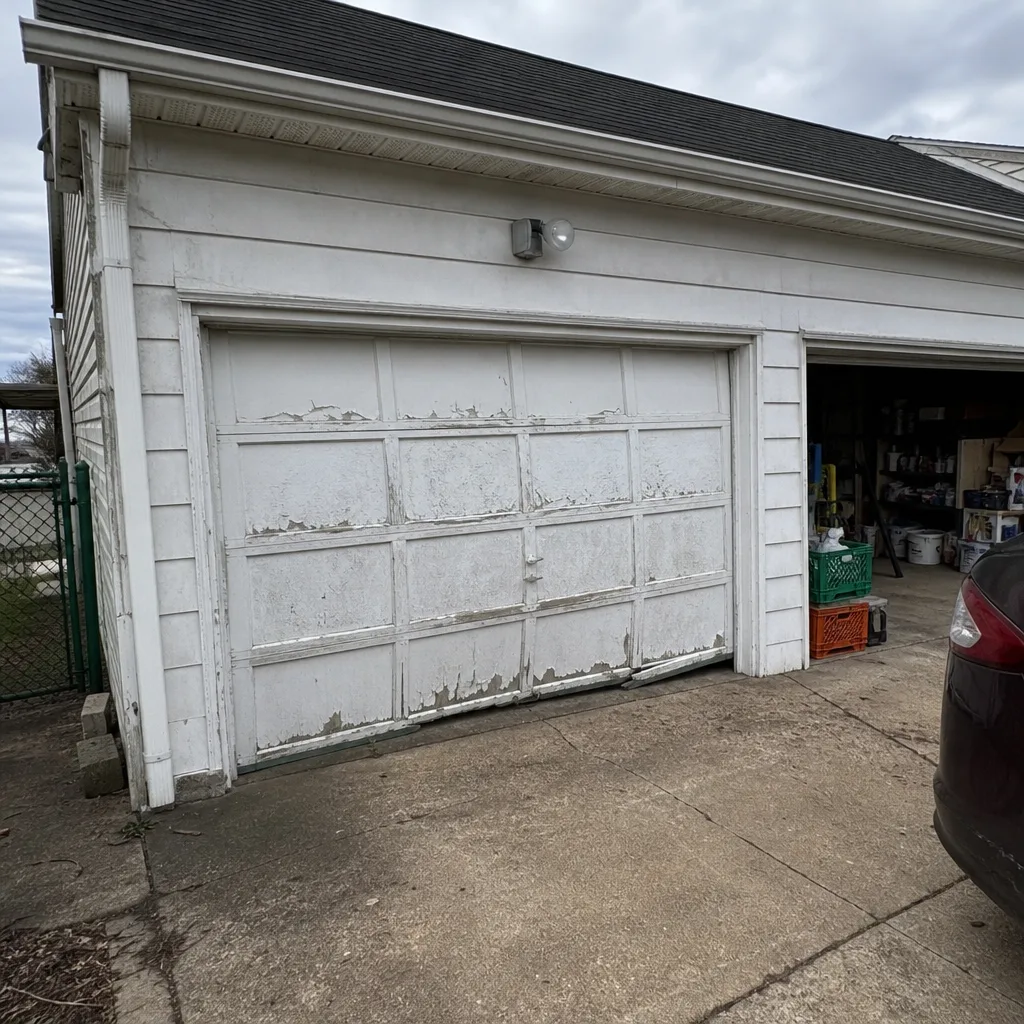
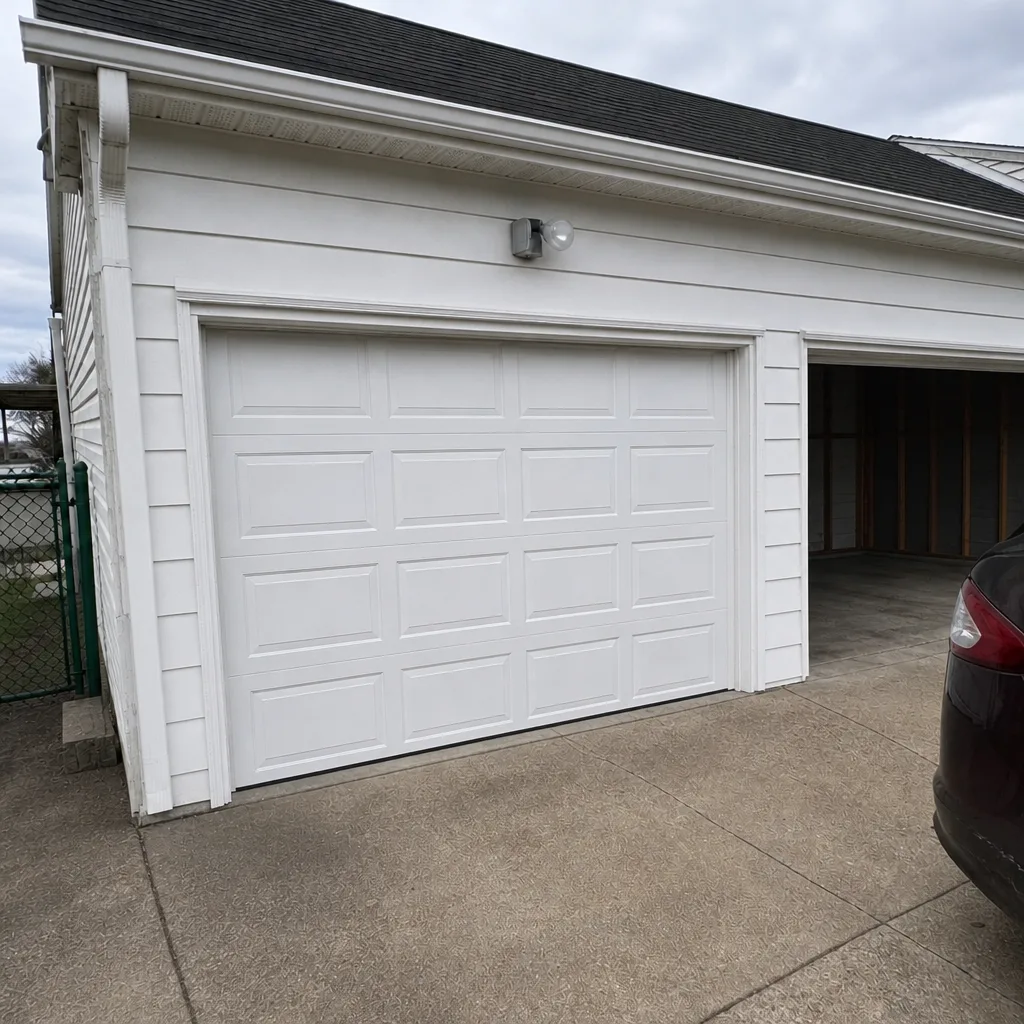
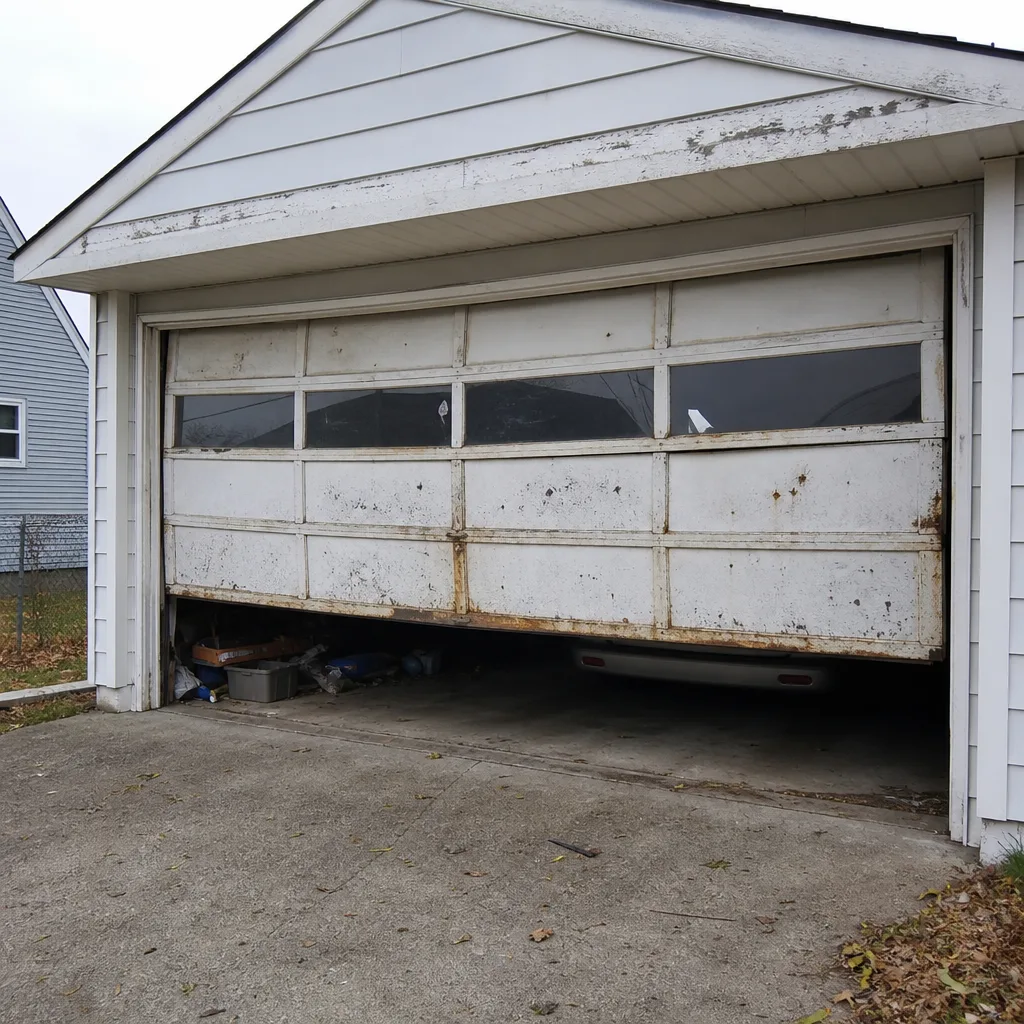
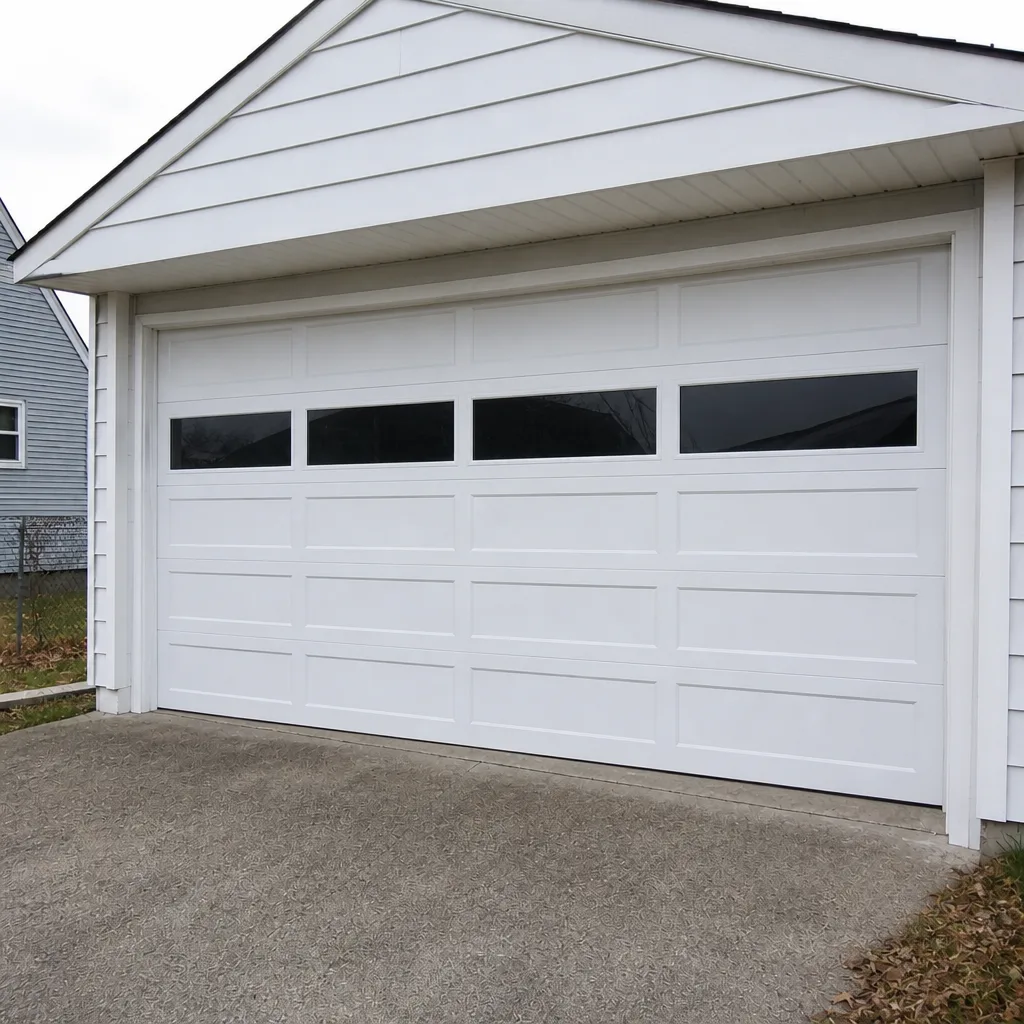
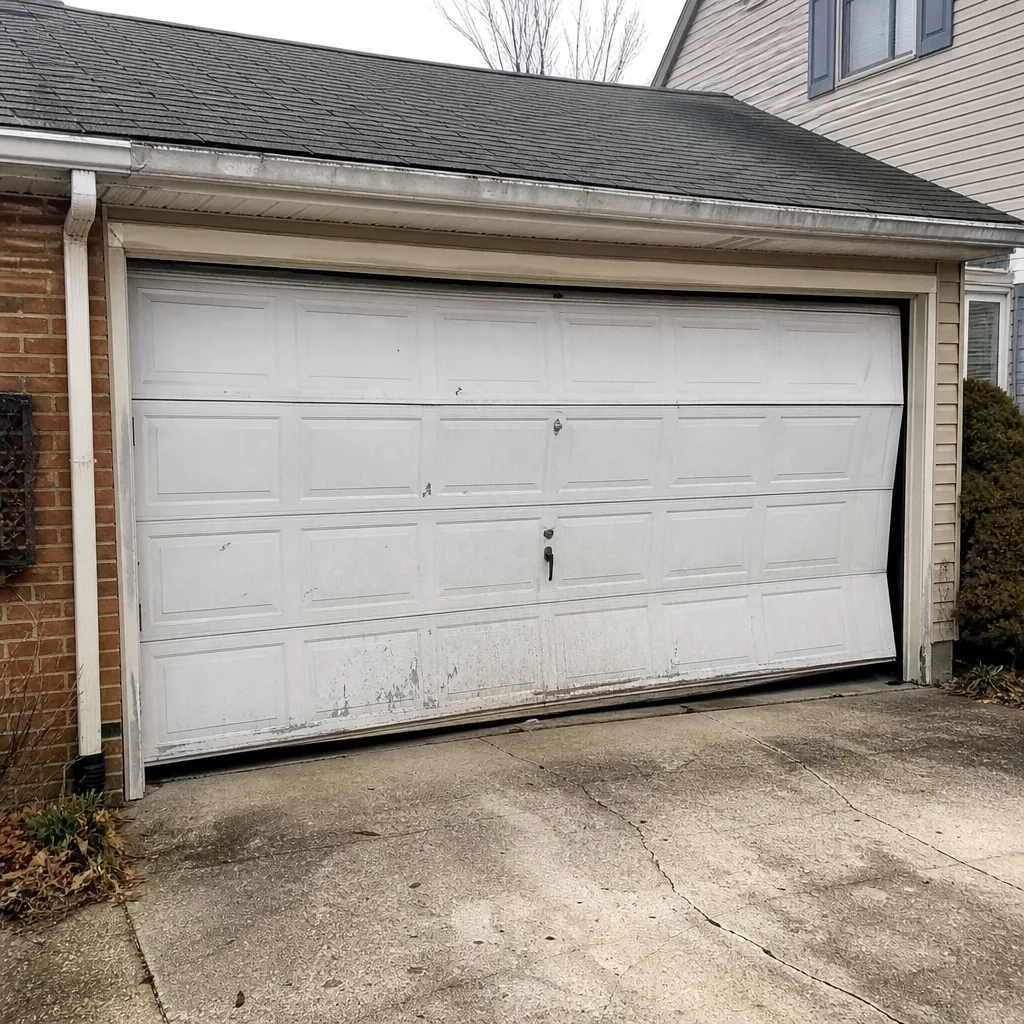
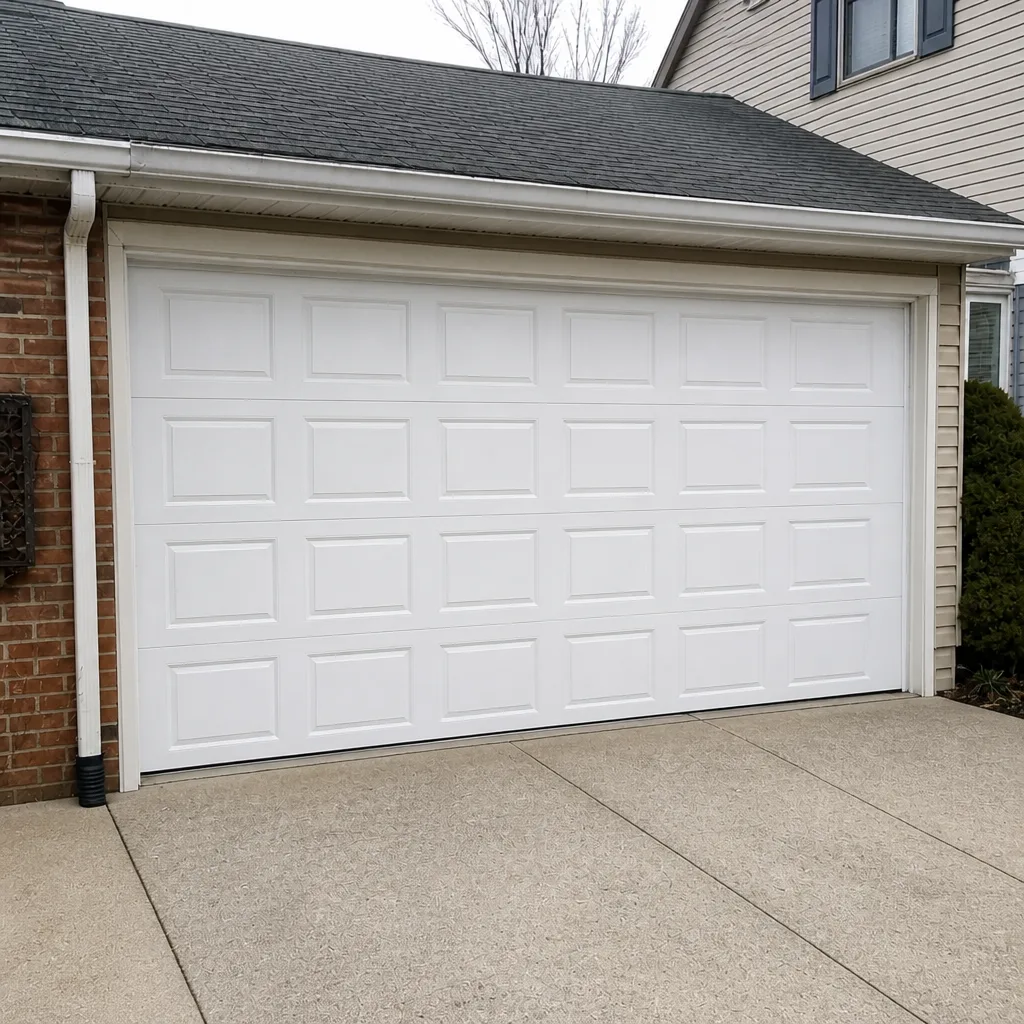
See the difference
 Before
 After
 Before
 After
 Before
 After
When to Call a Professional
Call us when the door is trapping a car, when it’s stuck open and you can’t secure the home, when a spring or cable has visibly failed, or when the door has come off its track and is hanging. Those are the situations where waiting costs more than calling. Also call when the door sounds wrong, when a remote or wall button stops responding while others work, or when you’re not sure whether a repair or a replacement is the right move. Levittown Garage Door Repair Co offers free estimates in Levittown – call (833) 362-9987 and we’ll tell you what we’re seeing and what it takes to get the door back in service. For complete replacements, the conversation starts with a free measure and a written quote, so you’ll know the cost before any work begins.
Frequently Asked Questions
Pull the opener’s power cord from the outlet or switch off the breaker, then pull straight down on the red emergency release cord hanging from the trolley on the rail. The door disconnects from the opener and you can lift it by hand, slowly and with both hands. Once power returns, push the trolley back and pull the cord again to re-engage, or follow your opener’s reconnect instructions. If the cord doesn’t release, don’t force it – call (833) 362-9987 for a diagnosis.
Sometimes, with care: a single-car door with one broken spring can often be lifted manually if you go slowly, keep it fully open or fully closed, and never leave it half-open. Double-car doors, doors with both springs gone, or any door that feels out of balance or racks to one side should not be operated by hand – the door can come down hard. Springs sit under extreme tension, so call for a same-day diagnosis rather than attempting a repair yourself.
It’s an emergency if the door is trapping a car, stuck open with the home unsecured, or off its track and hanging. It’s a next-day job if the door still opens and closes safely and the problem is noise, one dead remote, or a slow opener. Call (833) 362-9987 and describe the symptoms – we’ll tell you honestly which category you’re in, and estimates are free.
Cost depends on the part that failed – a spring, a cable, a roller, or an opener – and the written estimate sets the final price before any work starts. Typical repair ranges vary by job type, and a spring is usually replaced as a matched pair, so a pair costs roughly twice a single-spring quote. Call (833) 362-9987 for a free estimate; we’ll walk you through what’s needed and what it costs before we touch the door.
Cold weather makes metal contract and thickens the lubricant in the rollers and hinges, which increases resistance in the door’s travel. Springs also weaken slightly in the cold, and a spring that’s near the end of its life is more likely to snap in a January cold snap. Lubrication and a track check before winter go a long way. If the door starts to bind or hesitate, call (833) 362-9987 – a simple adjustment is cheaper than a full repair.
Almost certainly. We work on the brand you already have, including LiftMaster, Chamberlain, Genie, Craftsman, Clopay, Amarr, Wayne Dalton, and Raynor – both older legacy systems and current smart models. We don’t push a brand switch. Call (833) 362-9987 with your opener’s make and model if you have it, and we’ll let you know what’s involved and whether repair or replacement makes more sense.
Written by the team at Levittown Garage Door Repair Co.
The Bottom Line
Garage door emergencies are almost never about the door. They’re about not knowing where the release is, not knowing whether the car is actually trapped, and not knowing who to call. Learn your manual release, test it once a year while the stakes are low, learn to tell a true emergency from a next-day job, and put a reference card in the garage with your local repair contact on it. That’s the whole guide. If a broken spring, a stuck door, or an off-track situation catches you off guard in Levittown, call (833) 362-9987 for a free estimate. Our technicians have up to 11 years of experience, and we’ll get you back in service today or booked for the next available repair slot – either way, with a written price before any work starts. We’re closed on Saturdays, so if a door fails on a Saturday, call and we’ll book you for Sunday.
Written by the team at Levittown Garage Door Repair Co.