Last updated November 23, 2026
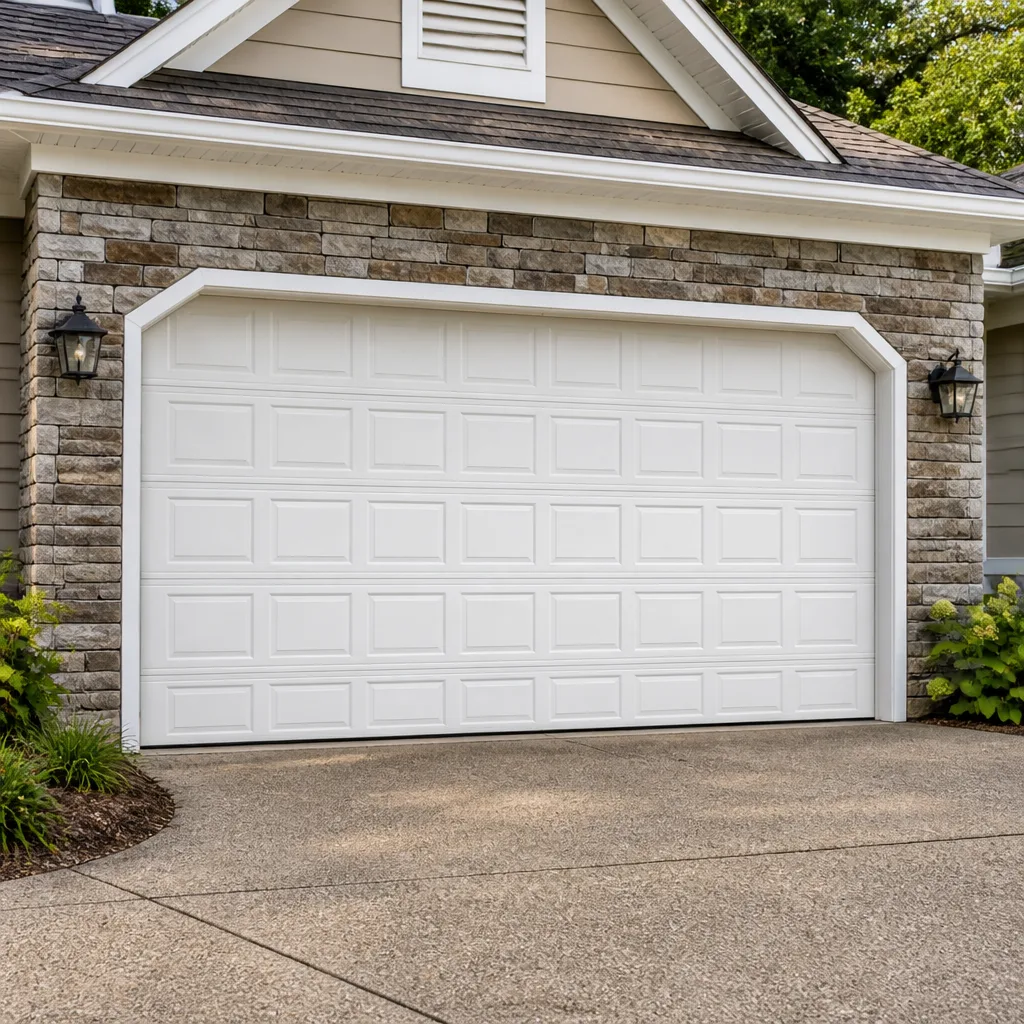 Raised-panel steel
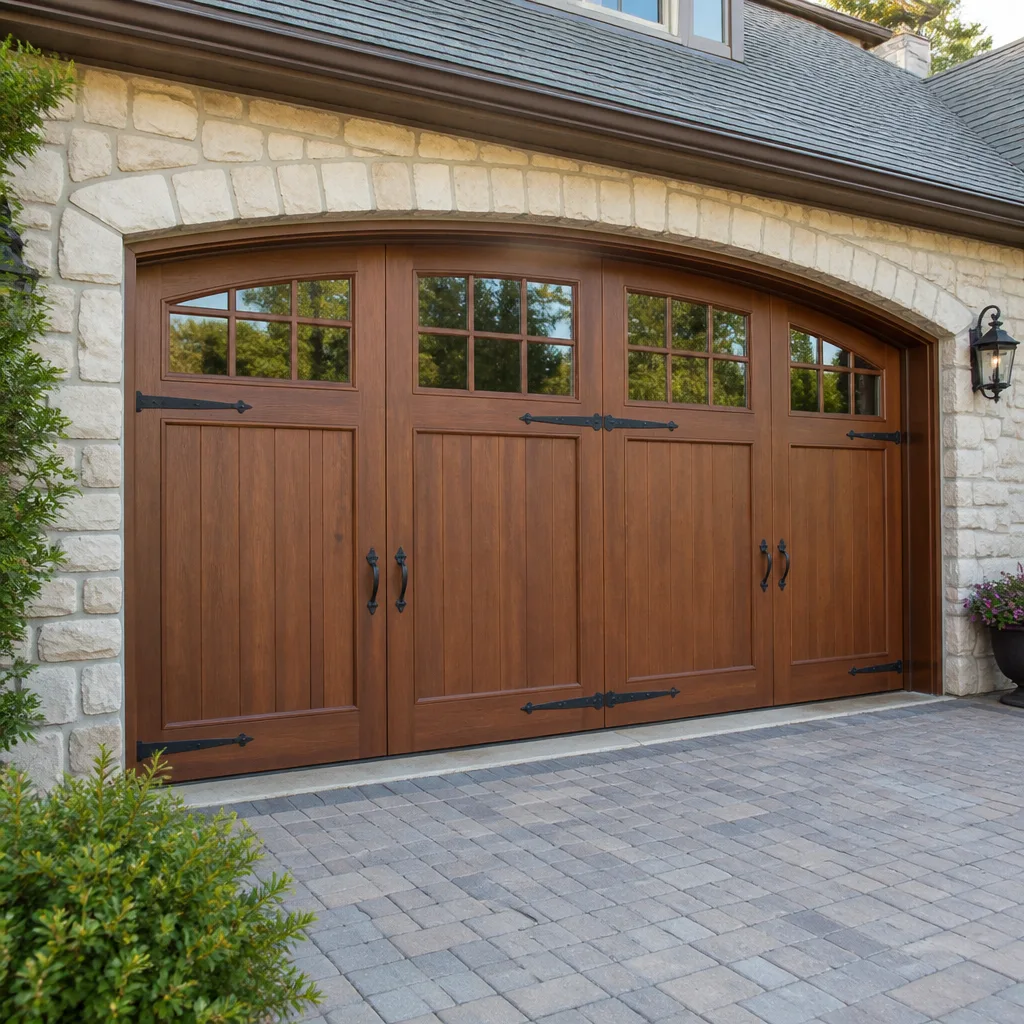 Carriage house
 Modern flush
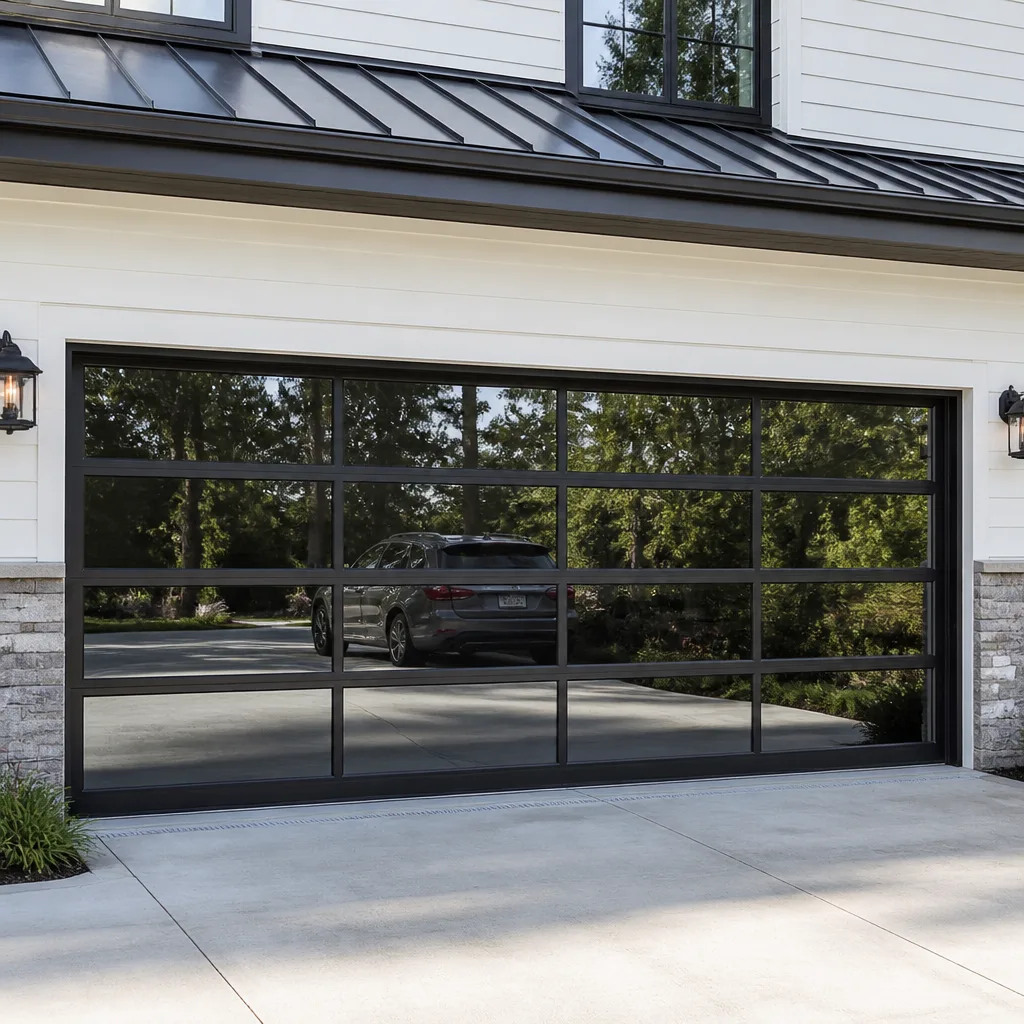 Full-view glass
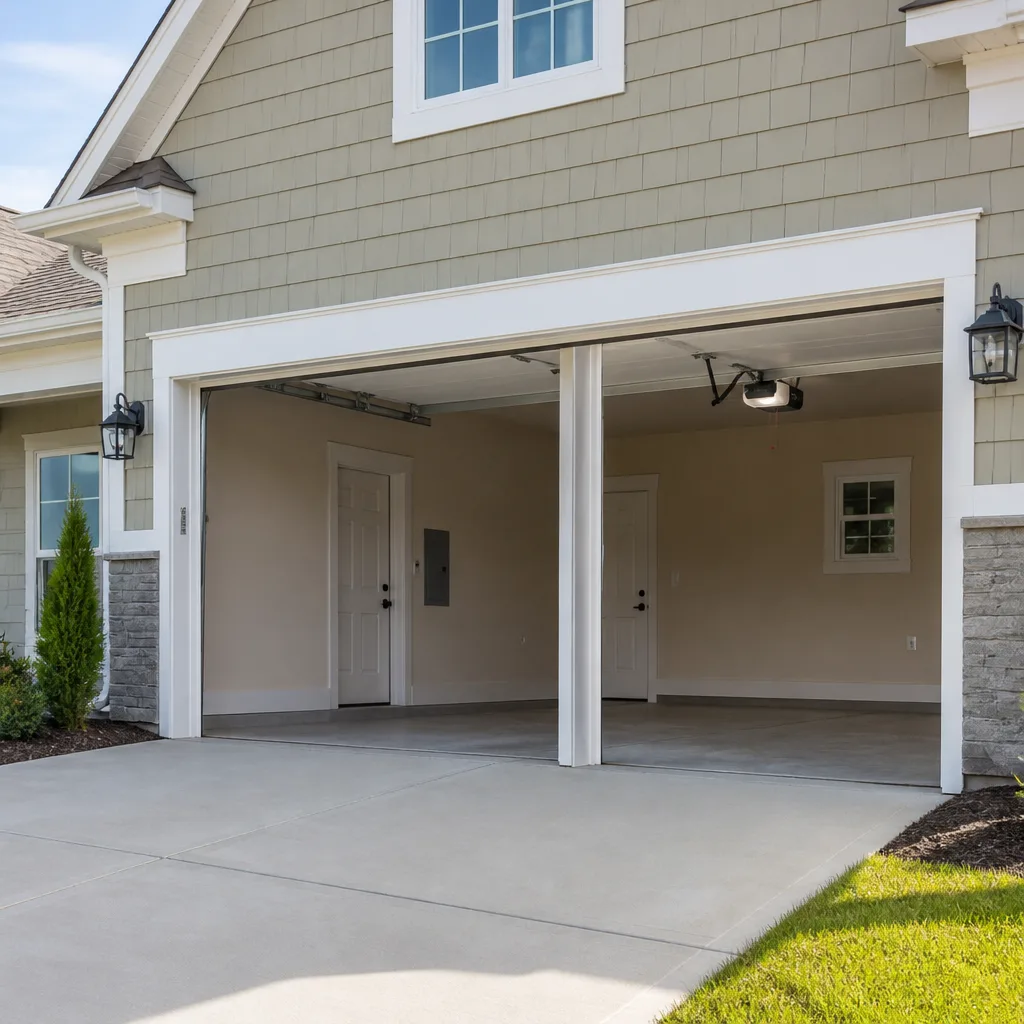 LiftMaster openers
 Chamberlain openers
Full 25-point door and opener safety check with every visit - springs, cables, rollers, tracks, and your LiftMaster or Chamberlain opener included
You get a price before we start. It does not change when the pro arrives.
Get your free estimateDIY vs Professional Garage Door: The Levittown Homeowner’s Decision Guide
Most homeowners assume the DIY line runs along skill. If you’re handy, you tackle it; if you’re not, you call someone. That’s not how it works with a garage door. The real dividing line is stored energy. A wound torsion spring holding a double door can store roughly 100 foot-pounds of torque, and when a cable lets go or a spring snaps under that load, the force releases in a fraction of a second with nothing to stop it. Skill doesn’t matter much when physics is driving the outcome. This guide separates the tasks around a Levittown garage you can safely handle yourself from the ones where a trained technician is the right call, and explains the mechanical reason the split exists.
Quick Answer
Safely DIY: adjusting the open and close travel limits, replacing remote batteries, re-pairing a remote or keypad, and lubricating hinges, rollers and the opener rail. Call a professional for anything involving torsion or extension springs, cables, the bottom bracket, and any repair where the door itself has come out of its tracks or stopped balancing. Spring and cable work is a different risk category entirely because it means working around tension that can release without warning. A good technician will also show you what to keep an eye on afterward, so you gain capability rather than dependency.
Styles & brands we work with
- Raised-panel steel
- Carriage house
- Modern flush
- Full-view glass
- LiftMaster openers
- Chamberlain openers
Table of Contents
- Why Springs and Cables Are a Different Risk Category
- Jobs You Can Genuinely Do Yourself in Levittown
- Jobs That Call for a Trained Technician
- The Cost Math That Actually Makes Sense
- When to Stop Mid-Repair and Call
- What a Technician Should Show You So You Can Maintain It Yourself
- How Levittown Weather Shapes the Decision
- Brand-Agnostic Repair and What It Means for You
- When to Call a Professional
Why Springs and Cables Are a Different Risk Category
It helps to understand what a garage door actually is. It’s a heavy panel assembly that a counterbalance system lifts for you, and the counterbalance is the whole trick. Torsion springs sit on a shaft above the door, extension springs run alongside the tracks, and cables tie the two together so the door lifts with a few pounds of effort. When that system is working, the door is safe to handle. When it fails, all the stored energy has to go somewhere.
That’s the entire reason spring replacement is offered as a dedicated service in this trade rather than folded into general handyman work. Many general repair services decline spring jobs outright, not because they can’t turn a wrench but because they don’t want the liability of handling a wound spring without the right winding bars, the right technique and the right understanding of how the two springs on a double door share the load. The danger isn’t hypothetical. A spring releasing unpredictably moves fast enough to cause permanent injury, and a cable snapping under tension can whip. Both happen without a sound loud enough to give you warning.
There’s a second reason to treat this as professional work. A door that’s been running with a broken spring, or with one spring replaced and the other left old, puts uneven load on the lift system. Openers aren’t built for that. In our experience, we regularly see openers on Levittown doors that burned out within months because the door had been running unbalanced, and by then the repair bill includes a new opener on top of the spring job.
The physics also explains why the bottom bracket and cables belong on the professional list. That bracket is under constant cable tension. You can’t safely work near it without first relieving that tension, and relieving it correctly is a technician’s job. Spring repair, cable work and bottom-bracket repair are the three tasks a homeowner should never attempt, no matter how confident they feel after a few YouTube videos.
Jobs You Can Genuinely Do Yourself in Levittown
Plenty of garage door complaints don’t involve tension at all. If you keep a stepladder and a screwdriver handy, you can handle more than you think, and doing so saves money without putting anything at risk. These are the repairs we routinely explain over the phone so a homeowner can fix them without a visit.
- Adjust travel limits on the opener. If the door stops short of the floor or reverses before it fully opens, the travel limit is the likely culprit. On most openers there’s a screw or a set of up and down buttons on the motor housing. Run the door with the emergency release pulled (door disconnected from the opener) to check that it moves freely by hand first. If it does, adjust the limit in small increments until the door closes fully and the safety reverse engages as expected.
- Re-pair a remote, keypad or smart hub. Remote problems are almost always pairing or battery, not the opener. Open the motor housing cover, press the learn button, and follow the sequence for your model. LiftMaster and Chamberlain units use a similar procedure; Craftsman units mostly work the same way. If the remote worked yesterday and doesn’t today, try a fresh battery before anything else.
- Lubricate hinges, rollers and the opener rail. This is the single cheapest maintenance task on a garage door. Use a garage-door-specific lubricant, not WD-40, on the hinge points, the roller stems and the opener rail. Do it twice a year and the door gets noticeably quieter.
- Clear and test the photo-eye safety sensors. If the door reverses the moment it starts down, the sensors are usually misaligned or blocked. Wipe the lenses clean, check that the LED on each unit is solid, and adjust the bracket until both are aligned and the light is steady on both.
- Tighten the track bolts. Vibrating bolts loosen over time. Run a socket wrench over the track brackets and the hinge bolts and snug anything that’s worked loose. Don’t overtighten; you’ll distort the track.
- Replace a bent roller. Rollers wear and develop flat spots. Pop a nylon roller out of its hinge and swap it for a new one of the same diameter. The job takes a few minutes per roller.
Notice what all six have in common: none of them require you to work near a wound spring or a tensioned cable. That’s the boundary. If you can do the task with the door disconnected and the tension relieved, it’s probably fair game.
Jobs That Call for a Trained Technician
These are the tasks where the physics or the risk simply doesn’t leave room for a home attempt, even for an experienced DIYer. If your Levittown door needs any of the following, schedule a professional.
- Torsion or extension spring replacement. This is the top of the list. A broken spring leaves the door effectively weightless-on-one-side and dangerous to handle. Replacing a matched pair is standard practice because a new spring paired with an old one wears unevenly.
- Cable replacement. Cables are under constant tension and run through the bottom bracket. A snapped cable often signals a deeper imbalance, and diagnosing and correcting that takes a trained eye.
- Bottom bracket repair. The bracket handles the cable load. Any work here needs the tension fully relieved first, which is not a homeowner task.
- Track realignment after a door has come out. If a door has jumped its tracks or come off the rollers, the panel weight is dangerous and the track may be bent. This is a job for a trained technician.
- Opener replacement and wiring. Some opener swaps are straightforward, but if the opener requires new wiring or a circuit connection, that crosses into electrical work where a trained pro is the right call.
- Panel replacement. A dented lower panel loosens the whole door’s balance. New panels have to match the existing weight to keep the counterbalance correct.
In our experience, homeowners who try spring work themselves often end up with a second repair on top of the first because the door gets dropped or the wrong-size spring gets installed. Our garage door spring repair covers both the spring and the rebalance that has to happen afterward.
The Cost Math That Actually Makes Sense
DIY sounds free until you count the parts, the tools and the time. Run the math honestly and the gap narrows more than most homeowners expect, especially when a DIY attempt turns into a callback repair. Here’s how the numbers break down for common jobs in a Levittown garage.
| Job | DIY parts & tools | Typical time | Professional estimate |
|---|---|---|---|
| Remote battery / re-pair | Under $10 | 15 min | Not worth a call |
| Lubrication & track bolt check | $10 – $20 | 30 – 45 min | Usually bundled with other work |
| Photo-eye sensor alignment | $0 | 15 min | Not worth a call |
| Roller replacement (set of 10) | $40 – $80 | 1 – 2 hours | Often bundled with tune-up |
| Opener travel limit adjustment | $0 | 15 – 30 min | Not worth a call |
| Torsion spring replacement (single) | Tools alone $50 – $120; spring $40 – $90 | Not recommended | Typical range $180 – $340 |
| Matched spring pair | Roughly double the single-spring parts | Not recommended | Roughly double the single-spring estimate |
| Opener replacement | $130 – $300 parts, varies by model | 3 – 5 hours | Estimate depends on opener and mounting |
Look at the bottom two rows. The parts cost for a torsion spring replacement is real money, and by the time you add winding bars and the diagnostic knowledge to get the wind count right, you’re within striking distance of the professional estimate. Then factor in the realistic chance of a callback. A mismeasured spring, a door dropped during the job, or an opener that gets damaged by an unbalanced door can double or triple the eventual bill. The spring estimates above are typical for the Levittown area and are always quoted and agreed before any work starts; the written estimate sets the final price.
Where DIY genuinely wins is on the top five rows. Those jobs cost almost nothing in parts and don’t risk injury. Where it loses every time is the tensioned systems, because the “savings” are theoretical until something goes wrong.
When to Stop Mid-Repair and Call
Even homeowners who start a repair with a clear scope run into surprises. The key is to recognize them instead of pushing through. Here are the specific signals that mean stop, put the tools down, and schedule a technician.
- The door is heavier than expected on one side when lifted by hand. That asymmetry means the counterbalance is failing. Don’t run the door with the opener. Don’t force it.
- You see a broken spring. A visible gap in the coiled spring, whether torsion or extension, is a stop signal. The door should not be opened until it’s repaired. If it’s stuck open, close it by hand with help if needed, and call for emergency service.
- One or both cables appear slack or frayed. Slack means tension has been lost somewhere else in the system, and that somewhere is usually a component you shouldn’t touch.
- The door has come off its tracks. Any track damage or a door hanging on the rollers has to be dealt with by a trained technician. Panel weight is unpredictable once the door is out of its channel.
- New noises appear after the repair. A grinding, popping or snapping sound that wasn’t there before means something got out of alignment. Stop and get a diagnosis rather than chasing the noise with more adjustments.
- The opener runs but the door doesn’t move smoothly. That often means the opener is fighting a balance issue. A garage door opener repair on its own won’t solve it if the underlying door is out of balance.
If your door has failed and won’t close, or a car is trapped inside, emergency service is the right next step. That’s a security and access problem for a home, not a weekend project. One call gets a trained technician out and your door back in service today. In Levittown, our emergency garage door service is available specifically for that scenario, whether it’s a snapped spring, a door off its track, or an opener that’s quit mid-cycle.
What a Technician Should Show You So You Can Maintain It Yourself
A good repair leaves you more capable, not more dependent. When we’re on a Levittown job, we show homeowners what to look for afterward so the next spring failure or cable issue gets caught early. Ask your technician for the same walkthrough and you’ll get years more life out of the door.
What that looks like in practice: they should show you how to disconnect the door from the opener using the emergency release, and explain what the door should feel like when you lift it by hand (a properly balanced door takes very little effort and stays where you leave it). They should walk you around the spring, cable and roller inspection points and tell you what a failing part looks like, so you’re not guessing next time. They should leave you knowing which parts of the door are safe to touch and which aren’t.
That capability matters because the maintenance tasks themselves are genuinely homeowner-friendly. Two lubrication passes a year, a quick visual on the cables and springs, a check that the safety sensors stay aligned, and a monthly run of the door’s reverse test will catch most developing problems. You’ll still call a technician when a spring goes, but you won’t call them for every creak or slow close. The difference between a system you understand and a system you’re afraid of is one conversation with a technician who’s willing to explain.
Regular garage door repair visits also let a technician spot the wear that isn’t obvious. A roller starting to fail or a hinge loosening is easy to fix and expensive to ignore. If you want a general walkthrough of what regular upkeep covers, our Levittown Garage Door Repair Co team is glad to answer questions over the phone.
How Levittown Weather Shapes the Decision
Levittown’s freeze-and-thaw cycle is a real factor in garage door wear. Winters here swing above and below freezing repeatedly, and that cycle affects metal hardware, bushings and opener lubrication. Springs can get stiff and start to bind, rollers can seize up, and the grease in older openers can thicken on cold mornings. You’ll notice more squeaking, slower starts and occasional reverses when the temperature drops. That’s normal for the region, not a sign that the door is failing outright.
The practical implication for the DIY decision is this: don’t fight winter with a screwdriver. If your door starts binding on cold mornings, the fix is usually a good lubrication pass and a check of the roller alignment, not a spring adjustment. If it’s still binding after that, it’s a balance issue and worth a diagnosis. The other local consideration is that a door that hasn’t been opened for weeks tends to bind on first use. Run it once a month, even in summer, and you’ll keep the mechanism free.
Levittown’s housing itself affects the decision too. The borough has a lot of ranch homes with single-car and double-car garages built in an era when standards differed from today’s, so spring systems differ from house to house. Some use extension springs; some use torsion. Ask before assuming your neighbor’s setup is yours. A technician can look at your specific door and tell you what it needs in under a minute.
Brand-Agnostic Repair and What It Means for You
One underappreciated variable in the DIY question is brand. If your opener is a LiftMaster or a Chamberlain and your door is a Raynor, you don’t need to find a specialist for the exact combination. Our technicians are equipped to service eight widely installed brands, which means a technician can work on the system already on your home without steering you toward a brand switch. That matters if you’re deciding between repairing what you have and replacing it.
It also matters when you’re chasing replacement parts. Craftsman openers, for example, use a mix of legacy and current components, and a homeowner trying to source a specific gear kit can spend hours down a part-number rabbit hole. A technician who services the brand can tell you whether the part is worth replacing or whether the opener has reached the natural end of its service life. In our experience, this is where a lot of DIY effort gets spent for the wrong outcome: time and money on a part for an opener that needed retiring two years ago.
Common Mistakes to Avoid
- Assuming a “broken opener” is actually an opener problem. If the door doesn’t move or reverses constantly, the opener is often fine and the door is out of balance. Diagnose the door first. A new opener on an unbalanced door will fail faster than the old one did.
- Replacing one spring on a matched pair. Old and new springs age at different rates, so the pair wears unevenly and the door runs unbalanced. Replace matched pairs together whenever possible, even though it costs more upfront.
- Using WD-40 as a lubricant. It’s a solvent, not a garage door lubricant, and it strips the existing grease off the moving parts. Use a proper garage-door lubricant on the hinges, rollers and rail.
- Bypassing the safety reverse test. Test it monthly. The door should reverse when it meets an obstruction. If it doesn’t, an object, a pet or a child in the path can be seriously hurt.
- Ignoring a slow-closing door. A door that suddenly takes longer to close than it used to, or doesn’t close full stop, is often a travel-limit or balance issue. Fix the small symptom before it becomes a spring or opener failure.
- Working on a wound torsion spring without the correct winding bars. Screwdrivers slipped into a winding cone are a common cause of injury. If you don’t have the right bars, you don’t have the right setup. This is the reason professionals use a specific tool for the job.
- Assuming every townhome or Levittown house has the same door. Builds varied by section and by builder. Ask about your specific system before buying parts that assume a standard setup.
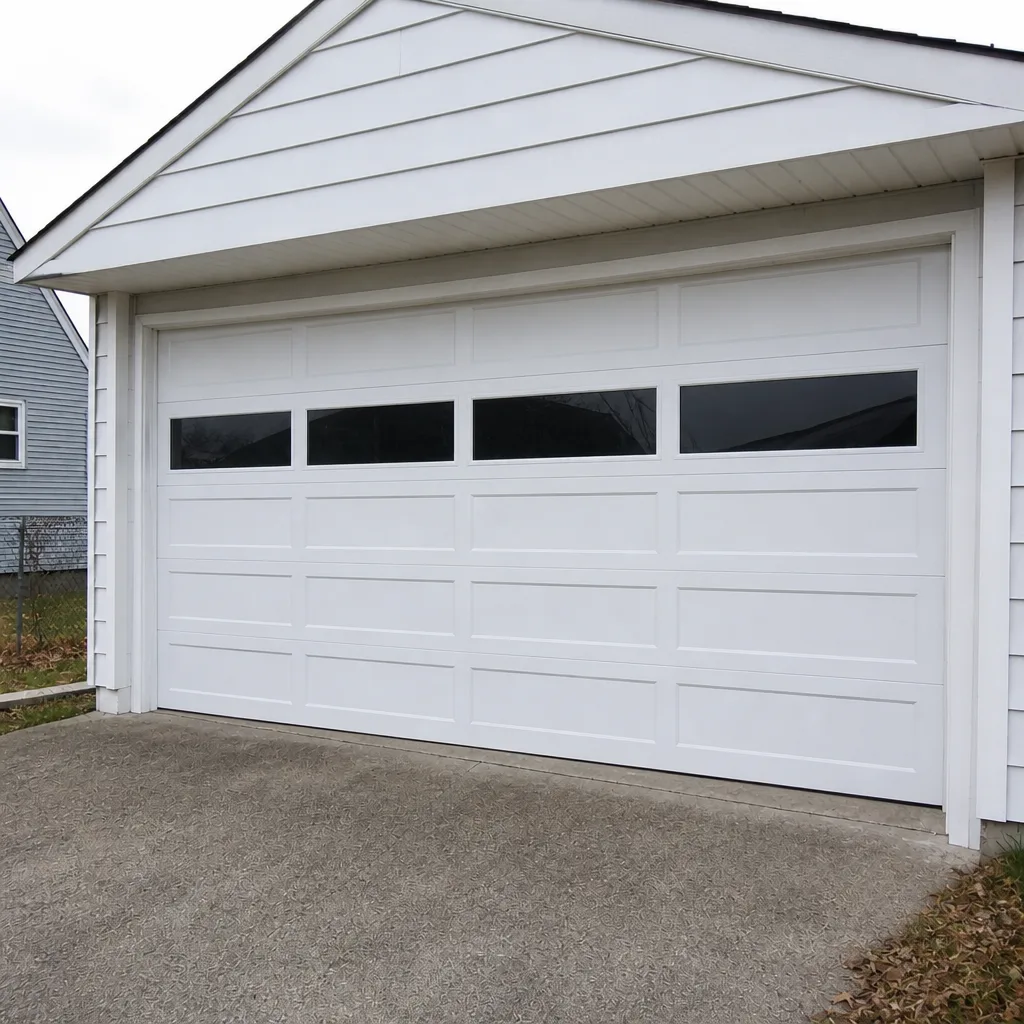
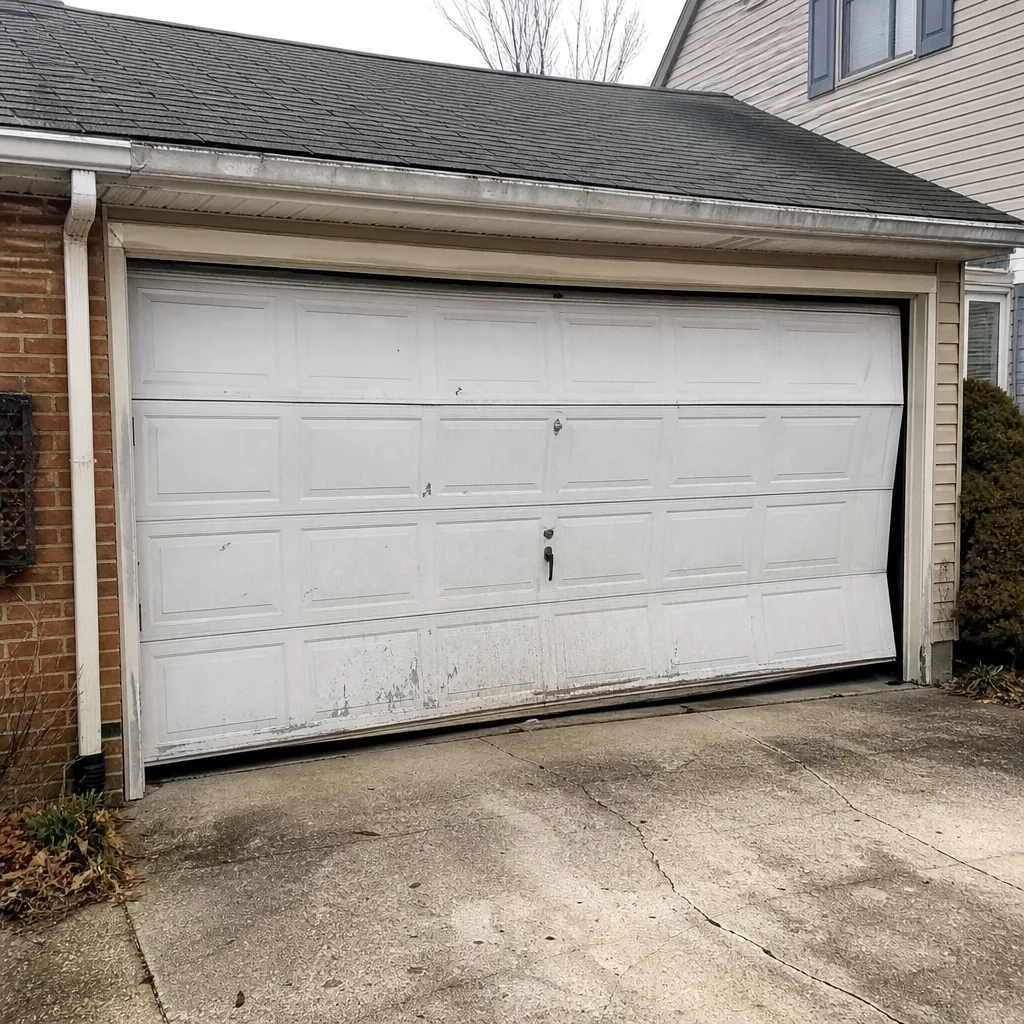
See the difference
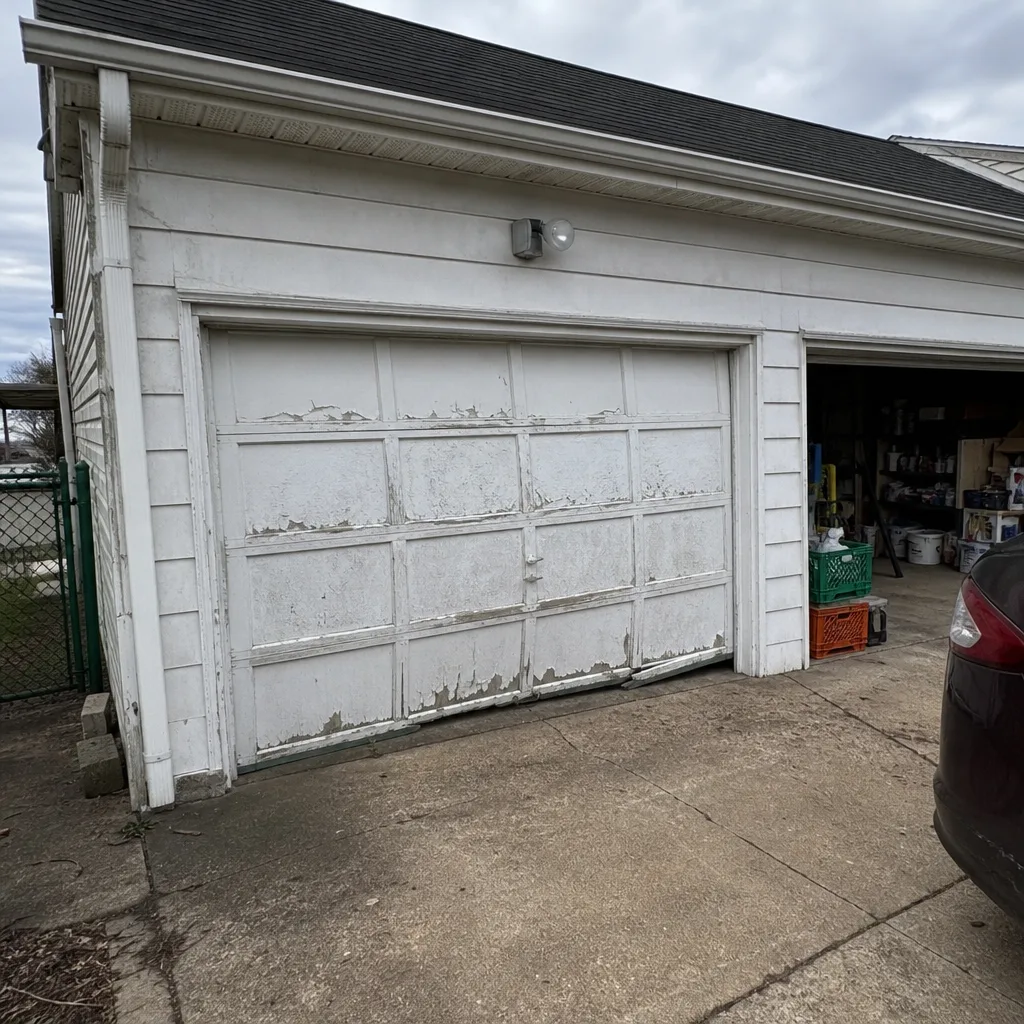 Before
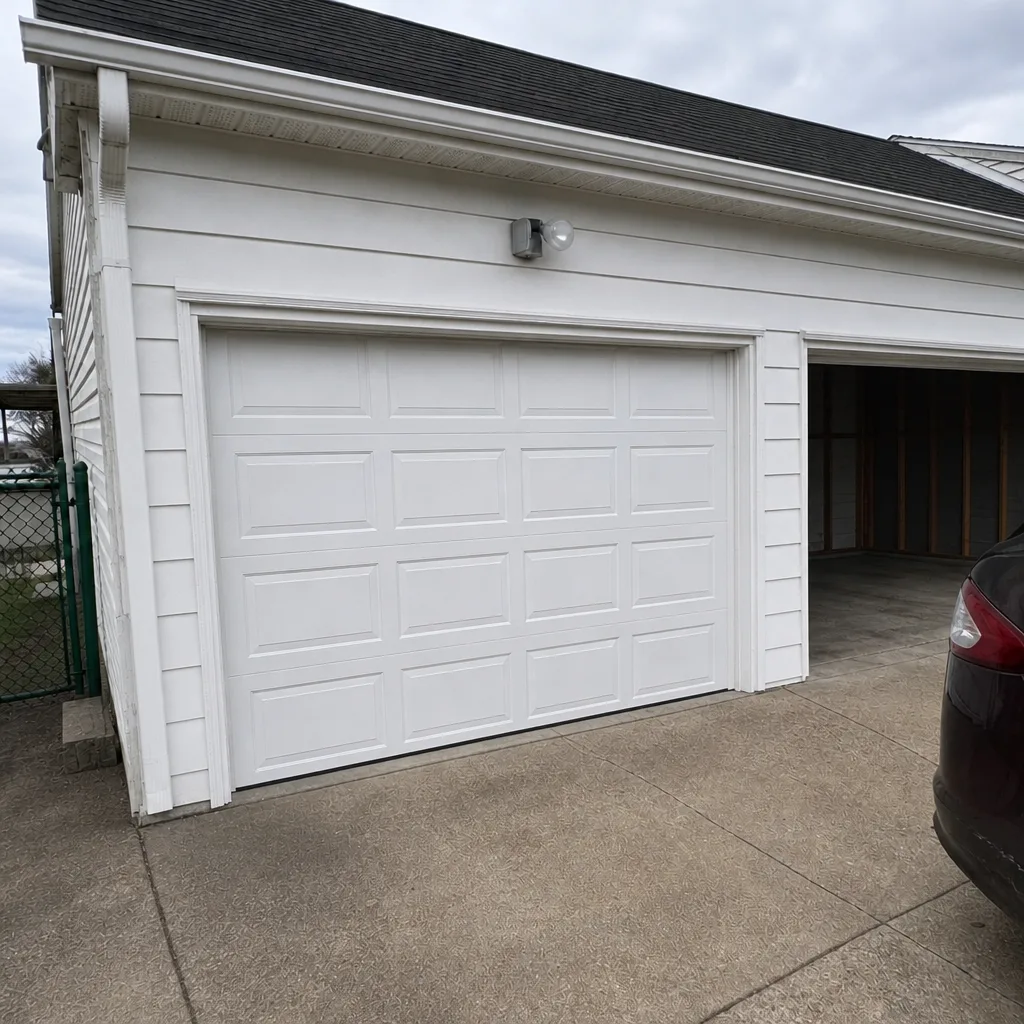 After
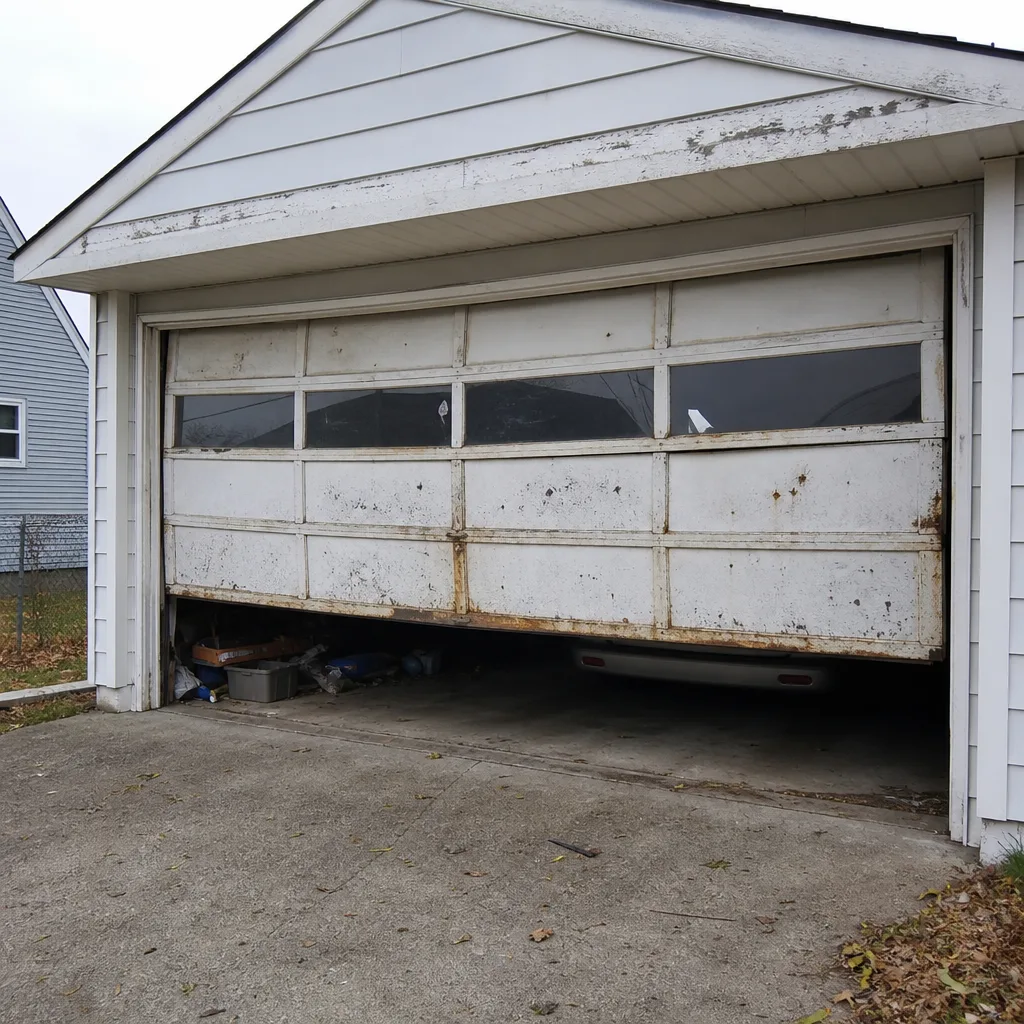 Before
 After
 Before
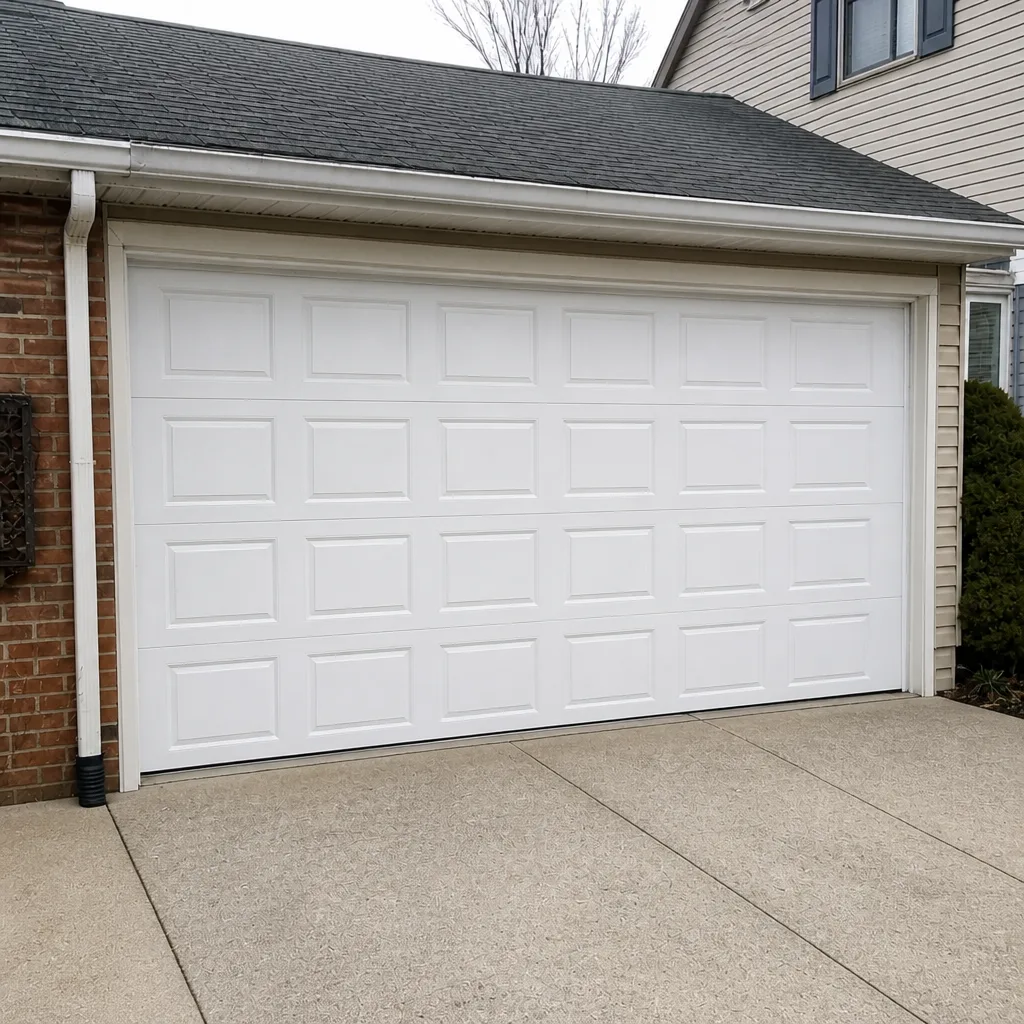 After
When to Call a Professional
Call a professional for any spring, cable or bottom-bracket work, for a door that’s come off its tracks, for an opener that’s fighting a balancing problem, and for panel replacement where weight matching matters. Also call when a repair stops making sense: if your DIY attempt isn’t solving the noise or the reverse, you’ve reached the point where a diagnosis beats another adjustment. And call when a door failure compromises your home’s security or traps a vehicle. Levittown Garage Door Repair Co offers free estimates in Levittown and handles spring repair, opener repair and full door installation as a single-company solution from first call to final walkthrough. Call (833) 362-9987 to get a technician out.
Frequently Asked Questions
No. Torsion and extension springs store enough energy to cause serious injury if they release unexpectedly, and the winding process requires specific tools and technique. A technician trained on spring replacement can do the job safely and rebalance the door afterward. Call (833) 362-9987 for an estimate.
Single-spring replacement typically runs $180 – $340 in the Levittown area, and a matched pair is roughly double that. The written estimate sets the final price, and we quote and agree on it before any work starts. Call (833) 362-9987 for an exact quote; in-person estimates are free.
You can safely handle remote batteries and pairing, safety-sensor alignment, lubrication, tightening loose track bolts, replacing a bent roller, and adjusting opener travel limits. Anything touching a spring, a cable or the bottom bracket is not a homeowner job, however confident you feel.
The price is set by the written estimate before work starts, and any additional repair is quoted and agreed before it happens. You won’t get an invoice larger than what you agreed to. Call (833) 362-9987 to schedule a free estimate.
Our technicians have up to 11 years of experience, and the local pros we connect you with are licensed and insured as their state requires. Ask for details when you book and we’ll tell you what applies to your job.
Yes. Emergency garage door service is a core offering, and a broken spring, a door off its tracks or an opener that quit mid-cycle qualifies. Call (833) 362-9987 and we’ll get a trained technician out to get your door back in service today.
The Bottom Line
Your garage door splits cleanly into two worlds. The world of remotes, sensors, lubrication, travel limits and rollers is yours to run, and doing it yourself saves real money without risking anything. The world of springs, cables and bottom brackets belongs to a trained technician, not because the work is complicated but because the tension those parts hold means a mistake can’t be corrected after the fact. Everything else is a judgment call based on scope and confidence. Keep the DIY line at the tensioned systems, stay on top of the maintenance, and call for a diagnosis the moment something feels different from how the door usually runs. From opener glitch to full installation, our technicians are equipped to work on the brand you already have. Call (833) 362-9987 for a free estimate in Levittown.
Written by the team at Levittown Garage Door Repair Co.